Showing posts with label Christian History. Show all posts

Dec 22, 2015

O Holy Night - by Mahalia Jackson

The Story Behind the Great Christmas Song


Reprinted from "Stories Behind the Best-Loved Songs of Christmas" with permission of Zondervan. The strange and fascinating story of "O Holy Night" began in France, yet eventually made its way around the world. This seemingly simple song, inspired by a request from a clergyman, would not only become one of the most beloved anthems of all time, it would mark a technological revolution that would forever change the way people were introduced to music.

In 1847, Placide Cappeau de Roquemaure was the commissionaire of wines in a small French town. Known more for his poetry than his church attendance, it probably shocked Placide when his parish priest asked the commissionaire to pen a poem for Christmas mass. Nevertheless, the poet was honored to share his talents with the church.

 In a dusty coach traveling down a bumpy road to France's capital city, Placide Cappeau considered the priest's request. Using the gospel of Luke as his guide, Cappeau imagined witnessing the birth of Jesus in Bethlehem. Thoughts of being present on the blessed night inspired him. By the time he arrived in Paris, "Cantique de Noel" had been completed.

Moved by his own work, Cappeau decided that his "Cantique de Noel" was not just a poem, but a song in need of a master musician's hand. Not musically inclined himself, the poet turned to one of his friends, Adolphe Charles Adams, for help.

The son of a well-known classical musician, Adolphe had studied in the Paris conservatoire. His talent and fame brought requests to write works for orchestras and ballets all over the world. Yet the lyrics that his friend Cappeau gave him must have challenged the composer in a fashion unlike anything he received from London, Berlin, or St. Petersburg.

As a man of Jewish ancestry, for Adolphe the words of "Cantique de Noel" represented a day he didn't celebrate and a man he did not view as the son of God. Nevertheless, Adams quickly went to work, attempting to marry an original score to Cappeau's beautiful words. Adams' finished work pleased both poet and priest. The song was performed just three weeks later at a Midnight Mass on Christmas Eve.

Initially, "Cantique de Noel" was wholeheartedly accepted by the church in France and the song quickly found its way into various Catholic Christmas services. But when Placide Cappeau walked away from the church and became a part of the socialist movement, and church leaders discovered that Adolphe Adams was a Jew, the song--which had quickly grown to be one of the most beloved Christmas songs in France--was suddenly and uniformly denounced by the church. The heads of the French Catholic church of the time deemed "Cantique de Noel" as unfit for church services because of its lack of musical taste and "total absence of the spirit of religion." Yet even as the church tried to bury the Christmas song, the French people continued to sing it, and a decade later a reclusive American writer brought it to a whole new audience halfway around the world.

Not only did this American writer--John Sullivan Dwight--feel that this wonderful Christmas songs needed to be introduced to America, he saw something else in the song that moved him beyond the story of the birth of Christ. An ardent abolitionist, Dwight strongly identified with the lines of the third verse: "Truly he taught us to love one another; his law is love and his gospel is peace. Chains shall he break, for the slave is our brother; and in his name all oppression shall cease." The text supported Dwight's own view of slavery in the South. Published in his magazine, Dwight's English translation of "O Holy Night" quickly found found favor in America, especially in the North during the Civil War.

Back in France, even though the song had been banned from the church for almost two decades, many commoners still sang "Cantique de Noel" at home. Legend has it that on Christmas Eve 1871, in the midst of fierce fighting between the armies of Germany and France, during the Franco-Prussian War, a French soldier suddenly jumped out of his muddy trench. Both sides stared at the seemingly crazed man. Boldly standing with no weapon in his hand or at his side, he lifted his eyes to the heavens and sang, "Minuit, Chretiens, c'est l'heure solennelle ou L'Homme Dieu descendit jusqu'a nous," the beginning of "Cantique de Noel."

 After completing all three verses, a German infantryman climbed out his hiding place and answered with, "Vom Himmel noch, da komm' ich her. Ich bring' euch gute neue Mar, Der guten Mar bring' ich so viel, Davon ich sing'n und sagen will," the beginning of Martin Luther's robust "From Heaven Above to Earth I Come."

The story goes that the fighting stopped for the next twenty-four hours while the men on both sides observed a temporary peace in honor of Christmas day. Perhaps this story had a part in the French church once again embracing "Cantique de Noel" in holiday services.
***
Adams had been dead for many years and Cappeau and Dwight were old men when on Christmas Eve 1906, Reginald Fessenden--a 33-year-old university professor and former chief chemist for Thomas Edison--did something long thought impossible. Using a new type of generator, Fessenden spoke into a microphone and, for the first time in history, a man's voice was broadcast over the airwaves: "And it came to pass in those days, that there went out a decree from Caesar Augustus, that all the world should be taxed," he began in a clear, strong voice, hoping he was reaching across the distances he supposed he would.

Read more at http://www.beliefnet.com/Entertainment/Movies/The-Nativity-Story/The-Amazing-Story-Of-O-Holy-Night.aspx?p=2#HKQg6jV94LfdYUve.99

Dec 16, 2015

Jesus, Son of God, Son of Man

by Lambert Dolphin

Why God Became a Man?


The religion page in the Saturday newspaper these days treats Jesus as a great moral teacher whose words we may or may not have accurately recorded for us in the gospels. Jesus may have been a remarkable teacher, but so was Confucius, Buddha, or Mohammed.  The disciples of Jesus, and the majority of the Jews who enthusiastically followed the Master at the beginning of his public ministry clearly hoped he would bring in the kingdom of God by throwing out the Roman overlords and bringing Israel back to the glory the nation had in the days of Solomon. Reading through the gospels there is plenty of evidence that Jesus' teachings were inexhaustibly rich and profound and authoritative. His miracles were real and brought much relief from pain, suffering and even death. His manhood, lived out in total dependence on the indwelling Father, was startling to many because no man living or dead had ever come close to measuring up to Jesus' demonstration of what God intended normal manhood to be.
While the people pressed upon him to hear the word of God, he was standing by the lake of Gennesaret. And he saw two boats by the lake; but the fishermen had gone out of them and were washing their nets. Getting into one of the boats, which was Simon's, he asked him to put out a little from the land. And he sat down and taught the people from the boat. And when he had ceased speaking, he said to Simon, "Put out into the deep and let down your nets for a catch." And Simon answered, "Master, we toiled all night and took nothing! But at your word I will let down the nets." And when they had done this, they enclosed a great shoal of fish; and as their nets were breaking, they beckoned to their partners in the other boat to come and help them. And they came and filled both the boats, so that they began to sink.

But when Simon Peter saw it, he fell down at Jesus' knees, saying, "Depart from me, for I am a sinful man, O Lord." For he was astonished, and all that were with him, at the catch of fish which they had taken; and so also were James and John, sons of Zebedee, who were partners with Simon. And Jesus said to Simon, "Do not be afraid; henceforth you will be catching men." (Luke 5:1-10)

Jesus probably first realized his calling when he was about 12 years old,
And the child grew and became strong, filled with wisdom; and the favor of God was upon him. Now his parents went to Jerusalem every year at the feast of the Passover. And when he was twelve years old, they went up according to custom; and when the feast was ended, as they were returning, the boy Jesus stayed behind in Jerusalem. His parents did not know it, but supposing him to be in the company they went a day's journey, and they sought him among their kinsfolk and acquaintances; and when they did not find him, they returned to Jerusalem, seeking him. After three days they found him in the temple, sitting among the teachers, listening to them and asking them questions; and all who heard him were amazed at his understanding and his answers. And when they saw him they were astonished; and his mother said to him, "Son, why have you treated us so? Behold, your father and I have been looking for you anxiously." And he said to them, "How is it that you sought me? Did you not know that I must be in my Father's house?" And they did not understand the saying which he spoke to them. And he went down with them and came to Nazareth, and was obedient to them; and his mother kept all these things in her heart. And Jesus increased in wisdom and in stature, and in favor with God and man." (Luke 2:40-52)

From the time He first realized why He had been sent into the world, Jesus knew that His main purpose was to arrive in Jerusalem at a precise, exact time and date on God's calendar that had been prophesied by Daniel 700 years earlier, (Daniel 9:24-27). There he knew that he would be betrayed by one of his own, and that he would become a sacrificial lamb for the sins of all the world.
"...[Jesus] strictly charged the disciples to tell no one that he was the Messiah. From that time Jesus began to show his disciples that he must go to Jerusalem and suffer many things from the elders and chief priests and scribes, and be killed, and on the third day be raised. And Peter took him and began to rebuke him, saying, "God forbid, Lord! This shall never happen to you." But he turned and said to Peter, "Get behind me, Satan! You are a hindrance to me; for you are not on the side of God, but of men." Then Jesus told his disciples, "If any man would come after me, let him deny himself and take up his cross and follow me. For whoever would save his life will lose it, and whoever loses his life for my sake will find it. For what will it profit a man, if he gains the whole world and forfeits his life? Or what shall a man give in return for his life? For the Son of man is to come with his angels in the glory of his Father, and then he will repay every man for what he has done. (Matthew 16:20-27)

Men today are no different from the Jews of Jesus' day. We'd all like a Savior who would fix up the externals of our lives, solve our financial and emotional problems, deal with our enemies and give us at the happiness that constantly eludes us. But the Primary Mission of Jesus was much more serious and profound and terrible. He came to undo cosmic evil and to accomplish a permanent fix for the problem of human sin. The solution to human ills and to the cosmic problem of evil could not, cannot, and did not come from human skills, ingenuity, or from our meritorious efforts. It is the Creator Himself who formulated the plans---from the beginning of time---for the solution of man's terrible plight. Though the councils of God are conducted in eternity "before the foundation of the world," in due season,
"...when the time had fully come, God sent forth his Son, born of woman, born under the law, to redeem those who were under the law, so that we might receive adoption as sons." (Galatians 4:4, 5)

God executed His plans, as He always does, according to His own timing and pre-planning. What God did to solve the problem of evil was to enter the human race in the Person of the Son, as a perfect, sinless man. Jesus,
"who, though he was in the form (morphe) of God, did not count equality with God a thing to be grasped, but emptied (ekenosen) himself, taking the form of a servant, being born in the likeness of men. And being found (schemati) in human form (homoiomati) he humbled himself and became obedient unto death, even death on a cross. Therefore God has highly exalted him and bestowed on him the name which is above every name, that at the name of Jesus every knee should bow, in heaven and on earth and under the earth, and every tongue confess that Jesus Christ is Lord, to the glory of God the Father." (Philippians 2:6-11)

Jesus, the Son of God became a substitute for each one of us, a sin-bearer, a reconciler. He is called in the New Testament, "the Author (archegos) and Finisher ( teleiotes) of our Faith" (Heb. 12:2). By a voluntary act the Son of God chose to become a man, to be an obedient servant, and to do everything, day by day throughout his entire life on earth, in total dependence upon the Father who indwelt Him.
 This passage quoted above from Philippians is of great importance to our understanding the nature of God and the radical solution to sin God accomplished through the incarnation of His Son. The early church wrestled over the issue of whether Christ had one nature or two (the problem of the "hypostatic union")---most Christians today agree that this passage implies that Jesus Christ is both fully God and fully man. Furthermore, Jesus lived His entire life on earth by faith in total dependence upon the Father who dwelt in Him, thus He did not, while He was on earth, exercise His sovereign power as God the Son. This right and privilege (that of acting as Sovereign God), in addition to His exalted and splendorous place beside the Father, were temporarily and voluntarily set aside by Jesus of his own free will.  The Son of God, having become a man, grew into maturity, through suffering and obedience, and so came to the age where He was fully qualified to die as a substitute for the sins of the world. Then, having accomplished that terrible, bloody work of the cross, Jesus was raised from the dead by the Father and by the Holy Spirit. Forty days later He ascended into the heavens. This same Jesus now sits at the "right hand of the Majesty on High." In this series of cosmic events, Jesus has actually gained a more exalted position in the universe than He held before. Because of his obedience and death on the cross, He has been elevated by the Father to the place of supreme authority in the entire universe. This "higher state" may be difficult for us to imagine---since Jesus was already the Son of God before He became a man---but such is the language used of Jesus in the New Testament describing his post-resurrection exaltation. Chicago's Moody Church pastor and prophet, the late A.W. Tozer wrote these words:
"The teaching of the New Testament is that now, at this very moment, there is a Man in heaven appearing in the presence of God for us. He is as certainly a man as was Adam or Moses or Paul; he is a man glorified, but his glorification did not de-humanize him. Today he is a real man, of the race of mankind, bearing our lineaments and dimensions, a visible and audible man, whom any other man would recognize instantly as one of us. But more than this, he is the heir of all things, Lord of all lords, head of the church, firstborn of the new creation. He is the way to God, the life of the believer, the hope of Israel, and the high priest of every true worshiper. He holds the keys of death and hell, and stands as advocate and surety for everyone who believes on him in truth. Salvation comes not by accepting the finished work, or deciding for Christ; it comes by believing on the Lord Jesus Christ, the whole, living, victorious Lord who, as God and man, fought our fight and won it, accepted our debt as his own and paid it, took our sins and died under them, and rose again to set us free. This is the true Christ; nothing less will do."

The Seat of Original Sin


The late Arthur Custance, a gifted Canadian Bible scholar, in his book The Seed of the Woman, (Ref. 1) makes a case that "original sin" in the human race may very well be transmitted biologically from generation to generation [from Adam] through the male sperm, rather than through the female ovum. Custance took care to defend his premises thoroughly. The virgin birth, Custance believed, allowed Jesus to be born of Mary free from all sin so as to become a "lamb without spot or blemish," "tempted in every way, just as we are, yet without sin." Scripture also speaks of Jesus as "The Lamb slain before the foundation of the world." If original sin is transmitted genetically by the male sperm and not by the female ovum, then Mary, though she herself was a forgiven sinner and a mortal daughter of Adam and Eve, could give birth to a sinless son through the overshadowing of the Holy Spirit without ordinary fertilization by her husband's seed.  The incarnation, the life, the death, and the resurrection of Jesus the Son of God is an awesome intrusion into our limited space-time domain. These events which we see as merely historic in our time frame constitute an eternal event, a transaction (known in theology as "the eternal covenant") between the Father and the Son, which really takes place in eternity, outside of time. The prophet Isaiah records amazing "conversations" outside of time between God the Father and His servant the Messiah, (Isaiah was written about 700 years before Jesus was born) For example Isaiah 49 says:
Listen to me, O coastlands, and hearken, you peoples from afar. The LORD called me (Messiah) from the womb, from the body of my mother he named my name. He made my mouth like a sharp sword, in the shadow of his hand he hid me; he made me a polished arrow, in his quiver he hid me away. And he said to me, 'You are my servant, Israel, (here the Messiah is spoken of as the true Israel) in whom I will be glorified.'

But I (Messiah) said, 'I have labored in vain, I have spent my strength for nothing and vanity; yet surely my right is with the LORD, and my recompense with my God.'

And now the LORD says, who formed me from the womb to be his servant, to bring Jacob back to him, and that Israel might be gathered to him, for I am honored in the eyes of the LORD, and my God has become my strength---he says: 'It is too light a thing that you should be my servant to raise up the tribes of Jacob and to restore the preserved of Israel; I will give you as a light to the nations, that my salvation may reach to the end of the earth.' Thus says the LORD, the Redeemer of Israel and his Holy One, to one deeply despised, abhorred by the nations, the servant of rulers: 'Kings shall see and arise; princes, and they shall prostrate themselves; because of the LORD, who is faithful, the Holy One of Israel, who has chosen you.'" (1-7)

Arthur Custance's argument about the mechanism by which sin may be genetically transmitted is a very reasonable one, (at least to my way of thinking), and helps us to understand why the blood line of the promise through legitimate heirs from Eve down through Mary is uninterrupted, while only the Kingly promise (not the blood line---see Jer. 22:30, 36:30) is preserved from Abraham to Joseph. The conception of Jesus in the womb of Mary by the Holy Spirit interrupted the chain of genetic links beginning with the fall, allowing a descendant of Adam to be born into the world free from original sin. The perfect obedience of Jesus during His life on earth also was necessary to assure that He reached the cross as a fully qualified sin-offering. Scripture emphasizes the humanity of the Messiah as fully as it does His Deity. The Old Testament is replete with references to the Messiah as the "root out of dry ground," "the seed of David," "the suffering servant of the LORD," and so on.

Jesus and the Undoing of Cosmic Evil


The most famous passage from the pen of Paul describing the resurrection of believers also makes mention of Christ's victory over evil angels, and over death itself. Indeed Jesus will, ultimately "put all things under himself:"
"But in fact Christ has been raised from the dead, the first fruits of those who have fallen asleep. For as by a man came death, by a man has come also the resurrection of the dead. For as in Adam all die, so also in Christ shall all be made alive. But each in his own order: Christ the first fruits, then at his coming those who belong to Christ. Then comes the end, when he delivers the kingdom to God the Father after destroying every rule and every authority and power. For he must reign until he has put all his enemies under his feet. The last enemy to be destroyed is death. 'For God has put all things in subjection under his feet.' But when it says, 'All things are put in subjection under him,' it is plain that he is excepted who put all things under him. When all things are subjected to him, then the Son himself will also be subjected to him who put all things under him, that God may be everything to every one." (1 Corinthians 15:20-28)

The Bible is full of evidence that both the spiritual dimension and human society are today influenced by an active and pernicious evil agency. The old creation has been ruined because of active evil perpetrated by fallen angels. Both the heavens and the material universe have become flawed and corrupted. Some of the laws of physics we now take for granted were evidently different in the past. Evil in the heavens means that malevolent spiritual beings, having great influence in the universe have access to the throne of God and to territories beyond the earth as well. Satan does not rule in hell, as popular cartoons usually suggest. As the prince of the power of the air he has access to heaven, (Job Chapter 1). As the god of this age he rules over the fallen social order of the nations.  Satan and his hordes of malevolent spirit-beings rule in the activities of men; however, only with permission from God. They are completely in subjection to God and can not go beyond boundaries established by God. Satan's pervasive influence of active evil influencing all human affairs is also temporary and soon will be coming to an end. In fact, the doom and fate of the Father of Lies has already been sealed in eternity. The victory of Jesus on the cross was a cosmic, all-encompassing one:
God has delivered us [who believe] from the dominion of darkness and transferred [translated] us to the kingdom of his beloved Son, in whom we have redemption, the forgiveness of sins. Jesus is the image of the invisible God, the first-born of all creation; for in him all things were created, in heaven and on earth, visible and invisible, whether thrones or dominions or principalities or authorities---all things were created through him and for him. He is before all things, and in him all things hold together. He is the head of the body, the church; he is the beginning, the first-born from the dead, that in everything he might be pre-eminent. For in him all the fullness of God was pleased to dwell, and through him to reconcile to himself all things, whether on earth or in heaven, making peace by the blood of his cross. And you, who once were estranged and hostile in mind, doing evil deeds, he has now reconciled in his body of flesh by his death, in order to present you holy and blameless and irreproachable before him...(Colossians 1:13-22)

We sons and daughters of Adam, who still live constrained in time, can rest assured that a bright, new world lies ahead for all who follow Jesus as Lord. A just and holy God cannot tolerate the present world situation forever. He must, and He will, intervene and change the status Que. One such direct intervention has already occurred, at the time of the Flood of Noah. God's next moves will be more grand, terrible, and awesome indeed. He reigns over the entire universe always, but He does not yet rule on the earth. The day of Christ's rule on earth is fast approaching.

Man's Three Enemies


Man is fallen, human evil is a reality---The first three Chapters of the Book of Romans spell this out for us in detail. How can we miss such a complete and thorough indictment before the bar of God's court of justice? Yet amazingly everyone of us seems intent on denying what should be perfectly obvious. Even though we all suffer from the effects of early in life, we persist in living for the moment denying the fact that the human mortality rate remains a flat 100%. The fact that we begin to die as soon as we are born, attests to the fall of our forefather Adam, "Sin came into the world through one man and death through sin, and so death spread to all men because all men sinned--" (Romans 5:12). Even those of us who know Jesus Christ as Lord, and who experience his renewing life in us, (Rom. 8:11) still live in fallen physical bodies---bodies that are not yet redeemed. Non-Christians are described in the Bible as "dead in trespasses and sins." Thus those who do not yet know God cannot be expected to live what in God's eyes is truly moral and godly lives---by our very nature. The power to live a moral life comes from God as a gift, as does inherent rightness which is imputed to us when we become Christians. Becoming a Christian does not eliminate sin, rather, conversion to Christ is the time the real battle begins. Christians find themselves subjected to temptations and inclinations towards evil through three mechanisms. The Bible calls them "the flesh, the world, and the devil." However, neither the body, nor matter, nor things in the material world are, in and of themselves, evil.
The flesh might better be translated "the self-life." The seat of the flesh lies in the as-yet-unredeemed physical body of man, but it is Satan who energizes and empowers the lusts of the flesh that we all experience. The enemy seeks to draw us away from dependence upon the indwelling Lord Jesus, this produces self-centeredness---which is how the flesh operates. The flesh and the world are Satan's main instruments in this process. The flesh, according to the Bible, has both "good" and "bad" aspects. The flesh always springs to life when a Christian tries to live his life by self-effort---rather than by dependence upon his indwelling Lord. Christians are free to "walk after the flesh" but admonished instead to "put to death the deeds of the body" and to "sow good works by the Spirit" since there are inevitable consequences for evil or for good depending on all our daily choices. These contrasts are set forth in Galatians Chapter 5. The "world," (as the New Testament uses the term), is not the world of nature, but culture, custom, tradition, and human society as dominated by Satan. The Greek word cosmos, translated "world" means "ornament, decoration, arrangement." Cosmos gives us our English word "cosmetics." Hence worldliness is a concern for external appearances more than inner content and quality. The world system is outwardly religious, scientific, cultured and elegant. Inwardly it seethes with national and commercial rivalries. The influence of the "world" on a follower of Christ shows up in the following ways: a conformity to cultural norms or traditions and stifles individuality, the use of force, greed, ambition and warfare to accomplish objectives, the use of financial reward, position, power or social status as a important aspect of identity. The world cares nothing for the worth of the individual or his uniqueness, promotes myths and illusions which appeal to human vanity and pride, diverts attention from spiritual values by appeals to pursue pleasure, pride (vainglory), or to power, is permissive in regard to sexual, moral and ethical values to encourage self-indulgence, makes an appeal to immediate pleasure rather than long-term goals, ignores eternal values and invisible realities, offers false philosophies and value systems to support its goals. The root problem behind worldly values is pride. The world exalts man, his abilities and his supposed "progress"---e.g. through the myth of social evolution, glosses over and hides suffering, death, poverty, the depravity of man, and man's accountability to God. The "world" seeks to unify mankind under an atheistic humanistic or pantheistic banner, and emphasizes pluralism while denying Biblical absolutes. Worldly philosophy teaches human progress and advancement through better education or social welfare.  The third enemy of man is Satan. The Devil is "the god of this world" (or in Greek this "age.") He does not preside over hell, but over the earth, that is, over society. He has access to heaven. As a "liar and a murderer from the beginning," Satan seeks to twist, warp, cripple and destroy man, and to further ruin God's creation. His basic appeal is to persuade men to be their own gods, to be self-sufficient, to attempt mastery of their own fates and destinies. Satan is not equal to god, and must obtain permission from God for all that he does. He is clever, deceitful, treacherous, and man's deadly enemy. (C.S. Lewis, Screwtape Letters is an excellent fictional story of conversations between the devils---revealing much about the stratagems of Satan and his devices). The good news of the Bible is that God has already solved the problem of evil in both dimensions, that is, "in heaven" and "on earth". This is why the theme of victory, triumph, and hope pervades the New Testament. "...I would have you wise as to what is good and guileless as to what is evil; then the God of peace will soon crush Satan under your feet." writes Paul (Romans 16: 19-20) To the Corinthians he says, "For he (Jesus) must reign until he has put all his enemies under his feet. The last enemy to be destroyed is death. 'For God has put all things under his feet.'" (1 Corinthians 15:25-27)

The Work of the Cross: The Central Accomplishment of Jesus


In Scripture, when God has something important to say, it is sometimes repeated. Usually one repetition is sufficient to tell us to pay attention, as when Jesus would begin a statement with the words "Truly, Truly I say to you..." (In the original language the word "truly" is actually the word Amen. "Amen, amen, I say to you). Sometimes Scripture repeats something twice to make very certain we don't miss something important. A very few times does Scripture repeat something three times for emphasis---for example "Holy, holy, holy is the Lord God of hosts, the whole earth is full of his glory," are Isaiah's words when he became aware of the holiness of God and his own deep-seated sinfulness (Isaiah 6).

 When it comes to the life of Jesus---His temptations, betrayal, trial, death and resurrection---four, not two, not three, Gospels were written. Surely this strategy by the Holy Spirit is intended to help us see the supremely great importance of God becoming a man. We must not miss the message that "...in Christ God was reconciling the world to himself, not counting their trespasses against them..." (2 Corinthians 5:19) John R.W. Stott has written a thorough treatment on the cross of Christ, revealing the importance of this subject from God's point of view (Ref. 2). But, the cross of Christ is all-too-frequently neglected or even crowded out of Christianity by other less "offensive" aspects of theology and Bible study. Not only is the subject of the Cross all about the death of Jesus on our behalf, but also it points to the fact that we, too, must be put to death, in Christ, on that same cross, to gain eternal life. Our crucifixion with Christ shows us that there is nothing in the old creation, in the first Adam, that can be saved apart from death. Paul writes, "I have been crucified with Christ; nevertheless I live, yet not I, but Christ lives in me, and the life I now live in the flesh I live by the faith of the Son of God who loved me and gave himself for me. I do not nullify the grace of God, for if justification came by the law, then Christ died to no avail." (Galatians 2:20-21)  While writing to encourage the Christians in the early church at Colossae, the Apostle Paul reveals to them some of the mighty once-for-all-time accomplishments of Jesus on the cross:
"As therefore you received Christ Jesus the Lord, so live in him, rooted and built up in him and established in the faith, just as you were taught, abounding in thanksgiving. See to it that no one makes a prey of you by philosophy and empty deceit, according to human tradition, according to the elemental spirits (stoicheia) of the universe, and not according to Christ. For in him the whole fullness of deity dwells bodily (permanently), and you have come to fullness of life in him, who is the head of all rule and authority. In him also you were circumcised with a circumcision made without hands, by putting off the body of flesh in the circumcision of Christ; and you were buried with him in (the) baptism, in which you were also raised with him through faith in the working of God, who raised him from the dead. And you, who were dead in trespasses and the uncircumcision of your flesh, God made alive together with him, having forgiven us all our trespasses, having canceled the (legal) bond which stood against us with its legal demands; this he set aside (blotted out), nailing it to the cross. He disarmed (stripped of power and authority) the principalities and powers (in the heavenly places) and made a public example (spectacle) of them, (bodily) triumphing over them in him." (Colossians 2: 6-15)

Christ's Return Seen from Eternity


Speaking of the return of Christ as one grand event, Paul wrote this to the Thessalonians:
"We are bound to give thanks to God for you, brethren, as is fitting, because your faith is growing abundantly, and the love of every one of you for one another is increasing. Therefore we ourselves boast of you in the churches of God for your steadfastness and faith in all your persecutions and in the afflictions which you are enduring. This is evidence of the righteous judgment of God, that you may be made worthy of the kingdom of God, for which you are suffering---since indeed God deems it just to repay with affliction those who afflict you, and to grant rest with us to you who are afflicted, when the Lord Jesus is revealed (apokalupsis) from heaven with his mighty angels in flaming fire, inflicting vengeance upon those who do not know God and upon those who do not obey the gospel of our Lord Jesus. They shall suffer the punishment of eternal destruction and exclusion from the presence of the Lord and from the glory of his might, when he comes on that day to be glorified in his saints, and to be marveled at in all who have believed, because our testimony to you was believed. To this end we always pray for you, that our God may make you worthy of his call, and may fulfill every good resolve and work of faith by his power, so that the name of our Lord Jesus may be glorified in you, and you in him, according to the grace of our God and the Lord Jesus Christ." (2 Thessalonians 1:3-12)

If death for the follower of Jesus Christ means leaving time and entering eternity, then a similar kind of happening transpires when physical death comes to those who have rejected all of Christ's rights and claims to rule their lives. Since the issue of sin has been dealt with once for all by Jesus, it is only our proud unwillingness to be forgiven that ultimately stands between us and our full reconciliation with our Creator! Physical death for those who are not God's children means that spirit, soul and body exit our space-time dimension and "time travel" to the end of the age when the Day of Judgment is held. This event (in eternity) will also intersect human history, like the Second Coming, at some future date on our calendars. But it is no more than a split second away in the consciousness of a person who dies in unbelief! The passage quoted above describes the terrible last glimpse the lost have of Jesus before they are separated from Him forever.  The book of the Revelation records what is known as the judgment of the great white throne, which follows immediately:
"Then I (John) saw a great white throne and him who sat upon it; from his presence earth and sky fled away, and no place was found for them. And I saw the dead, great and small, standing before the throne, and books were opened. Also another book was opened, which is the book of life. And the dead were judged by what was written in the books, by what they had done. And the sea gave up the dead in it, Death and Hades gave up the dead in them, and all were judged by what they had done. Then Death and Hades were thrown into the lake of fire. This is the second death, the lake of fire; and if any one's name was not found written in the book of life, he was thrown into the lake of fire." (Revelation 20:11-15)

Most Bible commentators teach, first, that all those judged at the Great White Throne are non-believers, and second, that there are degrees of punishment in hell---because of the reference to books (angelic records) being opened and the dead being judged according to what they have done. All those present at this judgment will find that their names have not been written in the book of life.

Conclusion


All paths in life lead ultimately to a face-to-face meeting with the man Jesus of Nazareth. There is no escaping Him. Jesus is the One who spoke the universe into being, carrying out the Father's design and plan for the creation. All things were made through him, and according to Colossians, "for him." He is the absent landlord who will one day come back and claim what is His own. We are only house-guests in Some Else's universe. Quoting from and applying Isaiah Chapter 45, the Apostle Paul says,
"None of us lives to himself, and none of us dies to himself. If we live, we live to the Lord, and if we die, we die to the Lord; so then, whether we live or whether we die, we are the Lord's. For to this end Christ died and lived again, that he might be Lord both of the dead and of the living. Why do you pass judgment on your brother? Or you, why do you despise your brother? For we shall all stand before the judgment seat of God; for it is written, 'As I live, says the Lord, every knee shall bow to me, and every tongue shall give praise to God.' So each of us shall give account of himself to God." (Romans 14:7-12)

Notes


1. The Seed of the Woman, by Arthur C. Custance. Available from Doorway Publications, %Evelyn M. White, 38 Elora Drive, Unit 4, Hamilton, Ontario, L9C 7L6, Canada 1980.  2. John R. W. Stott, The Cross of Christ (Intervarsity Press; Downers Grove, Illinois, 1986).

Read more at - http://ldolphin.org/accomplish.html

May 10, 2015

Kindred Survivors: Thousands Commemorate Armenian Genocide at the US Holocaust Museum

News Staff  : PR Newswire

"We, Armenians, Jews, sons and daughters of other nations that have survived genocides shall continue working together to fight for recognition, condemnation of all genocides and other crimes against humanity, as that is the most efficient way of preventing them in the future." –Armenian President Serzh Sargsyan.
(Washington, DC)—On May 6, Armenian President Serzh Sargsyan visited the U.S. Holocaust Memorial Museum as part of his three-day trip to Washington, D.C. (Photo: via U.S. Holocaust Memorial Museum)
 
The President's visit took place on the eve of the U.S. commemoration activities marking the 100th anniversary of the Armenian genocide. FromMay 7-9 in Washington, DC, the National Commemoration of the Armenian Genocide Centennial is hosting a series of events commemorating the anniversary. Thousands will gather from across the country, and internationally, to join in remembering and honoring those lost in the genocide 100 years ago.

"It was an honor to have the opportunity to visit this memorial and museum. We, Armenians, Jews, sons and daughters of other nations that have survived genocides shall continue working together to fight for recognition, condemnation of all genocides and other crimes against humanity, as that is the most efficient way of preventing them in the future," said President Sargsyan.

Read more at -  http://www.breakingchristiannews.com/articles/display_art.html?ID=15925

Before the Polos there Was Ruesbroek

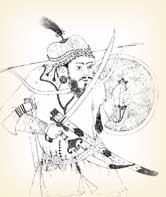
Before the Polos there Was Ruesbroek Everyone, it seems, has heard of Marco Polo and his journey to far off China. But on this day May 7, 1253, the year before Marco was born, a courageous monk from Flanders left Constantinople on his own trip to the Far East, visiting the court of the Great Khan Mangu in the very heart of Mongolia. William of Rubruck's feat is little known.
From the start, his efforts were intended to be evangelistic. Louis IX, the saintly king of France, heard that Sartak, Son of Batu, was a Christian. He determined to make contact and encourage these distant brothers in the faith. William, a Franciscan friar, was the man chosen for the job. Accompanied by Bartholomew of Cremona (a fellow friar) and a few other individuals, he left for Sartak's kingdom, hoping to establish a mission there.

Sartak proved to be no Christian. William of Rubruck and his companion suddenly found their mission stretched well beyond initial anticipation. To proceed with their plans, they must first visit Batu, father of Sartak, they were told. And so the two Franciscans traveled up the Volga to Batu's camp. Batu sent them on to Mongolia with two Nestorian priests and a guide. The little party crossed Russia and Mongolia in the depths of winter and arrived in Karakoram in January of 1254.

Other Europeans, captives of war, were already present in the city. Nestorian Christians had long since penetrated the region with the good news of reconciliation with God in Christ. Their ministry had little effect, perhaps because they regularly became drunk on wine rather than on the Holy Spirit.
William met the Khan, discussed theology in his presence, and was allowed to preach. Once he grew vehement and upset the Khan. Nevertheless, William survived for eight months, apparently without serious threat to his person. He baptized sixty Christians.

In August, William left Tatary, bearing a letter from Mangu, demanding submission of all Western kings and the Pope. God had appointed him master of the world, claimed the Khan, and not even mighty seas and high mountains would prevent him from conquering the West.

William of Rubruck arrived at Acre in May 1255, bearing this grandiose proclamation. He forwarded it to King Louis with a careful and accurate report. It included the best descriptions of Asia which had reached Europe to that point. In its pages were suggestions for further mission work. This did not materialize. Altogether, Rubruck's missionary journey covered 11,000 miles, much of it through dangerous territory.
Bibliography:
  1. Abbott, Jacob. History of Genghis Khan. New York: Harpers, 1899. Source of the image.
  2. Neill, Stephen. A History of Christian Missions. The Pelican History of the Church #6. Hammondsworth, Middlesex, England: Pelican Books, 1964, pp. 122ff.
  3. Olschki, Leonardo. Marco Polo's Precursors. Baltimore, Johns Hopkins Press, 1943.
  4. Schlager, Patricius. "Rubruck, William." The Catholic Encyclopedia. New York: Robert Appleton, 1914.
  5. "William of Rubruck." Explorers and Discoverers of the World. Edited by Daniel B. Baker. Detroit: Gale Research, 1993.
Read this article at -  http://www.christianity.com/church/church-history/timeline/1201-1500/before-the-polos-there-was-ruesbroek-11629838.html

Julian of Norwich's Revelations

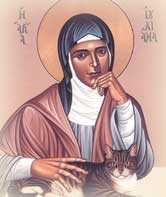
Julian of Norwich's Revelations When I was half way through my thirty-first year God sent me an illness which prostrated me for three days and nights. On the fourth night I received the last rites of Holy Church as it was thought I could not survive till day..." So wrote Julian of Norwich, describing a series of visions or "showings" that came to her.
Some time earlier, she had prayed for three things: To understand Christ's passion, to suffer physically while still a young woman, and to receive from God the gift of three "wounds," which were real sorrow for sin, genuine compassion and a true longing for God. The intent of all these prayers was that she might die to herself and live to God.

It seemed that the second request, at least, was being heard. Julian was in great pain, her eyes dimmed, she became numb to the waist, her breath grew shorter and shorter. Everyone, including her mother, expected her to die.

Early in the morning on this day, May 8, 1373, Julian's pain suddenly left her. It came into her mind to ask God again that she might understand Christ's passion. At once, she saw blood flowing from an image of Christ. Later she declared, "The most precious blood of our Lord Jesus Christ is in truth both costly and copious," and she asserted that God would prefer us to wash our sins in it than in water.

Over a period of about five hours, from 4 A.M. until 9 A.M. Julian received fifteen visions. The following evening she received another which summed up and confirmed the first fifteen. The visions stressed the creative and sustaining power of God and his infinite love for that which he created. Christ's mother Mary appeared, setting a tone of reverence. "How reverently she marveled that He [Christ] should be born of his own creature, and of one so simple."

"It was at this time that our Lord showed me spiritually how intimately he loves us. I saw that he is everything that we know to be good and helpful. In his love he clothes us, enfolds and embraces us; that tender love completely surrounds us, never to leave us. As I saw it he is everything that is good."
Julian recovered her health and recorded her visions in a book called Sixteen Revelations of Divine Love. Either before or after her visions, Julian became an anchoress (a female hermit) and was visited by individuals who sought wise advice. After twenty years of meditation on her showings, she wrote a longer version of her book. Two or three copies survived into the twentieth century.

Were Julian's revelations from God? She upheld key doctrines such as the Trinity, emphasized the key virtue--love--and recognized salvation as coming through Christ alone. On the other hand, she shocked contemporaries by speaking of Christ as mother. Puzzled by sin and hell, she denied God's wrath and concluded that "everything will be all right," that all souls will eventually be saved. There are other difficulties in her showings. However, her writing represents the flowering of English Medieval mysticism.

Bibliography:
  1. Deen, Edith. Great Women of the Christian Faith. New York: Harper, 1959.
  2. Gardner, Edmund G. "Juliana of Norwich." Catholic Encyclopedia. New York: Robert Appleton, 1914.
  3. Julian of Norwich. Revelations of Divine Love. Translated by Clifton Wolters. Penguin, 1966.
  4. "Juliana." Dictionary of National Biography
  5. Read this article at - http://www.christianity.com/church/church-history/timeline/1201-1500/julian-of-norwichs-revelations-11629862.html

May 7, 2015

Famed Southern Baptist, George W. Truett

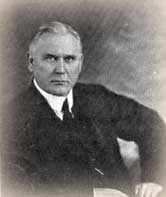
Famed Southern Baptist, George W. Truett George W. Truett was born on this day, May 6, 1867 on a farm in the mountains of North Carolina. He became one of the most popular boys in the county, equally handy on the farm, at his desk or sighting down a rifle barrel.

Several times as a child and then as a young man, George recognized his need for a savior from his sins. But he was nineteen before he went forward, "confessing Christ before all the people." That very night he began to urge his classmates to turn to Christ. Many did. He was baptized, joined the Baptist church and began to teach Sunday school. Not only that, but, to pay his way through college, the young man opened a school, which soon enrolled 300 students and employed three teachers! He preached. Those who heard him speak called him a second Spurgeon. He was offered a church, but turned it down. He had decided to move with his parents to Texas. And Texas is where he made his mark for Christ.

The local Baptist church at Whitewright Texas decided to ordain him. George protested, but "there I was against a whole church..." He was ordained, but as of yet held no church. Instead, the 23-year-old accepted the position as chief financial officer of Baylor University because, "people do what he asks them to do." The school was deeply in debt by the standards of the day. In 23 months, George eliminated the debt completely. Later he was offered the school's presidency, but he turned it down, preferring to pastor a church.

At 30, George became pastor of the First Baptist Church of Dallas, Texas. He had wanted to turn it down, but felt God was saying, "take it." During his 47 years of leadership, the church grew from 715 members to over 7,000. Even after it was remodeled, a thousand people might be turned away from the doors on a given Sunday. It was the largest membership in the Southern Baptist denomination, the largest membership in the world (at that time) and highly influential. Other than his excellent speaking, another source of growth was his training program for Sunday school teachers.

People hung on George's words. In one sermon, he said "Our cities saved means the salvation of civilization. Our cities lost means the corruption and destruction of civilization." He then went on to show that the family is the key to the city. "As goes the home, so will go the city. And I pause to say that the home is in peril and endangered now as it has not been in modern times. ...If people trifle with the home they are undermining the foundation of an enduring and worthy civilization...Put crepe on the door of your heart if things are wrong in the family. Put crepe on the door." He always preached for a decision.

George almost left the pulpit once, however. He accidentally shot and killed one of his closest friends, the chief of police, in a hunting accident. Praying and crying, he could not bring himself to preach again, until in a vision he saw Christ saying "You are my man from now on." The night that he returned to the pulpit, other churches closed their doors so that their members could go hear him preach.

On his seventieth birthday he wrote his wife a letter in which he said, "I would this day rededicate my all to Christ..." Although greatly honored in his life, none of it went to his head. He died in 1944 after a painful illness.
Resources
  1. Ezell, John S. "Truett, George Washington." Dictionary of American Biography.
  2. Perez, Joan Jenkins. "Truett, George Washington." http://www.tsha.utexas.edu/handbook/online/ articles/view/TT/ftr16.html.
  3. Reese, Ed. George Truett. Christian Hall of Fame Series, #10. Glenwood, Illinois: Christian Hall of Fame Series, 1975.
  4. Truett, George Washington. "The Highest Welfare Of The Home." http://www.bibleteacher.org/gwt_4.htm.
  5. Various other internet articles.
Read this article at -  http://www.christianity.com/church/church-history/timeline/1801-1900/famed-southern-baptist-george-w-truett-11630544.html

Demetrius Gallitzin, Apostle of the Alleghenies

Demetrius Gallitzin, Apostle of the Alleghenies If you had one of the largest fortunes in Europe, what would you do with it? Demetrius Gallitzin answered that question by putting it to use for God.
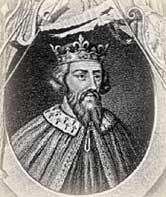
It is surprising that Demetrius learned to love God at all. Although his mother had been baptized as a child, she lost her faith at a young age when a tutor taught her atheism. As for Demetrius' father, he was an ambassador from Russia to European courts. He had been raised in the Orthodox Church, but in France he accepted the writings of Voltaire, Diderot and other Freethinkers, and sneered at Christianity. Demetrius was reared on these radical ideas.

But something stirred in his mother's heart. She re-examined the claims of Christianity and returned to her childhood faith. She began to plead with her son, to write him letters, and to pray for him. Demetrius finally made up his mind to study religious systems to see if any were worth following. As a result, he converted to Roman Catholicism. Ever afterward, he believed that this denomination held the only route to salvation.

The young man enlisted in the Austrian army, but political changes forced him out. His father advised him to study engineering in the United States, and so Gallitzin sailed to the new world.
There he was shocked to discover how few Catholics there were. At that time, laws discriminated against Catholics. Demetrius determined to build up the church. His Orthodox Church relatives were dead set against it, but he attended seminary and was ordained in 1795.

Gallitzin took over a small parish in Pennsylvania. It had only a dozen members. Gallitzen traveled, taught and worked without rest. He poured his fortune into buying lands for Catholic settlers and slogged across the Alleghenies carrying the gospel into the untamed heart of the continent. Because of this he is known as "The Apostle of the Alleghenies." His flock grew to 10,000 people.

Gallitzen also defended Catholics against accusations. He wrote in his Defense of Catholic Principles:"The main point to be explained now is, in what manner we believe that Jesus Christ has accomplished the redemption of man, We believe that Jesus Christ, in order to become a victim of propitiation for our sins, assumed human nature, which being united to his divine nature, formed one person. As God, he could not suffer: by becoming a real man, assuming a real human soul, and a real human body, he made himself liable to sufferings; and by being God, his sufferings became an infinite value, and of course adequate as a satisfaction [for man's sins]."

On one of his trips, Demetrius took a nasty fall, which left him with a double hernia. After that, he had to travel by sledge. Forty-one years after he began his work in America, he died on this day, Easter Sunday, May 6, 1840. In all those years, he never took a penny of salary even after Russia confiscated most of his fortune because he had converted to Catholicism.
Bibliography:
  1. Gallitzin , Demetrius A. A defence of Catholic principles, in a letter to a Protestant minister. London : W. E. Andrews, 1824.
  2. Heyden, Thomas. A memoir on the life and character of the Rev. Prince Demetrius A. de Gallitzin, founder of Loretto and catholicity, in Cambria county, Pa., apostle of the Alleghanies. Baltimore, J. Murphy, New York, Catholic Publication Society, 1869.
  3. Kittell, Ferdinand. "Demetrius Augustine Gallitzin." The Catholic Encyclopedia. New York: Robert Appleton, 1914.
  4. Various encyclopedia and internet articles.
Read this article at -  http://www.christianity.com/church/church-history/timeline/1801-1900/demetrius-gallitzin-apostle-of-the-alleghenies-11630457.html

The Crucial Battle at Ethandun

I consider Alfred the Great one of the preeminent figures in Christian and western history.  His focus on education, a Christian education that is, and his wisdom and courage in dealing with the Danish invaders makes him a keystone along the map of Christian history.
The Crucial Battle at Ethandun Ethandun. Dane versus Saxon. Pagan versus Christian. Guthrum versus Alfred. Battle Worm versus Elf Counsel. The battle which took place at Ethandun on this day, May 6, 878 ensured that Christianity would survive in England. As with every major battle, the events preceding and following Ethandun were as important as the battle itself. The battle was merely the nexus, the watershed, the moment of crisis.
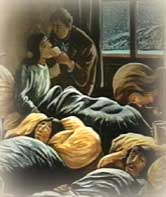
Alfred stood to lose everything. Vikings had attacked the British Isles for many years. Northumbria, East Anglia and Mercia had fallen. By 877 the kingdom of Wessex alone resisted the invaders. In a surprise winter attack, having sworn a false peace, Guthrum drove Alfred from his throne. It seemed the Danes had triumphed. They thought Alfred, like other nobles and kings, would flee overseas. Christianity would be forced underground. Civilization would take a beating. The Saxons would be slaves.

But Alfred didn't run. He hid on the Isle of Athelney in Somerset. When spring came, he sent out messengers, summoning the Anglo-Saxons to Egbert's Stone. The thanes responded, weeping for joy at seeing their king alive. They marched to confront Guthrum.

The armies met at Ethandun. Guthrum with his professional soldiers was the loser. He fled to his fortress at Reading. A few days later he surrendered. For once Alfred had sufficient arms and men to destroy his enemy. Instead, he baptized Guthrum and thirty of the pirate's earls. For twelve days he catechized these new converts in the peace of Christ then let them go away.

Guthrum kept peace, rising against Alfred only once. Alfred himself became the only English king called "Great." He built a new style ship which proved successful against the Danish long boats. An innovative system of forts allowed Alfred to field a permanent standing army while protecting the populace at home. With consummate diplomacy he tied Mercia to Wessex and brought Wales under Saxon authority. A wise treaty with the Danes reduced feuds. He revised the laws, building on Bible teachings.

Alfred is sometimes called the "father of the English language." War had destroyed Latin learning in England. Alfred saw that he could either preserve learning by utilizing the early English language or he could stick to Latin and watch learning founder. Deeply concerned for his people's souls, he chose to go vernacular. Scholars were in such short supply he had to import them. He himself learned Latin and spearheaded the drive to translate psalms, Gregory's Pastoral Care, Orosius' Geography, Boethius' Consolation of Philosophy, and several other works.

Because of Alfred, England possessed a native and wholly Christian literature long before other Western countries. He also updated and distributed the Anglo-Saxon Chronicle.
Bibliography:
  1. Alfred the Great: papers from the eleventh-centenary conferences. Editor Timothy Reuter. Aldershot, Hants, England; Burlington, VT: Ashgate, 2003.
  2. "Alfred" and "Asser." Dictionary of National Biography. Edited by Leslie Stephen and Sidney Lee. London: Oxford University Press, 1921-1996.
  3. Allen, John. One Hundred Great Lives. New York: Journal of Living, 1944.
  4. Asser. Life of Alfred. Various editions.
  5. Duggan, Alfred. The King of Athelney. London: New English Library, 1961. Novel.
  6. Duckett, Eleanor Shipley. Alfred the Great. University of Chicago Press, 1956.
  7. Kunitz, Stanley L. British Authors Before 1800; a biographical dictionary. New York: H. W. Wilson, 1952.
  8. Mapp, Alf J. The Golden Dragon: Alfred the Great and his times. La Salle, Illinois: Open Court, 1974.
  9. Plummer, Charles. The Life and Times of Alfred the Great; being the Ford lectures for 1901, by Charles Plummer ... With an appendix. Oxford, Clarendon Press, 1902.
Read this article at -  http://www.christianity.com/church/church-history/timeline/601-900/the-crucial-battle-at-ethandun-11629771.html

May 5, 2015

Hans Egede To Greenland

Hans Egede To Greenland On the west coast of Greenland, in the tundra zone about one hundred and fifty miles south of the arctic circle, a new colony was being built. Europeans had established a presence in Greenland as early as 980 under Eric the Red. Severe winters and the problems of maintaining trade caused the colony to perish 400 years later. Now, in 1722, the Danes were reestablishing their presence. The leader of the expedition was not a Dane, however. He was a tough-skinned Norwegian. More to the point, he was a Christian missionary.
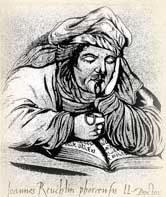
Protestantism was slow to develop a missionary consciousness and commitment. The little nation of Denmark was among the first Protestant countries which recognized the urgency of spreading the gospel. It's leaders founded a mission school in 1714. Among the missions-minded was their ruler, the good king Frederick IV. Having come under the influence of Pietism, he strongly supported Danish missions, including the Greenland project. On this day, May 3, 1721, Hans Egede sailed with his wife Gertrude for the inhospitable regions of the world's largest island.

Greenland is a harsh land. No settlement is possible except along the coasts, for the interior of the world's largest island is ice-covered year round. In spite of all its ice, Greenland's northern regions are more arid than the driest Sahara, receiving less than five inches of rain a year. The southern coasts receive 30 inches a year. There grasses grow and some trees: alder, birch and willow. Hans Egede found both winter and summer beautiful despite the low average temperatures and pale sun that never rises high in the sky.

In 1722 he founded a colony and named it Godthåb. Known as Nuuk today, it is capital of the nation. From this base he preached to the Eskimos, but saw few indications of success. Superstition ran deep in these hardy Indians and they could not be weaned from the words of their angakut (soothsayers). The problems of teaching Christianity were compounded by Egede's difficulties mastering the Eskimo language. It seemed to have few words with which to express Christian concepts. Despite this, he attempted to produce a translation of the New Testament. Adding to all these barriers was his own temperament, which tended to be harsh and overbearing. He dearly loved the people, but like many Christians, did not know how to express this in human terms.

That changed in 1733 when a smallpox epidemic swept the island. Hans and his wife poured themselves heart and soul into caring for dying Greenlanders. "You have been kinder to us than we have been to one another," exclaimed one. Gertrude so exhausted herself in the effort that she died a short time later. Hans returned to Denmark in 1736.

His son Paul, raised among the Eskimos, took over the work, mastered the language, completed the translation, and witnessed revival. His father rejoiced to see him reap where he had sown.
Bibliography:
  1. "Egede, Hans." The Oxford Dictionary of the Christian Church. Edited by F. L. Cross and E. A. Livingstone. Oxford, 1997.
  2. Lives of missionaries, Greenland: Hans Egede; Matthew Stach and his associates. London, Society for Promoting Christian Knowledge, 186 -.
  3. Neill, Stephen. A History of Christian Missions. The Pelican History of the Church #6. Hammondsworth, Middlesex, England: Pelican Books, 1964.
  4. Fleisher, Eric W. & Jürgen Weibull. Viking Times to Modern; the story of Swedish exploring & settlement in America, and the development of trade & shipping from the Vikings to our time. Minneapolis, University of Minnesota Press, 1954; p. 143.
Read this article at -  http://www.christianity.com/church/church-history/timeline/1701-1800/hans-egede-to-greenland-11630202.html

An Admission about Charles Finney


McIlvaine title page

Introduction

When Charles Finney became a Christian he abandoned his law studies and turned to evangelistic preaching instead. He emphasized intensive preparatory prayer, direct calls to listeners to repent and change the direction of their lives, daily meetings, and “anxious benches” for those in fervent prayer for their salvation Half a million people confessed Christ in his meetings. Because of his insistence that people could get right with God if they chose to, Finney was accused of teaching Arminianism at the very least if not Pelagianism (the idea that people can choose the good without Divine assistance). He also generated controversy by teaching that Christians can become sinless here and now (up to their knowledge). And, his “moral theory” of the atonement was considered heresy by some theologians, who consequently refused to have anything to do with him. J. H. McIlvaine (Joshua Hall McIlvaine, a prominent pastor, educator, and author) had been an opponent, but later changed his mind and wrote the following letter on this day, 4 May, 1890:

Quote

“In answer to your note of March 29th inquiring for particulars of Mr. Finney’s labors in Rochester while I was there, I am happy to say that I regard them as connected with the greatest work of grace I have ever seen in any of the churches. I was not in sympathy with it at the time, and would not admit Mr. Finney into the pulpit of the First Church, of which I was then pastor; but I have long been convinced that I was totally wrong, and have since taken occasion to say so to the church itself. During the revival Rochester rocked to its foundations. Great numbers of hopeful converts were added to all the churches during his labors. You are at liberty to make what use of these statements you please.”

Source

Wright, G. Frederick. Charles Grandison Finney. Oberlin, OH: 1891.

Apr 26, 2015

Reuchlin Found Not Guilty

Reuchlin Found Not Guilty To Johann Reuchlin, Luther owed the Hebrew grammar for his Bible translation. A man of lowly birth, Reuchlin's talent for singing brought him to the attention of the Margrave of Baden who made him a companion of his son. In love with learning, the singer seized every opportunity his new position afforded to educate himself. Languages were his forte. He wrote the first Latin dictionary to be published in Germany and a Greek grammar. Hebrew was his dearest love. He ferreted out the rules of Israel's ancient language by study of Hebrew texts and converse with every rabbi who appeared within his range. His authority became widely recognized.
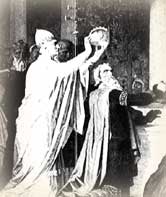
Reputation was nearly the cause of his ruin. A converted Jew and a Dominican inquisitor extracted from Emperor Maximilian an order to burn all Hebrew works except the Old Testament, charging they were full of errors and blasphemies. Before the edict could be carried out, the Emperor had second thoughts and consulted the greatest Hebrew scholar of the age: Reuchlin.

Reuchlin urged preservation of the Jewish books as aids to study, and as examples of errors against which champions of faith might joust. To destroy the books would give ammunition to the church's enemies, he said. The emperor revoked his order.

The Dominicans were furious. Selecting passages from Reuchlin's writings, they tried to prove him a heretic. Possibly he was. He seemed to expect salvation through cabalistic practices rather than relying totally on Christ's atoning blood. The inquisition summoned him and ordered his writings burnt. Sympathetic scholars appealed to Leo X. The Pope referred the matter to the Bishop of Spires, whose tribunal heard the issue. On this day, April 24, 1514, the tribunal declared Reuchlin not guilty. It was a great victory for freedom of learning.

The Dominicans were not so easily brushed off. They instigated the faculties at Cologne, Erfurt, Louvain, Mainz and Paris to condemn Reuchlin's writings. Thus armed, they approached Leo X. Leo dithered. Should he win applause from scholars by protecting the Jewish books, or placate the clerics? He appointed a commission. It backed Reuchlin. Still Leo hesitated. At last he decided to suspend judgment. This in itself was a victory for Reuchlin. The cause of the embattled scholar became the cause of the innovators. Reuchlin's nephew, Melanchthon, rejoiced. Erasmus praised him.
In 1517 Luther posted his 95 theses. "Thanks be to God," said the weary Reuchlin. "At last they have found a man who will give them so much to do that they will be compelled to let my old age end in peace." Thanks to Reuchlin, the Talmud and Kabbala were preserved. Although he died a broken man, freedom for academic production was strengthened because of his ordeal. Soon his studies formed the basis for better translations of the Old Testament. Furthermore, his influence assured Melanchthon a position among the learned and a place in the Reformation.
Bibliography:
  1. Hirsch, Samuel A. Book of Essays. Macmillan, 1905.
  2. Loeffler, Klemens. "Johannes Reuchlin." The Catholic Encyclopedia. New York: Robert Appleton, 1914.
  3. Manschreck, Clyde Leonard. Melanchthon, the Quiet Reformer. New York, Abingdon Press, 1958), especially 24, 25.
  4. Mee, Charles L., jr. White Robe, Black Robe. New York: Putnam, 1972; p. 154ff.
  5. "Reuchlin, Johannes." The Oxford Dictionary of the Christian Church. Edited by F. L. Cross and E. A. Livingstone. Oxford, 1997.
  6. Rummel, Erika. The Case against Johann Reuchlin: religious and social controversy in sixteenth-century Germany. Toronto: University of Toronto Press, 2002.
Read this article at -  http://www.christianity.com/church/church-history/timeline/1501-1600/reuchlin-found-not-guilty-11629914.html

Leo III Attacked in a Procession

Leo III Attacked in a Procession Paschal the Primicerius, a nephew of Pope Adrian I was a sore loser. He wanted to be pope, but in 795, Leo was installed instead. With his cronies, Paschal plotted a cruel revenge. On this day, April 25, 799, as Leo walked in the procession of the Greater Litanies (a form of chanted prayer and responses on St. Mark's Day), armed men attacked him.
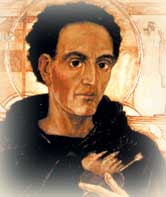
They scattered the procession and set upon Leo, stabbing his eyes and attempting to cut out his tongue. Leo fell bleeding in the street. The ruffians then dragged him to the chapel of St. Sylvester and jabbed at his eyes again. Finally they left him in the monastery of Erasmus.
Miraculously, Leo recovered sight and the use of his tongue. Friends helped him escape from the monastery and eventually he worked his way over the Alps to the court of Charlemagne. The King of the Franks received Leo sympathetically and returned him to Rome under the protection of his own officials. The Romans cheered.

Paschal's men leveled wild accusations at Leo. Leo asked the bishops to try him. They refused, and so he swore in St. Peters that he was innocent of the charges. Charlemagne ordered the conspirators executed, but Leo, remembering Christ's command to forgive our enemies, pleaded for their lives. In the end, they were merely exiled.

While Charlemagne lived, he and Leo maintained a close working relationship, probably the best ever between the Franks and the popes. The following Christmas Day, as Charlemagne knelt in St. Peter's, Leo placed a jeweled crown on his head. The assembly shouted: "To Charles, the most pious Augustus, crowned by God, to our great and pacific emperor life and victory!"

By crowning Charlemagne, Leo was in effect claiming that emperors receive their authority from the church, a proposition which would be sorely tested in coming centuries. However, Charlemagne protected Leo, and the two worked together to maintain the peace of Italy and, indeed, to some extent of the entire Mediterranean world. Charlemagne also gave Leo rich treasures from his conquests, with which the pope beautified Rome and assisted the poor.

After Charlemagne died, Leo's enemies resurfaced. Again they plotted against him. This time Leo found out about it early enough to arrest the conspirators before they could attack.

Had the years hardened Leo? This time there was no leniency: he had them executed.
Bibliography:
  1. Brusher, Joseph Stanislaus. Popes through the Ages. Princeton, N. J.: Van Nostrand, 1959.
  2. De Rosa, Peter. Vicars of Christ; the dark side of the papacy. Dublin: Poolbeg Press, 2000, pp. 45-46.
  3. Durant, Will. The Age of Faith. Part IV of the Story of Civilization. New York: Simon and Schuster, 1950, especially pp. 468-469.
  4. Lea, Henry C. Studies in Church History. Philadelphia: Henry C. Lea; London: Samson, Low, Son, & Marston, 1869, pp.34,35.
  5. "Leo III, St." The Oxford Dictionary of the Christian Church. Edited by F. L. Cross and E. A. Livingstone. Oxford, 1997.
  6. Mann, Horace K. "Pope St. Leo III." The Catholic Encyclopedia. New York: Robert Appleton, 1914.
  7. Montor, Chevalier Artaud de. Lives and Times of the Popes. New York: Catholic Publication Society of America, 1909.
  8. Various encyclopedia and internet articles.
Read this article at -  http://www.christianity.com/church/church-history/timeline/601-900/leo-iii-attacked-in-a-procession-11629757.html

Augustine of Hippo Raised to New Life

Augustine of Hippo Raised to New Life And we were baptized and all anxiety for our past life vanished away." With these joyous words Augustine recorded his entrance into the church on this day, April 25, 387, Easter day.
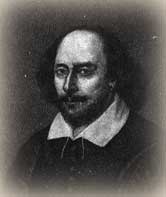
He had been 33 years in coming to this public confession of Christ. Born in North Africa in 354 of a Christian mother and pagan father, Augustine became at twelve years of age a student at Carthage and at sixteen, a teacher of grammar. At this young age, he was already promiscuous. And he tells in his famous autobiography that he boasted of sins he had not had opportunity to commit, rather than seem to have fallen behind his peers in wickedness.

His mother was determined to see him converted and baptized. He was equally determined to have his pleasures. He took a mistress and she bore him a son, Adeodatus, "Gift of God." For a while he resented the lad but soon became inseparable from him. At 29 his restless spirit drove him to Italy. His mother determined to accompany him so that her prayers might be reinforced by her presence. Augustine gave her the slip, sailing while she knelt praying in a chapel.

In Rome he taught rhetoric for a year, but was cheated of his fees. And so he looked for a more fertile field of labor and settled on Milan. His mother caught up with him and prevailed upon him to attend the church of St. Ambrose. Christian singing moved him deeply. In spite of himself he began to drift toward faith. He found the writings of the Apostle Paul deeply stirring and more satisfying than the cool abstractions of philosophy. He wrestled with deep conviction but was unable to yield himself to God, owing to his attachment to the flesh.

Finally he reached a day when his inner vacillations were too great to ignore. He tried reading scripture but abandoned the effort. Unable to act on the truth he knew, he began to weep, and threw himself behind a fig tree. "How long, O Lord," he cried. And his heart answered "Why not now?" A child's sing-song voice came clearly to him, repeating over and over, "Take it and read it." It seemed a message from God. He snatched up the Bible and read Paul's words, ". . .not in orgies and drunkenness, not in sexual immorality and debauchery, not in dissension and jealousy. Rather, clothe yourselves with the Lord Jesus Christ, and do not think about how to gratify the desires of the sinful nature." Faith flooded in upon him. He immediately thrust aside those sins of the flesh which had held him in thrall for so long.

"But this faith would not let me be at ease about my past sins, since these had not yet been forgiven me by means of your baptism." He entered the water and was relieved. At his mother's death, he returned to Africa where he founded a monastery, became bishop of Hippo and a brilliant and prolific theologian who more than any other stamped his imprint upon the Medieval church.
Bibliography:
  1. Aland, Kurt. Saints and Sinners; men and ideas in the early church. Philadelphia: Fortress Press, 1970.
  2. Augustine, St. Confessions. Various editions.
  3. -----------------. City of God. Various editions.
  4. -----------------. On True Religion. Various editions.
  5. "Augustine, St." Dictionary of Scientific Biography. Edited by Charles Coulston Gillispie. New York: Scribner's, 1970.
  6. Bowie, Walter Russell. Men of Fire. New York: Harper and Brothers, 1961.
  7. Copleston, Frederick. A History of Philosophy. London: Burn, Oates & Washbourn, 1951 - .
  8. D'Souza, Dinesh. The Catholic Classics. Huntington, Indiana: Our Sunday Visitor, 1986.
  9. Dunham, James H. The Religion of Philosophers. Freeport, New York: Books for Libraries Press, 1969, 1947.
  10. Portalie, Eugene. "Augustine, Life of Saint." The Catholic Encyclopedia. New York: Robert Appleton, 1914.
  11. Runes, Dagobert D. A Treasury of Philosophy. New York: Philosophical Library, 1945. p. 71.
  12. Russell, Bertrand. Wisdom of the West. New York: Fawcett, 1964.
Read the rest of this article at -  http://www.christianity.com/church/church-history/timeline/301-600/augustine-of-hippo-raised-to-new-life-11629683.html

William Shakespeare - To Exist, or not Exist

Did he exist?  Did he actually write the plays and poems attributed to him?  Maybe...or maybe not...
William Shakespeare To be or not to be -- that is the question."
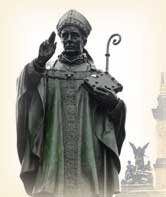
"My words go up, my thoughts remain below Words without thoughts ne'er to Heaven go."
uotes and phrases of William Shakespeare, the greatest of all English writers have become part and parcel of our culture and speech, but much about the man's life and beliefs remains mysterious. Even the date of his death is not certain, although it is generally thought that he died on this date, April 23, 1616. This would have been almost on Shakespeare's 52nd birthday (he was baptized the 26th of April, 1564 probably a few days after his birth).

Was Shakespeare a true Christian? Some of the anecdotes about his life make that doubtful. Nonetheless, a month before his death, he wrote his will, which he concluded by saying, "I commend my soul into the hands of God my Creator, hoping and assuredly believing through the only merits of Jesus Christ my Saviour to be made partaker of life everlasting."
He instructed that his tombstone to be inscribed:
"Good friend, for Jesus' sake forbear
To dig the dust enclosed here.
Blessed be the man that spares these stones,
And cursed be he that moves my bones."
Shakespeare also seems to have been a faithful member of the Church of England. Though he never wrote a play on a Biblical story, the Bible and the Book of Common Prayer were the most frequently quoted sources in his work. He quotes or alludes to passages from at least 42 books of the Bible; and phrases from the morning and evening prayers in the Book of Common Prayer are frequent. Of the books of the Bible, Shakespeare quoted from Matthew 151 times and from the Psalms 137 times.
Some have speculated that the King James Version of the Bible contains a cryptogram for Shakespeare. If you look at the 46th psalm in the King James translation, the 46th word from the beginning is "shake" and the 46th word from the end is "spear." Interestingly, Shakespeare was 46 when the translation was made in 1610! Did Shakespeare help with the translation work? There is no serious basis for such conjecture.

Indeed, there is serious scholarship that argues that Shakespeare did not even author the works attributed to him. One way or the other, Shakespeare took his secrets (spiritual and otherwise) to the grave with him when he died around this date almost 400 years ago.
Bibliography:
  1. Adapted from an earlier Christian History Institute story.
  2. Garrison, Webb. Strange Facts About the Bible. Nashville: Abington Press, 1968.
  3. Michell, John. Who Wrote Shakespeare? London: Thames and Hudson, 1996.
  4. "Shakespeare, William." Encyclopedia Britannica. Encyclopedia Britannica, 1968.
Read this article at -  http://www.christianity.com/church/church-history/timeline/1601-1700/william-shakespeare-11630064.html

Dead Adalbert Worth His Weight in Gold

Dead Adalbert Worth His Weight in Gold The first known missionary to the Prussians was Bishop Adalbert of Prague. His work in Prussia followed years of fruitless labor in his native Bohemia. Paradoxically, it was only by leaving his own people that he won them.

Born a Vojtech, Adalbert was related to the princely Slavniks. He took Adalbert as his name at confirmation in honor of an archbishop who had supervised his education. Prague's first bishop had been German. On the death of the German, the talented and devout Adalbert replaced him. With great energy and austerity, he set out to reform the clergy and eliminate pagan practices. He sought to extend the range of Christianity among his people. Many pagans clung to their old ways which were nationalistic. Among these was Duke Boleslav of Bohemia. These opposed Adalbert's reforms.
In the end Adalbert's opponents drove him into exile. He entered a Benedictine Abbey in Rome. Four years later, he heeded an invitation to return to Prague. He soon wished he hadn't. Resistance again mounted, and he gave up the fight as a lost cause. A sneak attack by Duke Boleslav wiped out the Slavnik family.

If he could not preach at home, Adalbert would go to other fields. He determined to advance the gospel one way or another. Under the protection of Emperor Otto III, he traveled into Germany, intending to extend his work among the Poles and Magyars. Poland's King Boleslav I invited him to bring the gospel to the Prussians of the Northern coast. Adalbert responded favorably.

In such esteem did the good king hold Adalbert, he made him archbishop of Gnesen. Adalbert proceeded to preach the gospel throughout Poland and to the Prussian shores. This labor of love cost him his life. A pagan priest, jealous, no doubt, for his own prerogatives, murdered him on this day April 23, 997.

King Boleslav I determined to have the martyr's body back. The pagans agreed--on one condition. Boleslav must pay them Adalbert's weight in gold. The King did not hesitate and the missionary's body was brought to him.

Bohemia, which had rejected the martyr while he lived, now clamored for his relics which were reputed to possess miraculous powers. Poland agreed, but stipulated that Bohemia must accept the reforms Adalbert had tried so fruitlessly to introduce while he was bishop among them. The Bohemians accepted these terms and the Roman Catholic ordinances were established.

Adalbert's influence was not yet spent. Moved by the account of the old bishop's death, a young man determined to carry on his work. Ten years later the Prussians murdered St. Bruno of Querfort also. Men like Adalbert and Bruno gave the Medieval Roman church its truest greatness.
Bibliography:
  1. "Adalbert of Prague." New Catholic Encyclopedia. New York: Thomson, Gale, 2002.
  2. Baring-Gould, Sabine. Lives of the Saints, Vol 4. Edinburgh: J. Grant, 1914.
  3. Peake, Elizabeth. History of the German Emperors and Their Contemporaries. Lippincott, 1874.
  4. Various encyclopedia and internet articles.
Read this article at -  http://www.christianity.com/church/church-history/timeline/901-1200/dead-adalbert-worth-his-weight-in-gold-11629777.html