And they overcame him by the Blood of the Lamb, and by the word of their testimony, and they loved not their lives unto death. (Rev. 12:11)
Watch, and pray
I have heard that the opening lines of the “Hallelujah” Chorus are the most recognizable piece of music the world over.
Of
course, the “Hallelujah” Chorus comes from “Messiah,” an oratorio (a
sacred opera) by George Frederick Handel. The whole work is heavenly,
and its highlight is the “Hallelujah” Chorus. (Sometimes, I view
“Messiah” as the zenith of Western civilization.)
I
remember when the millennium change-over first hit on January 1, 2000
(although geeks like to say technically the first day of the millennium
was January 1, 2001). In one far eastern country’s time zone after
another, people the world over were celebrating the new year, the new
century, the new millennium.
As I recall watching
television of the celebration, the one song that I heard more than any
other on that day, from various countries, was the “Hallelujah” Chorus.
It is universally loved.
Within months of the Berlin
Wall coming down, Pepsi had a beautiful TV commercial celebrating the
historic event. The piece they chose for that spot was the “Hallelujah”
Chorus. It worked perfectly.
There’s something deeply touching about that piece of music.
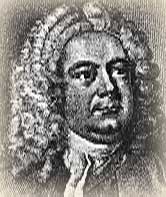
By the time he was twelve, Handel wrote his first work.
Later, after his father’s death, he tried to study law, but he had no interest. So he studied music at the University of Halle.
In 1712, Handel moved to England and never returned to Germany.
While
he experienced various successes through various compositions,
including operas and sacred operas (oratorios, based on biblical
themes), Kavanaugh notes that his failures threatened to overwhelm
Handel: “His occasional commercial successes soon met with financial
disaster… He drove himself relentlessly to recover from one failure
after another, and finally his health began to fail. By 1741 he was
swimming in debt. It seemed certain he would land in debtor’s prison.”
But
1741 proved to be the turning point. On the one hand, he gave what he
feared was his farewell concert. On the other hand, a friend of his,
Charles Jennens, gave him a libretto (a text) for a sacred work. It was
essentially 73 Bible verses, focused on the Messiah, both from the
Hebrew and the Christian Bible. Furthermore, a charity in Dublin paid
him money to write something for a charity performance.
“Messiah” was the result, and it was very successful.
It’s
interesting to note in this year, 2011, the 400th anniversary of the
King James Version of the Bible, that Handel’s work was impacted by that
literary masterpiece. Every word of “Messiah” comes from that book.
Oxford professor Alister E. McGrath wrote, “Without the King James Bible, there would have been no Paradise Lost, no Pilgrim’s Progress,
no Handel’s 'Messiah,' no Negro spirituals, and no Gettysburg Address.
These, and innumerable other works were inspired by the language of this
Bible.”
Charles Jennens’ role in this masterpiece is
often lost, even on fans of “Messiah.” He is the one who carefully
gleaned through the King James Bible and assembled the verses about the
Christ that Handel so brilliantly set to music.
I
count that 42 of the verses come from the Old Testament, including many
passages from the Psalms and Isaiah. Thirty-one come from the New
Testament.
“Messiah” was first performed in Dublin in
1742. It was a benefit concert for charity. According to one source,
proceeds freed 142 men from debtors’ prison.
A year
later, King George II was present at the first performance of “Messiah”
in London. Is it said that the monarch fell asleep, and at the opening
of the “Hallelujah” Chorus, he rose to his feet, thinking it was his
cue. Whatever the reason, he stood, and that has been the custom ever
since—to stand during the “Hallelujah” Chorus.
About
100 years later, even the aged Queen Victoria, who sat in her wheelchair
as the chorus began, struggled to her feet as the choir sang, “King of
kings and Lord of lords.” She said, “No way will I sit in the presence
of the King of kings.”
So out of one genius’s pain and
low point in his life came a work of beauty that continues to uplift
millions of people the world over. Kavanaugh notes the secret of
Handel’s success, “He was a relentless optimist whose faith in God
sustained him through every difficulty.”
One of the greatest pieces of Christian music ever written, by anyone, at any time in history. If you haven't heard it, please take the time to check it out. Stunningly beautiful and exceptionally well-written, using scripture in every piece.
At twelve noon, on this date, April 13,
1742, the world first heard the lovely overture, memorable arias
and majestic choruses of the most famous oratorio ever written. There
has not been a year since then that George Frederick Handel's
Messiah has not been performed in concert halls around the
world. Usually it appears in numerous halls.
The performance took place in Dublin, in the Fishamble Street Musick
Hall. Dubliners received it with enthusiasm. "...the best judges
allowed it to be the most finished piece of music," wrote the
Dublin Gazette. "Words are wanting to express the exquisite delight
it afforded..." Two performances were given. Two years later,
annual performances were established in Dublin. London did not receive
the oratorio as readily. Criticized, it did not catch on there until
1749.
Handel had turned to oratorios, most of them on religious themes,
after opera failed him. Messiah was special even within its
genre. The composer deliberately wrote it so that it could be performed
by as few as four singers with strings, continuo, two drums and two
trumpets. The idea was to produce a work which could be staged anywhere.
Handel was often near destitution, and a piece like Messiah, which
could be performed by small ensembles, offered him opportunities to
raise desperately needed cash.
The text, by Charles Jennens, pulled together fragments of scripture
relating to Christ. The power of the scriptures came by laying them
forth almost as translated (he used more than one translation where it
suited his purpose) and joining them so that they built on and clarified
one another without comment. Old and New Testament passages were placed
beside each other where a relationship existed. Where Jennens modified
passages, he did so to make them scan better and to keep the texts in
the third tense throughout. Handel, although a rough-tongued man,
claimed to know the Bible as well as any bishop and made a few
alterations himself. Jennens, a devout Anglican, intended through his
libretto to challenge the Deists who denied Christ's divinity: "And
his name shall be called Wonderful, Counselor, the Mighty God, the
Everlasting Father, the Prince of Peace."
He succeeded in his intent, for Messiah
portrays Christ as Son of God, the fulfillment of prophecy, Savior of
the world, and coming King. John Newton, slaver turned clergyman,
preached fifty sermons on the text. Although Newton preached his series
as a rebuke to those who glorified the music above God's word, he said
that it comprehended all the principle truths of the Gospel. That
Jennens fused the words together without once backtracking or repeating
a passage demonstrates the perfectionism which made him a fussy
person.
Handel united the whole into a magnificent artwork, writing the work
in twenty-three fervent days, despite having already suffered a stroke.
The music often rises to great loveliness and power. Passion builds
until the climactic Hallelujah chorus. Of this chorus, Handel said in
his broken English, "I did think I did see all heaven before me and
the great God himself!"
Bibliography:
Barne, Kitty. Introducing Handel. New York: Roy, 1960.
Flower, Newman. George Frederick Handel, his personality and his
times. New York: Scribners, 1948.
Grout, Donald J. A History of Western Music. New York: W.
W. Norton, 1960.
Grove, Sir George, ed. "Handel, George Frederick." New
Grove Dictionary of Music and Musicians. London: Macmillan
Publishers; Washington, D.C.: Grove's Dictionaries of Music, 1985,
1980.
"Handel, George Frederick." Dictionary of National
Biography. Edited by Leslie Stephen and Sidney Lee. London: Oxford
University Press, 1921 - 1996.
Scholes, Percy Alfred. "Handel, George Frederick." In
The Oxford Companion to Music. Editor John Owen Ward. London,
New York: Oxford University Press, 1970.
Society for the Diffusion of Useful Knowledge (Great Britain).
Portraits of Eminent Men, of Various Ages and Nations, with
Memoirs. London: C. Knight, 1845.
Ruoff, Henry W. Masters of Achievement. Buffalo, New York:
Frontier Press, 1911.
Zoff, Otto, Editor. Great Composers Through the Eyes of Their
Contemporaries. New York: Dutton, 1951.
Various encyclopedia articles and books on music appreciation
Read this article at - http://www.christianity.com/church/church-history/timeline/1701-1800/hallelujah-handels-masterpiece-11630238.html
“To be human is to worship.” Those are the opening words of Daniel Block’s excellent new book on worship, For the Glory of God. Men and women are inveterate worshippers. Paul makes this clear in Romans 1. Even those who reject the plain knowledge of God which can be perceived within the created order do not cease worshiping. Rather they simply begin worshipping created things instead of the Creator (Rom 1:18ff). Given that we all worship and that our hearts tend to be deceptive, it is vital that our worship be shaped by what God has made clear in His Word rather than by personal opinions, past experiences, or intuitions.
While not an exhaustive list, the following 7 points help us think more biblically about worship: 1. Worship is to be regulated according to Scripture.
It matters to God how His people worship Him. Form matters. Just ask Nadab and Abihu. We are never invited to worship God in ways that seem right to us. Scripture never calls us to do what “feels right” in God’s presence. Rather, God’s Word makes quite clear those elements of which our worship should consist. They are the preaching of His Word, music and singing, the reading of Scripture, prayer, tithes and offerings, confession of sin, and the sacraments (baptism and the Lord’s Supper).
In a day when many Christians operate as spiritual entrepreneurs, it is important to remember that we do not decide how to come to God (or “connect,” “experience,” “encounter” or whichever word is popular). To quote Block once more: “[The] goal of authentic worship is the glory of God rather than the pleasure of human beings, which means that forms of worship should conform to the will of God rather than to the whims of fallen humanity” (p. 6).
2. Worship is the response to God’s self-revelation.
We worship God in response to that which he has revealed about himself. Christianity is a revealed religion. That is we cannot intuit the gospel or those attributes of God not clearly visible in the created order. In this way we are dependent upon the Scriptures to truly know and worship God. This is why God has made the proclamation of his Word central to worship.
3. Worship may be accompanied by affections but not guided by them.
I wonder what is meant by statements like, “The worship was great”? I’m not trying to be picky here but we can tell what we believe about a thing from the things we say about it. It seems to me that the way we evaluate worship often has less to do with its adherence to God’s stated will and more to do with the depth of affections (emotions) that we feel. Certainly our worship of God ought to engage the affections. But we must always remember that emotions are tricky things susceptible to manipulation and misguidance.
4. Worship should not be governed by pragmatic concerns.
If there is an unofficial religion among evangelicals today it may well be pragmatism. It’s the idea that if it works, then it must be good. If it grows our church, if it attracts young families, if it appeals to millennials, if it produces the right emotions then it is good. But the church’s worship must never be governed by such concerns as church growth, the preferences of unbelievers, attraction to a preferred demographic, or our subjective experience.
5. Worship is for God.
While we are generally careful not to say so, there seems to be a tendency to treat worship as something which is for us. Don’t misunderstand. There are great blessings to be had in worshipping God. What is more, God does not require our worship as though he needs something from us (Acts 17:22-25). Rather, God calls us to worship him because of His essential worthiness. God demanded the release of his people from Egypt that they might worship Him (Ex 5:1). The Psalms repeatedly call upon the people of God to worship the Lord because of who he is and what he has done. We worship God because it is always right for the creature to worship the Creator.
6. Worship is not meant to facilitate mystical encounters with God.
Based on some of the comments responding to my previous article on worship (Is Your Church Worship More Pagan than Christian?), it is clear that many Christians believe that music and worship play a mediatorial role in our relationship with God. But worship does not bring us to or otherwise facilitate an encounter with God. Certainly we worship just as we live coram deo (before the face of God). Jesus, by his dying and rising, has brought us to God. For all of the opining on this issue, I have yet to see anything in Scripture that tells us that music brings us to God. Jesus our Great High Priest has brought us near to God and he requires no further assistance.
7. Worship and obedience are inseparable.
The Bible does not separate persons from their deeds. Neither does the Bible separate worship from obedience. The primary evidence of what is in the heart is not our words or emotions but our deeds. In his parable of the Vine and Vinedresser (Lk 13:6-9) Jesus teaches that branches that do not produce fruit are tossed into the fire. This principle is established by God in the form of covenant blessings and curses (Lev 26; Deut 28). God’s moral law (the 10 Commandments) may be properly understood as a call to live all of life for the glory of God.
Todd Pruitt serves as Lead Pastor of Covenant Presbyterian Church in Harrisonburg, VA and blogs regularly at Ref21 and 1517. Raised a Southern Baptist, he is a graduate of Midwestern Baptist Theological Seminary in Kansas City. He, along with Carl Trueman and Aimee Byrd, hosts the podcast Mortification of Spin. Todd and his wife Karen have three children.
To pay homage to the town they love and to celebrate their 130 anniversary Sabadell Bank in Spain delighted the townspeople with an incredible symphony flash mob. Watch as they play Beethoven's Ninth Symphony and sang Ode to Joy, filling up the town with joy and beautiful music!
I grew up in Southern Baptist churches, and for all of their imperfections, the hymns have remained with me, in my darkest and brightest hours. They hymns, classics all, are engraved in my mind, holy reminders of worship, praise and glorifying Jesus Christ, Lord of Lords and King of Kings. And this sounds so much like the end of the old services...however you choose to worship the Lord. Whatever songs, whoever sings them, worship Him tonight. Glorify Him for Who He Is, and all that He has done for you. Blessed be the name of the Lord.

 At twelve noon,