Showing posts with label Philosophy. Show all posts

Apr 15, 2016

Numbers Prove God

Jay Dyer from Jay's Analysis wrote this article and it's compelling.  While I would not agree with all of his philosophical assumptions, it's still good stuff.  See what you think...

The Divine is the highest of Infinities.

By: Jay Dyer

When considering the question of “proofs” for the existence of God, the history of argumentation has often been lacking.  The dialectical relationship of the empirical/materialist tradition debating with the idealist/Platonic tradition is a perennial feature of the history of western philosophy.  Modern “New Atheists,” for example, are eager to pounce on flaws in the so-called “classical proofs,” as if these were the b-all, end-all of the question of rational certainty for the divine.

The chief problems with the “classical proofs” are that: 1) They do not prove what they set out to prove insofar as they are (classically) based on an empirical theological method that stems primarily from Aquinas, 2) The arguments themselves are non sequitur, where the starting points of the proofs do not logically necessitate the conclusions, and 3) The philosophical and theological assumptions implicit in the arguments are not consistent with the theological beliefs about God in the biblical system.  These three majors flaws have led to centuries of debates that were often fruitless and have allowed overly confident pseudo-philosophers and “scientists” to presume that these matters are bound up with medieval superstitions that were heroically suppressed and refuted by the rationalists of the Enlightenment era.

Ironically, this narrative itself is a modern mythos presented by the “New Atheists” and the average run-of-the-mill academicians.  The modern materialist apologists are themselves buried in a faux dialectic that ignores, suppresses and misses the real issues at hand.   It should also be remembered that ancient and medieval thinkers had not asked questions that would later be raised, and in particular, I’m thinking of more foundational philosophical questions that never entered the mind of the medieval man.  Areas of philosophy and physics that developed in the modern world, like subatomic research, phenomenology and linguistic and semiotic research were not within their purview (obviously).

With such being the case, we can assess that the classical proofs are not necessarily terrible, but flawed due to the fact that they were posited with certain presuppositions.  But what happens when, over time, philosophy and science (and theology) questions those assumptions, and asks how do we make sense of these principles themselves.   For example, all medieval thinkers utilized Ancient Greek principles of logic and geometry.   Numbers, logic, and geometric forms were assumed to be the case: It never entered Roger Bacon’s or Photios of Constantinople’s mind to ask, “How is it possible for logic and numbers to be.”

In other words, the medieval mind didn’t consider things from a meta perspective.  There is logic, but what about metalogic?  Logic functions, but is there a higher level logic to logic?  What are the necessary conditions for the possibility of logic to be at all?  One could probably trace out a deeper connection between the artistic forms that were created in different periods and the development of 3d perspectivalism on a 2d surface, compared with the philosophical and scientific questions that began to be asked in that period.  Were the developments in optics and the study of light influential on the Renaissance portrayal of 3d perspectives?  I’m sure they were.   However, it had not entered the mind of medieval man to think in meta or transcendental categories.

It is true that ancient and medieval man posited transcendental arguments: Aristotle presents one for the law of non-contradiction, as well as filling out a more specific consideration of the different categories, which do match up in certain ways to Kant’s categories, so it’s not correct to say the medievals had no idea of what a “transcendental” was, or what a transcendental kind of argument was.   It is correct to say they did not consider the various sciences and arts from the perspective of how they are possible – what the necessary conditions for the possibility of those things to be were.  When the secular scientistic revolution occurred asking a lot of these questions, western Theism marched confidently along professing the same old, tired arguments that were unprepared to meet the level of questioning the revolutionaries were asking.  Western theology was ill-equipped due to its own assumptions about God’s existence being strictly the same as His essence, Actus Purus, an absolutely simple monad, with all human predicates equalling the divine ousia itself.

Read the rest of this article at -  https://jaysanalysis.com/2013/10/26/numbers-prove-god/

May 7, 2015

Ex Machina – The Global A.I. Brain Revealed

One of the best movie reviews yet, chock with links to fascinating facts on the long history of transhumanism, and the article itself eventually discloses it's ultimate goal. Good stuff....
Caleb, Ava and Nathan. Film poster.

By: Jay Dyer

Spoilers Ahead

Ex Machina is the latest incarnation of the familiar Short Circuit theme we’ve seen lately – but this film does not feature the madcap antics of Johnny 5 seducing Ally Sheedy. In Ex Machina, the bots are babes, and the babe bots are not happy about their male masters, and Steve Gutenberg is not one of them.  However, there is a lot of sexual innuendo and robo fetish in this download, and as you can imagine with a JaysAnalysis analysis, there’s a deeper, esoteric meaning!  Boot up your floppies and polish your laser discs because if there’s anything we can learn from Ex Machina, it’s that you can make a chick perfect and she still ain’t happy.

For most nerds, the robobabe is some kind of fantasy, but Ex Machina has an important lesson to teach all nerds: give up that pipe dream.  Recalling iconic imagery from Speilberg’s A.I., PKD and Blade Runner, here we have the archetypal tech geek who is coaxed into meeting a tech elite at his underground mountain facility following winning a “contest.”  As a low-level coder at Bluebook, the world’s largest search engine, Caleb Smith (Domhnall Gleeson) discovers his CEO,

Nathan Bateman’s (played by Oliver Isaac) home is actually a research facility for super advanced A.I.   Guarded by levels of security requiring key cards and shrouded in secrecy, Bateman’s zen architecture provides a stark contrast of cold techno logic against the lush green of the mountain forests, foreshadowing the coming faceoff between nature/man and A.I.  As with 2001: A Space Odyssey, man specifically will square off, not against the masculine HAL, but the feminine Ava (played by Alicia Vikander).

Caleb is instructed by Nathan to perform a series of Turing tests on Ava to see if she can pass by fooling him into thinking she is self-aware.  Boozing his way through the film, Nathan’s shady side gradually emerges as it becomes evident he is lying to Caleb.  Modelled on a seven-day week patterned after the days of creation in Genesis, each day Caleb conducts a “session” with Ava that involves a series of questions between them, as Nathan watches each session from his panoptic surveillance system.  Dating herself as “1,” Ava refuses to specify whether she is one day or one year old, indicating (following the climax) that she is not concerned with dates because she is the new number 1, the first, as a fembot replacement of Adam.

With lifelike precision, Ava is able to perfectly mimic human emotions and manipulate Caleb into thinking she is self-aware and experiences emotional attachment to him.  Utilizing his weakness as a horny, single tech geek, Ava we find has profiled Caleb from the beginning, and rather than winning a competition, the real study is not Ava, but a deep psychological operation on Caleb to see if he can be manipulated by A.I.  Nathan has planned all along to deceive Caleb into thinking he is special, and through mass surveillance data collected globally, Nathan is able to construct the perfect A.I. deception based on Caleb’s online footprint and psych profile.

Readers will recall that I highlighted in this very idea in past articles, explaining that social media and search engines themselves are designed ultimately to provide the synthetic version of the subconscious for the “global brain.”  The global brain is a real plan, and as highlighted in my analysis of Spike Jonze’s Her, it will be linked into the supercomputers, the Internet of Things, and the mass data from search engines and social media.  All of this is explicitly stated and revealed in the plot of Ex Machina, even to the point of Caleb sounding like he was reading directly from JaysAnalysis articles – that problems in the philosophy of linguistics and pattern recognition would be central to avoiding the Godelian “loop” of determined reactions, that might be circumvented by linking the A.I. to the “global brain.” As I wrote in reference to Her:
maxresdefault
Ava, the embodiment of Lilith, Sophia and the Golem.

Bill Joy, in his famous piece “Why the Future Doesn’t Need Us,” warned of this years ago in Wired Magazine, but what deep researchers know is that this has been the century-long terminus of the entire establishment. More recently, I have also delved into the Manhattan Project as the major, over-arching program that, like MK ULTRA, is actually a name for numerous side projects. With Manhattan for example, the front that it was merely about building the bomb is only a cover story.

The Manhattan Project also reaches as far as the Salk Institute, brain initiatives, mass innoculations (via Dr. Salk), and much, much more. Even now, the Manhattan Projects many transformations has led to its present incarnation as the Department of Energy, and Oak Ridge, TN’s old atomic factory is now the home to an NSA supercomuputer (under the Department of Energy).  Supercomputers like these are the backbone of this “global brain.”

Read the rest of this article at -  http://jaysanalysis.com/2015/04/26/ex-machina-the-global-a-i-brain-revealed/

Apr 22, 2015

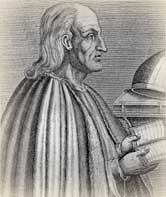
Anselm's Subtle Proof of God's Existence

Anselm's Subtle Proof of God's Existence When St. Anselm died on this day, April 21, 1109, the church was poorer by a great mind and England by a zealous reformer. Anselm won a name for reform because he attempted to end abuses such as the slave trade. He urged the holding of regular synods and, while he was archbishop, enforced clerical celibacy within his see. Because of his powerful intellect, some scholars consider him one of the creators of scholasticism. But his most notable gift to history was what has become known as the ontological proof for the existence of God.

Can the existence of God be proven? Anselm thought so. Modern philosophers and theologians disagree. However, it is Anselm's argument, the ontological proof, which remains the most troublesome for them to disprove.

Anselm's argument went something like this: When we discuss the existence of God, we define him as a perfect being, greater than anything else which can be conceived. If God does not exist, then the name "God" refers to an imaginary being. This makes the definition of "God" contradictory, for to be real, to be living, to have power is greater than to be imaginary. It is clear I cannot even discuss the word "God" as defined if he does not exist, because I have to conceive of him as really existing in order for him to be greater than anything else, for a God who does not exist is not greater than anything else.

In short, no philosopher can legitimately argue that God does not exist if he defines God as a perfect being greater than any which can be imagined; for to be perfect, God must have real existence. Those who acknowledge He exists do not have a problem with self-contradiction when they affirm his existence. Since we can indeed raise the question of God's existence and argue the point, then God must exist. Bertrand Russell, one of the greatest logicians and mathematicians of the Twentieth Century, no friend of Christianity, grappled with Anselm's proof and at one time is said to have thought the proof worked.

As Archbishop of Canterbury, the zealous Anselm struggled with King William for church rights. He was exiled. Similar conflict would shortly afterward lead to the murder of Becket. As a theologian, the pious Anselm is remembered for his book, Why Did God Become Man? In it he argued that each of us has run up such a debt of sin that there is no way we can repay God. Christ, as infinite God, has merit enough and to spare to pay our debts. As a scholar, the learned Anselm argued that we must believe in order to understand. We could restate his insight in modern terms like this: truth only begins to come clear when one is committed to it. You cannot see around a bend in a trail unless you walk toward it.

Anselm died surrounded by friends who placed his body in ashes on the floor. He was probably canonized in 1494, although there is debate whether this occurred at all. His beatific status aside, Anselm will long be remembered as the author of the ontological proof.
Bibliography:
  1. "Anselm, St". Dictionary of National Biography. Edited by Leslie Stephen and Sidney Lee. London: Oxford University Press, 1921 - 1996.
  2. "Anselm, St." The Oxford Dictionary of the Christian Church. Edited by F. L. Cross and E. A. Livingstone. Oxford: Oxford University Press, 1997.
  3. Copleston, Frederick. A History of Philosophy. Westminster, Maryland: Newman Press, 1953-
  4. Dark, Sidney. Seven Archbishops. London: Eyre & Spottiswoode, 1944.
  5. Dictionary of the History of Ideas. Scribner's, 1974.
  6. Eadmer. The Life of St. Anselm, Archbishop of Canterbury. Edited with introd., notes, and translation by R.W. Southern. New York: T. Nelson, 1962.
  7. Hook, Walter Farquhar, 1798-1875. Lives of the Archbishops of Canterbury. London: R. Bentley, 1865 - 1884.
  8. McKilliam, Annie E. A Chronicle of the Archbishops of Canterbury. London: J. Clarke, 1913.
  9. Rigg, J. M. St. Anselm of Canterbury, a chapter in the history of religion. London: Methuen & co., 1896.
  10. Rule, Martin. The Life and Times of St. Anselm: Archbishop of Canterbury and Primate of the Britains. London: Kegan Paul, Trench, 1883.
  11. Runes, Dagobert D. A Treasury of Philosophy. New York: Philosophical Library, 1945.
  12. Russell, Bertrand. Wisdom of the West. New York: Fawcett, 1964.
  13. Various encyclopedia and internet articles and references in histories of philosophy.
Read this article at -  http://www.christianity.com/church/church-history/timeline/901-1200/anselms-subtle-proof-of-gods-existence-11629798.html

Apr 6, 2015

Fragmentation of the Psyche and the Nous


Psi and the Caduceus

By: Jay
The subject of dissociative identity disorder and the fracturing of the psyche is a complex topic that is becoming more mainstream through alternative media.  The causes, nature and extent of the disorder are still shrouded in mystery, though modern medicine and psychology do have a lot to say about the matter.  One of the reasons the disorder is controversial is that it doesn’t seem to fit well in the dominant materialist/biologist reductionism upon which mass science is built.   Given the presupposition of modern science that the psyche is entirely equated with the brain itself, the assumptions are thus that any possible solution to mental problems of this nature can only be remedied or suppressed through the addition of, and rearrangement of, molecular compounds.
This fact is seen most clearly in the pharmaceutical solution, which may provide temporary relief and the subduing of more manic tendencies, fails to address the spiritual dimension of man, excluding from the outset the psyche might be more than a series of neurons firing.  The monetary and propagandist power of these corporations, combined with the power to dictate the results through the funding of their “objective studies” that vindicate the latest happy pill, disavow from the outset any other approaches, models or therapeutic applications.  Despite the deep interconnectedness of the pharmaceutical industry with the intelligence agencies and psychological and biological warfare industries, few and far between are those who are willing to question this approach as a whole, due to the almost universal indoctrination of neo-Darwinian theory, which thus also preconditions all approaches to therapeutic psychology.

One example of the dilemma a proponent of the modern approach must grapple with is something I have highlighted in the past: if the DSM-V is the “bible” of psychological disorders, then one must accept that the DSM-V still cites older articles referencing mind-controlled alters.  If mind-controlled alters are a non-existent fiction of raving conspiracy lunatics, then the DSM-V is now subject to change (as it constantly is), and must be revised.  Of course, the DSM-V is constantly revised, as “disorders” suddenly appear quite frequently, all of which are dependent upon the theorizing of so-called experts that operate within the existing paradigm.  In this regard, we can see the clear incoherency at work: The circular nature of the existing psychological establishment vindicates the pharmaceutical establishment, which in turn provides the funding to vindicate the psychological establishment.  The circular establishment becomes the de facto final court of appeal, even as its theories and revisions are constantly over-turning each other in a perpetual cycle.

Since most people in this field are not familiar with psychological warfare, the military application of such techniques, and the origins and rise of the American Psychological Association and its cousin, the Tavistock Institute, the analogy with the advance of super technologies is appropriate – both “techniques” arise from the military application.  In other words, the technological advances of an entity like DARPA are for warfare purposes, even though they are marketed publicly as “humanitarian.”  In the same way, the application of modern psychology arose from Institutes and agencies concerned primarily with the subject of mass social engineering and psychological warfare.  It should come as no surprise the establishment remedies have such a low success rate.  Of course, what one considers a “success” and “progress” is determined by what one’s worldview and ends are, so from the perspective of mass social engineering, the present psychological establishment is a huge success, providing cheap mass experimentation and billions in profits.  If mass drugging of the populace into a catatonic, zombie-like state is the end goal, then the existing system can certainly claim it is a great, progressive success.
Through the chemical process, the alchemist seeks the transmutation of mater.
Through the chemical process, the alchemist seeks the transmutation of matter.

With this in mind, it is understandable why “alternative” approaches and forms of therapy are derided and laughed at, as the goal of modern “health” is not the integration and healing of the person as a whole, but the chemical treatment of the effects of the problem.  As with other fields of research, the “compartmentalization” of information is applied in psychology and medicine as it is in military information.  The long-term plans and goals of the pharmaceutical industry and their pill-pushing doctors are ignored at the expense of short-term gains, but the difficulty extends much deeper than the standard left/liberal approach to this question, where the true ends of these industries are almost entirely ascribed to monetary gain.   However the oligarchical elite that dominate the western establishment themselves have stated many times what the long-term goals of all these industries are, including “psychology” and the pharmaceutical application.  This is why, for example, treatments for disorders that have a higher success rate with cannabis are demonized, while synthetic versions of the same chemical are offered for ridiculous prices.

Unfortunately, the level at which discourse on the topic of cannabis is so dumbed-down and stupid on both sides of the aisle, it is almost futile to discuss, as both the left/liberal pothead are as clueless as the faux “conservative war on drugs” crusader.  Both sides of this question are unaware of the complexities involved, as the left/liberal sees the government as “the man” infringing on the “rights” of atomized nobodies wanting a good buzz.  On the other hand, moronic conservatives (so-called) are ignorant of the fact that the “war on drugs” was a covert plan for deep state control of the drug trade, criminalizing certain substances so both the black markets and pharmaceutical markets can maintain a monopolistic control.  For the left/liberal, the foolish trust in NGOs he believes are actually interested in his “freedom,” are actually promoting a destructive social agenda for think tanks that have a different strategy of social engineering than other think tanks.

Read the rest of this article at -  http://jaysanalysis.com/2015/04/05/fragmentation-of-the-psyche-and-the-nous/

Mar 6, 2015

The Philosophy of Creation, Darwinian Evolution and the Absolute

God has made worlds of worlds, and infinite infinities. He Himself is the Absolute, Personal Infinity, Aleph Nought.

By: Jay

One of the most difficult things for people to readjust to is the counter-intuitive (or seemingly counter-intuitive) worldview in modified Platonism that I often refer to.  This reorientation shifts one’s entire perspective on the outer, external world, rendering it again a sacred space, infused with the Divine, as opposed to a brute, “material” realm dominated by chaos, entropy and death.  It is understandable why people prefer this grand narrative (and a depressing narrative it is), despite the protestations of those who opt for this paradigm that we in the other camp are “weak” for choosing older “fictions” like souls, angels and God.  To be sure, the materialists and servants of delusion of brute “matter” have their own deity – the impersonal “forces of nature,” but we’ll set that aside for the moment.

It is crucial that the psyche undergo this repentance, metanoia in Greek, and reorienting, as the attitude mentioned is that of fallen man, viewing his world as one devoid of the supernatural under the guise of “science.”  While the scientific method is certainly a useful tool (I read scientific material frequently), the lack of philosophical education on the part of that community is appalling.  It is precisely the hubristic impetus of fallen man that impels the hardcore dogmatists of the brute, impersonal forces of nature cult to stamp out all such ideas – even the slightest inkling by any of their ilk, tending toward the idea the psyche or mind may not be reduced to chemical reactions, must be swiftly punished.

This is why the discoveries and theses proposed in quantum physics are so disturbing to advocates of scientism, despite their good faith in future science to resolve all questions with strict rationalism.  Never mind the fact that “reason” itself is nonsensical in the deterministic paradigm of Darwinian naturalism, the crusaders of modern empiricism are committed adherents of the Holy Inquisition of Scientism, and no manner of logical argumentation can persuade them otherwise.  Those aware of an alternate version of human history, the Biblical narrative, in which man is a fallen creature in rebellion against his Creator, have a perfectly rational (indeed, the only rational) explanation of these events – and can even explain why man himself prefers his own self-imposed servitude, to quote Kant, rather than submission to the doctrine of Creation.

Creation is crucial because of the implications for the entirety of how man views and operates in the world.  Our worldview will determine the way we act, showing the old adage of lex orandi, lex credendi to be correct.  If the universe is a created reality, then the implications for how things like electrons, matter and other natural processes work will have vastly different meanings.  For example, if there is no Creation, and the universe is either eternal or illusory, the way we operate will be dictated accordingly.  We can look to history to show us cultures where such a fundamental presupposition dominated, such as Hindu India or ancient China.  In these cultures, the dominance of the Absolute as an impersonal reality, with a multitude of lesser deities to be supplicated created a vast array of self-destructive practices amongst those populations.  Starvation in India, while cattle roamed free as divine, and a “divine” emperor in China, where individual subjects had no personal identity.  These are merely examples of basic philosophical presuppositions that undergirded a culture and resulted in a praxis consistent therewith.
The Eagle Nebula.
The Eagle Nebula.

Precisely because these cultures were suffused with the notion that time and the universe was eternal, it became a trap from which the wheel of time and “materiality” had to be escaped, through meditation, radical asceticism, or some other form of mystical gnosis.  If, on the other hand, “material” reality was a created reality, and not a self-subsisting eternal principle of its own, and the fundamental framework of the “stuff” of reality was designed and began at a point in time, the implications would be vastly different.  The creation account of Genesis, for example, presents a very different narrative of history and beginnings than these other accounts.  Although it has been fashionable for the last few hundred years to dismiss the Genesis narrative as a fictional mythology of numerous blended Ancient Near Eastern cosmologies, the fact is, the Creation account of Genesis presents a vastly different theology than any other religious account, aside from even the Egyptian account, which comes close.

This difference cannot be overstated: The biblical account posits that time and “matter” are not evils, traps or the source of any fundamentally oppositional principle, but are rather goods – inherently good, due to being created in time by a good God.  God, being good, does not “create” evil, as if it had any substantial or ontological being.  All being, in the metaphysical sense, in this sense, is created being, and created with the potential to receive the higher divine energies or powers of God.  In other words, creation was such that it was placed in a state in which it might be raised to even higher goods, but this does not mean creation was therefore “bad,” because its initial state was a lesser good.  There is no opposition or dialectic between the good being many, as later western philosophy, and in particular Platonism would posit.  This opposition of the good necessarily being absolutely One (the simple monad), was a Platonic idea that would have its precedent in ancient far eastern thought.

Read the rest of this article at - http://jaysanalysis.com/2015/03/05/the-philosophy-of-creation-darwinian-evolution-and-the-absolute/

Feb 21, 2015

The Moral Argument

A little Christian philosophy and apologetics by Dr. William Lane Craig....


For more resources visit: http://www.reasonablefaith.org/moral
View the Kalam Cosmological Argument animation video: http://youtu.be/6CulBuMCLg0
View the Fine Tuning Argument animation video:
https://www.youtube.com/watch?v=UpIiI...
Reasonable Faith features the work of philosopher and theologian Dr. William Lane Craig and aims to provide in the public arena an intelligent, articulate, and uncompromising yet gracious Christian perspective on the most important issues concerning the truth of the Christian faith today, such as:

-the existence of God
-the meaning of life
-the objectivity of truth
-the foundation of moral values
-the creation of the universe
-intelligent design
-the reliability of the Gospels
-the uniqueness of Jesus
-the historicity of Jesus' resurrection
-the challenge of religious pluralism

We welcome your comments in the Reasonable Faith forums:
http://www.reasonablefaith.org/forums/
Be sure to also visit Reasonable Faith's other channel which contains full-length clips: http://www.youtube.com/reasonablefait...
Follow Reasonable Faith on Twitter: http://twitter.com/rfupdates
Like Reasonable Faith on Facebook: http://www.facebook.com/reasonablefai...

Jan 23, 2015

A Third Gender? A Natural Extension of Oneism

Cris Putnam   
 
Third Gender
 In The Supernatural Worldview, I explained the burgeoning monistic spirituality or oneism — all is one — as the religious paradigm of our age. One page 393, I explained:
The defining issue is the creature/creator distinction. From exegesis of: “who exchanged the truth of God for the lie, and worshiped and served the creature rather than the Creator, who is blessed forever. Amen” (Romans 1:25, NKJV, underline added). Although many use the indefinite article “a,” it is argued by many competent scholars that the definite article “the” is the best translation so that the text juxtaposes “the lie” to “the Creator.”[i] The lie is pantheistic monism or “all is one” which entails the universe evolved.  Remarkably, pagan or paganus comes from the Latin word meaning “of the earth” and originally denoted rural folk.[ii] From Paul’s apposition in Romans 1:25, Peter Jones observed that there are really only two religious perspectives, “oneism” (worship of creation) and “twoism” (worship of the creator). Jones explains:
One-ism believes that “all is one” and shares the same essential nature. Theologians use the term “consubstantiality.” As you probably know, “con” means “with” in Latin, and you know what “substantial” means — “substance” or “essence.” In One-ism, everything shares the same essence. In a word, everything is a piece of the divine. [iii]
Oneism extends into sexuality as androgyny and homo / bi-sexuality.  After all, if all is one, then there are no distinctions between male and female. However a supernatural worldview makes these distinctions based on a creature / creator separation. Jesus said, “Have you not read that he who created them from the beginning made them male and female,”(Mt 19:4) Now Thailand is writing a third gender into its constitution. President Obama would seemingly concur. I wonder how long before America follows suit?
Thailand to have ‘third gender’ in new constitution
Thailand is poised to recognise a third gender in its new constitution, with the constitutional drafting panel saying on Thursday that “Thai society has advanced”.
The panel, composed of members handpicked by the ruling junta, said that “there are not only men and women”, and that there is a need to recognize all genders.
“We need to protect all sexes – we consider all genders to be equal”, panel spokesman Kamnoon Sittisamarn told journalists.
The panel will send details of the measure to the National Reform Council by April. It will need to be formally approved by the ruling junta, also known as the National Council for Peace and Order.
Thailand has a significant LGBT community, with homosexual, transgender and transsexual people playing a prominent role in the country’s entertainment industry.
In 2012, a group of lawmakers and LGBT activists formed a committee to draft legislation recognizing same-sex couples that would, among other things, enable them to marry.
But discussion of the draft law was put on ice while Thailand struggled with political protests in 2013 and 2014.
BioEdge

[i] Peter Jones, One or Two: Seeing a World of Difference, Kindle edition (Escondido, CA: Main Entry, 2010) Kindle Locations 1307-1308.
[ii] “Paganus” in An Elementary Latin Dictionary ed. Charlton T. Lewis (Medford, MA: American Book Company, 1890).
[iii] Jones, One or Two, Kindle Locations 151-157.

Read this article at - http://www.logosapologia.org/a-third-gender-a-natural-extension-of-oneism/

Jan 11, 2015

Blinded by Darkness: The Collective Denial of Evil and Its Impact on Psychiatric Treatment


By Rev Sheri Heller, LCSW
evil eye by Brian Suda
The only thing necessary for the triumph of evil is for good men to do nothing
–Edmund Burke

A therapist advises a woman who’s been stalked and harassed by her psychopathic ex-husband to meet him over coffee to address co-parenting. A young woman with severe somatization of trauma is told by her therapist that her psychopathic brother was engaging in sexual “play” when he was raping her vaginally with objects as children. A young man avoids necessary treatment because his perpetrator, his father, is an iconic philanthropist.

Why is the burden of proof on the victim to establish a legitimate case for his/her suffering? Why aren’t these victims believed, and why are facilitators of an empirical science denying the psychological reality of evil?

The answers to these questions are complex. Many people, including clinicians, are blinded by the psychopath’s mask of normalcy. We stigmatize victims, denouncing them as inferior given their emotional instability, while lauding the capable and convincing psychopath. Our innate tendency to maintain internal equilibrium and illusions of safety compel us to rely on elaborate psychological defenses to deny threatening information.

 What is Human Evil?

Evil denotes an absence of good. It is that which is depraved and immoral. In this article we will address the conundrum of human evil—specifically the evil we inflict upon one another—and the collective denial of its very existence, which in turn allows for evil’s proliferation.

In “Religion Within the Boundaries of Mere Reason” philosopher Immanuel Kant makes the claim that evil is innate to the human species. According to Kant, self-conceit is the trait responsible for moral corruption (Kant, I. Religion Within the Boundaries of Mere Reason, Robert M. Adams et al, Eds. Cambridge UK: Cambridge University Press;1998).

An extreme propensity for evil has been referred to by psychiatrist Hervey Cleckley as a neuropsychiatric defect that fuels the need to destroy. According to Cleckley, the psychopath has the uncanny ability to conceal this defect (Cleckley HM. The Mask of Sanity: An Attempt to Clarify Some Issues about the So-Called Psychopathic Personality. Whitefish, MT: Literary Licensing; 2011).
We are deceived, even deluded, by the psychopath’s disguise of virtue, his glibness, ostensible calm, status, and charm. The psychopath’s veneer of normality can be so seamless it becomes implausible to consider the malevolence behind the mask, even for trained clinicians.

Read the rest of this article at - http://pro.psychcentral.com/blinded-by-darkness-the-collective-denial-of-evil-and-its-impact-on-psychiatric-treatment/006697.html#

Jan 10, 2015

Ivan Ilyin: On the Devil

by

In this 1947 essay, Russian philosopher Ivan Ilyin (1883-1954) addresses the reality of the devil in history and our own time. Tellingly, the advance of the secular and materialist outlook has corresponded with an ever-growing fascination with the demonic – along with its public justification. Translated by Mark Hackard.

In the life of the human race, the diabolical principle has its own history. On this question serious academic literature exists – not concerning, however, recent decades. Yet namely recent decades shed new light on the past two centuries. The age of European Enlightenment (beginning with the French Encyclopedists of the 18th century) undermined within men belief in the being of a personal devil. The educated man cannot believe in the existence of such a revolting anthropomorphic being “with a tail, claws, and horns” (according to Zhukovsky), unseen by anyone but portrayed in ballads and in pictures. Luther still believed in him and even hurled filth at him, but later centuries rejected the devil, and he gradually “disappeared” and flamed out as an “outdated prejudice.”

But it was precisely then that art and philosophy became interested in him. The enlightened European had only Satan’s cloak remaining, and he began to drape himself in it with fascination. There burned a desire to find out more about the devil, discern his “true form,” guess his thoughts and wishes, “transform” into him or at least walk before men in his guise…

And so art began to imagine and portray him, while philosophy attended to his theoretical justification. The devil, of course, “didn’t succeed,” because the human imagination is incapable of containing him, but in literature, music, and painting began a culture of demonism. From the beginning of the 19th century, Europe has been fascinated with his anti-divine forms; there appears the demonism of doubt; negation; pride; rebellion; disappointment; bitterness; melancholy; contempt; egoism, and even boredom. The poets depict Prometheus, the Son of the Morning, Cain, Don Juan, and Mephistopheles.

Byron; Goethe; Schiller; Chamisso; Hoffman; Franz Liszt; and later Stuck, Baudelaire, and others display an entire gallery of demons or demonic men and moods. Moreover, these demons are intelligent, witty, educated, ingenious, and temperamental, in a word, charming and evoking sympathy, while demonic men are the incarnation of “world-angst,” “noble protest,” and some “higher revolutionary consciousness.”
Franz Von Stuck Lucifer
Lucifer, by Franz Von Stuck
 
Simultaneously the mystical doctrine holding that there is a “dark principle,” even within God, is revived. The German Romantics find poetic words in favor of “innocent shamelessness,” and the Left-Hegelian Max Stirner comes out openly preaching human self-deification and demonic egoism. Denial of a personal devil is gradually replaced by the justification of the diabolic principle…

The abyss concealed beyond this was seen by Dostoevsky. He identified it, and with prophetic alarm sought the means to overcome it his whole life.

Friederich Nietzsche also approached this abyss, was captivated by it, and would extol it. His last works, The Will to Power, The Antichrist, and Ecce Homo, contain direct and open propagation of evil…

Read the rest of this article at - http://souloftheeast.org/2015/01/08/ivan-ilyin-on-the-devil/

Dec 3, 2014

Plato’s Phaedo – Esoteric Analysis

This may be deep water for some, but it's helpful to understand much Christian doctrine today, especially two of it's most influential ancestors, Origen and Augustine.  Well worth the read...


Triads of philosophy
By: Jay

Phaedo is the dialogue of Plato that concerns Socrates’ final words.  The discussion revolves around a proposal by Socrates’ associates to defend his views of the afterlife and the immortality of the soul, followed by a counter argument by a Pythagorean, and a final rebuttal by Socrates before the recounting of his drinking the hemlock.  A great read, the work constitutes one of Plato’s most notable dialogues: The influence of Phaedo on subsequent Western thought is clearly tremendous. Until recently, I hadn’t thought about it since my undergrad days of philosophy 101, where we read a selection and hit the highlights of the doctrine of forms and immortality of the soul.  Returning to the unabridged work years later and with a much wider range of knowledge, the discussion struck me as profound as much as it is bizarre and mysterious.   In this article, we will investigate the epistemological, metaphysical and esoteric teachings sprinkled along the way, as well as problematic areas.

Early in the dialogue, Socrates mentions his desire to practice the “arts” based on a recurring dream he has had.  In response to queries about this, Socrates tells his friends “philosophy is the greatest of the arts,” based on his attempt to create an Aesop’s Fable of his own about the duality involved in pleasure and pain.  The dialogue is also littered with reference to “initiation into the Mysteries,’ the allegorical understanding given in religious initiations, and that the “initiates of the Mysteries” are prepared for journey of the dead undertaken in the afterlife.  Pleasure, he argues, is dialectically tied to pain, and both tend to ever bring their opposite.  In this life, our attachment to bodily pleasure and passion thus becomes a hindrance that wears down the lofty, immortal nature of the soul.  The allegorical meaning of the Rites of the Mysteries is therefore the philosophical understanding of how to live well so that in the next life one can pass on to blissful Valhalla.  However, Socrates does not entirely “spiritualize” or “allegorize” the rites of the gods – he follows them in both senses.

The references to the Mysteries and the rites of religion is curious, given the standard, secular version of this topic in academic settings, which generally focuses on a cursory overview and a discarding of any esoteric ideas in the dialogues.  Marxist, feminist and statist education in our day is universally programmed to read all great works as externally imposed class and gender warfare diatribes, subverting everything wholesome and wondrous in them.  And should you happen upon a male professor that isn’t a feminist/Marxist, you likely got an atheist materialist who scoffed at anything in the work beyond his feeble grasp.  Contrary to these sophistical losers, Phaedo is a religious treatise about initiatic knowledge through revelation.  While all of its theses and ideas are not what I would recommend, Phaedo is a perennialist document, and not a secular one.

Read the rest of this article at - http://jaysanalysis.com/2014/12/01/platos-phaedo-esoteric-analysis/

Jun 26, 2014

Creation Metaphysics and “A Single Unified Science”

Creation Icon.
Creation Icon.

By: Jay
I have written on scientism lately, and in the archives several more critiques of scientism and naïve empiricism (its presupposition) are available.  The question then arises as to how are we to replace this bad, contradictory narrative of man’s “progress” with something better.  Is there an answer elsewhere?  Can claims of religious belief and theology be rational?  Are they not merely leaps of faith, with no reason behind them?  In short, there are answers and religious claims are just as warranted as a “scientific” claim, and sometimes more so.  When we consider “warranted” beliefs, as they are often termed in philosophy, we can see alternate explanations that are far superior to the reductionist materialism of our day.
 
It is my thesis that there is an alternate metaphysics that is suppressed by the centralized western establishment that has allowed a covert advancement in highly complex technologies, while the ignorant public have been given a mass consumption physics and worldview that is ultimately a dead-end (materialism).  One of the chief arguments I fall back on is the fact that highly advanced technologies are based on a rigorous, formal logic that is ordered and perfectly systematic.  Since logic itself, which forms the basis and presupposition of those systems, is not, and cannot be “matter,” the central narrative explanation of reality given by modern academia for man’s origins, “Enlightenment,” and so-called scientific advance is completely wrong.
 
This alternate metaphysics is closer to what is found in aspects of Platonism and Eastern Orthodox theology, and this is likely what informed Tesla to be so successful with his inventions, despite his latter days of theosophy.  I do not intend to advocate all of Platonism or Pythagoreanism or later developments in Plato’s students, but rather when considering foundational
philosophical presuppositional commitments and assumptions, the ideas of thinkers closer to this tradition are more correct than those of an atomistic, materialist bent.  Modern quantum thinkers generally tend to be open about “Platonic” theories of metaphysics matching up to their discoveries, while materialistic science is utterly bankrupt at providing any coherent account of reality.
One of the founding fathers of quantum physics, Werner Heisenberg, stated:
 
“In the philosophy of Democritus the atoms are eternal and indestructible units of matter, they can never be transformed into each other. With regard to this question modern physics takes a definite stand against the materialism of Democritus and for Plato and the Pythagoreans. The elementary particles are certainly not eternal and indestructible units of matter, they can actually be transformed into each other. As a matter of fact, if two such particles, moving through space with a very high kinetic energy, collide, then many new elementary particles may be created from the available energy and the old particles may have disappeared in the collision. Such events have been frequently observed and offer the best proof that all particles are made of the same substance: energy. But the resemblance of the modern views to those of Plato and the Pythagoreans can be carried somewhat further. The elementary particles in Plato’s Timaeus are finally not substance but mathematical forms.

“All things are numbers” is a sentence attributed to Pythagoras. The only mathematical forms available at that time were such geometric forms as the regular solids or the triangles which form their surface. In modern quantum theory there can be no doubt that the elementary particles will finally also be mathematical forms but of a much more complicated nature. The Greek philosophers thought of static forms and found them in the regular solids. Modern science, however, has from its beginning in the sixteenth and seventeenth centuries started from the dynamic problem. The constant element in physics since Newton is not a configuration or a geometrical form, but a dynamic law. The equation of motion holds at all times, it is in this sense eternal, whereas the geometrical forms, like the orbits, are changing. Therefore, the mathematical forms that represent the elementary particles will be solutions of some eternal law of motion for matter. This is a problem which has not yet been solved.” (Physics and Philosophy: The Revolution in Modern Science (1958) Lectures delivered at University of St. Andrews, Scotland, Winter 1955-56)
 
The principle at work here is explained in notable philosophy of science writer, Michael Polanyi, who wrote:
 
“To say that the discovery of objective truth in science consists in the apprehension of a rationality which commands our respect and arouses our contemplative admiration, that such discovery, while using the experience of our senses as clues, transcends this experience by embracing the vision of a reality beyond the impression of our senses, a vision which speaks for itself in guiding us to an even deeper understanding of reality-such an account of scientific procedure would be generally shrugged aside as out-dated Platonism: a piece of mystery-mongering unworthy of an enlightened age. Yet it is precisely on this conception of objectivity that I wish to insist in.” (Personal Knowledge, p. 5-6)
Ours is a day of cowardice, ignorance and lack of real knowledge and wisdom, despite the avalanche of information available at everyone’s fingertips.  Without a framework to place information, the never-ending data stream is useless and destructive.  If anyone has the desire to find truth, he must not be afraid to go against the grain and consider options outside the so-called mainstream, not because going against the grain is somehow inherently laudatory, but because it is a time of tremendous deception.  In a land of supposed free inquiry and free thought, the only thing considered untenable and anathema is creation by a single Personal God.  In fact, Carl Sagan and Richard Dawkins even say we can posit alien origins, yet belief in God is somehow irrational.  On the contrary – those on our side have a far superior explanation of reality that is actually coherent.  A biblical worldview may not answer every single question posed, but no worldview can provide that, much less one that is fundamentally contradictory like materialism or unobserved aeonian Darwinian evolutionary theory.
Atomic orbit. "The smallest units of matter are not physical objects in the ordinary sense; they are forms, ideas which can be expressed unambiguously only in mathematical language." -Werner Heisenberg
Atomic orbit. “The smallest units of matter are not physical objects in the ordinary sense; they are forms, ideas which can be expressed unambiguously only in mathematical language.” -Werner Heisenberg
 
In response, I would like to suggest the metaphysics and philosophy of science posited by one of my favorite thinkers, the Orthodox theologian and traditionalist, Dr. Philip Sherrard.  Dr. Sherrard is not well-known to Western academics.  His concise, yet brilliant approach to this question solidifies a new way to look at science based on the Eastern and biblical tradition, which provides a unique metaphysic, and particularly the metaphysic found in thinkers like St. Maximos Confessor. I believe these ideas form a part of the hidden metaphysics mentioned earlier.  Sherrard’s brief, but brilliant article “A Single Unified Science” is below and includes my comments and analysis.