And they overcame him by the Blood of the Lamb, and by the word of their testimony, and they loved not their lives unto death. (Rev. 12:11)
Watch, and pray
I believe in God, the Father Almighty, Creator of Heaven and earth;
and in Jesus Christ, His only Son Our Lord,
Who
was conceived by the Holy Spirit, born of the Virgin Mary, suffered
under Pontius Pilate, was crucified, died, and was buried.
He descended into Hell; the third day He rose again from the dead;
He
ascended into Heaven, and sitteth at the right hand of God, the Father
almighty; from thence He shall come to judge the living and the dead.
I believe in the Holy Spirit, the holy catholic church, the communion
of saints, the forgiveness of sins, the resurrection of the body and
life everlasting.
Amen.
Now when they had departed, behold, an angel of the Lord appeared to Joseph in a dream and said, “Rise, take the child and his mother, and flee to Egypt, and remain there until I tell you, for Herod is about to search for the child, to destroy him.” And he rose and took the child and his mother by night and departed to Egypt and remained there until the death of Herod. This was to fulfill what the Lord had spoken by the prophet, “Out of Egypt I called my son.” (Matthew 2:13-15)
That last verse has caused lots of consternation. The Holy Family goes to Egypt, and this somehow fulfills Hosea’s reference to Israel’s exodus? As I mentioned last week, at first glance it looks like Matthew is connecting the dots by the slimmest of connections.
Here’s what we read in Hosea 11:1-4:
When Israel was a child,I loved him, and out of Egypt I called my son. The more they were called, the more they went away; they kept sacrificing to the Baals and burning offerings to idols.Yet it was I who taught Ephraim to walk; I took them up by their arms, but they did not know that I healed them. I led them with cords of kindness,with the bands of love, andI became to them as one who eases the yoke on their jaws, andI bent down to them and fed them.
Clearly, Hosea, speaking for the Lord, is harkening back to the Exodus. He is remembering when Israel was just a little toddler of a nation and God delivered them out of bondage in Egypt. “Many years ago, by Moses and the plagues and all that, I called my son Israel out of Egypt, out of the house of slavery”–that’s what Hosea 11 is about.
But look again at Matthew. “Out of Egypt I called my son” here refers to God hiding Jesus away in Egypt to avoid Herod’s decree and then calling him back from Egypt when Herod is dead. This seems to be unrelated to anything Hosea was talking about. How can Matthew say this flight to Egypt fulfilled the words of the prophet Hosea when the two events seem connected by no more than the word Egypt? How can this possibly be a fulfillment of Old Testament prophecy?
Swing and a Miss
That’s a tough question and one that has generated a lot of bad answers. Some, with good intentions, have said “Look, Matthew says Jesus fulfilled this prophecy, so it must be that Hosea is a direct prophecy about the Messiah and only about the Messiah. Hosea knew he was predicting something about the Christ.” That does try to make sense of Matthew’s language, but you really have to get creative with Hosea to make it look like he was knowingly predicting a Messianic flight to Egypt.
Others have suggested that Matthew was just making a loose connection between two events that had to do with Egypt. He’s just playing free association with Biblical prophecy. “Jesus came out of Egypt. Here’s something in the prophets about Egypt. So let’s put the two together.” Not only does this make Matthew look a bit silly and throw into question some basic beliefs about biblical inspiration, this sort of loosey-goosey prophetic fulfillment simply doesn’t fit with the rest of Matthew’s gospel.
Matthew, more than any gospel writer, goes to great lengths to show that Jesus’ birth, life, and death, are rooted firmly in the Old Testament. Jesus was born of a virgin (fulfilling Isaiah 7:14). He was born in Bethlehem (fulfilling Micah 5:1-2). He was sought out to be killed by Herod (fulfilling Jeremiah 31:15). He was preceded by John preparing the way (fulfilling Isaiah 40:3). He healed diseases (fulfilling Isaiah 53:4). He spoke through parables (fulfilling Psalm 78:2). He came to Jerusalem riding on a donkey (fulfilling Zechariah 9:9). Matthew is very deliberate with his use of the Old Testament. So his citing of Hosea 11 must be more than just a connection with the word Egypt.
Jesus as the True Israel
So how do we make sense of this prophecy in Hosea and fulfillment in Matthew? The first step toward understanding Matthew’s purpose is to look more carefully at the word “fulfill.” The Greek word is pleroō. And it simply means to fill up. That’s what Matthew is at pains to demonstrate–that Jesus was filling up the Old Testament. Sometimes this meant very specifically that the Old Testament predicted the Messiah’s birthplace would be in Bethlehem and Jesus was, in fact, born in Bethlehem. There you go. That’s fulfillment. But fulfillment can be broader than that. It can refer to the filling up of the Old Testament; that is, the bringing to light what previously had been in shadows.
Take Mark 1:14-15, for example. “Now after John was arrested, Jesus came into Galilee, proclaiming the gospel of God, and saying, ‘The time is fulfilled, and the kingdom of God is at hand; repent and believe in the gospel.’” When Jesus said “the time is fulfilled,” he did not mean “right now a specific prediction of Scripture is coming to pass.” He meant, “with my preaching of the gospel, the time has been filled up and the kingdom is here. The Old Testament is reaching its climax.” Likewise, I don’t believe Matthew thought Jesus’ flight to Egypt was predicted in Hosea 11:1. But I do believe that Matthew thought Jesus’ flight to and return from Egypt was filling upHosea 11:1.
So what exactly is Jesus fulfilling, or filling up in Matthew 2:15? Jesus, as Matthew correctly understands the situation, is filling up the redemptive historical purposes of the nation. In other words, Matthew can claim that this Hosea passage, which talks about the Exodus of Israel out of Egypt, is fulfilled in Jesus, because Jesus is the embodiment of Israel.
Matthew looked back and saw an analogical correspondence between the history of the nation Israel and the history of the Messiah…the Hosea 11:1 quotation by Matthew is not an example of arbitrary exegesis on the part of a New Testament writer. On the contrary Matthew looked back and carefully drew analogies between the events of the nation’s history and the historical incidents in the life of Jesus (Biliotheca Sacra 143:325).
In the gospel of Matthew, Jesus is cast as the true and faithful Israel. Matthew is retelling Israel’s well known story, but he’s putting Jesus right in the middle as the main character in the story. Jesus is the new Israel.
Chapter one starts with the genealogy of Jesus. The very first words, in Greek, are “biblos geneseos Iesou Christou”–a book of the beginning of Jesus Christ. Now why is that significant? Well, because that word geneseos is a form of the word genesis, as in the first book the Bible. I don’t think Matthew is trying to be tricky here, but surely he knew the first book of the Bible and realized that when he begins his gospel with “a book of the genesis of Jesus” he is, at least, strongly suggesting that this story of Jesus Christ marks a new beginning for the people of God. The story is starting over. This suggestion is supported by another parallel with the first book of the Bible. Genesis is broken up into ten toledoth sections. Ten times in the book of Genesis, we read “these are the generations (toledoth) of…” Interestingly enough, these toledoth sections are, in a couple of places, translated into the Greek Septuagint with biblos geneseos (Gen. 2:4; 5:1), which further points in the direction that Matthew understood Jesus to be a new generation, a new genealogy, a new beginning for the nation of Israel.
Not only is Jesus the new Genesis, his life embodies the new Exodus. Shortly after Jesus birth, he was rushed away to safety to avoid the wrath of a jealous king who had ordered all the young boys to be killed. Where else does this happen in the Bible? Exodus 1. Pharaoh fears the Hebrews and so he orders that every baby boy be thrown into the Nile. But Moses was spared because his mother hid him in a basket in the river. Likewise, Jesus was spared Herod’s decree because his mother hid him in Egypt.
Following right on the heels of Jesus’ exodus out of Egypt, we come to his baptism in the Jordan in Matthew 3. Again, I don’t think Matthew is trying to be speak in secret code, and he certainly isn’t making the stories up, but he has arranged the material in such a way as to retell Israel’s story, with Jesus now as the true Israel. So just like the Israelites left Egypt and then passed through the Red Sea (baptized into the sea according 1 Cor. 10:2), Jesus too leaves Egypt and passes through the waters in his baptism.
Just to point out one more parallel, think what happens to the Israelites after they pass through the Red Sea. They wind up in the desert where they wander for forty years. And where is Jesus in Matthew 4 after his baptism? He is in the desert about to be tempted after having fasted for forty days and forty nights.
Matthew clearly wants to portray Jesus as fulfilling Israel’s history and bringing it to a climax. Matthew didn’t think Hosea 11:1 was a direct prophecy about Jesus and his family going to Egypt. And Hosea certainly didn’t mean it as such. The passage is about Israel’s Exodus out of Egypt and about her subsequent idolatries and adulteries. Matthew understood that. He wasn’t trying to give Hosea 11 a new meaning. But he did see something Messianic in Hosea’s words. Jesus would be the faithful Son called out of Egypt, filling up what was lacking in the first faithless son, Israel. From his genesis to his exodus to his baptism in the Jordan to his forty days in the wilderness, Jesus was identifying himself with the covenant people. He was the embodiment of Israel.
With Him He Was Well Pleased
And so when Jesus fled Herod and went to Egypt, it brought to a climax the work of deliverance that began in the Exodus of Israel and was now coming to completion in the Exodus of Jesus. That’s why Matthew can say “this was to fulfill what was spoken by the prophet.” But whereas the first Israel, God’s son, broke the covenant and deserved God’s wrath, when God beholds his only begotten Son Jesus Christ, he says in Matthew 3:17, “This is my Son, whom I love; with him I am well pleased.”
Far from being a barely connected prophetic fulfillment, this word from Hosea 11 filled up in Matthew 2, is a robust piece of New Testament theology. This text says something weighty about the person of Jesus Christ. Jesus is the one who came to complete all that Israel was designed to perform. All the adulteries and idolatries and rebellion and waywardness that characterized Israel would be recast in the true Israel Jesus Christ. God sent his Son to do himself what his people could not do for themselves. This is the meaning of fulfillment of Hosea 11 and the true meaning of Immanuel, God with us.
After much study of prophetic scripture, I've come to see Psalm 2 as the overview of all that will happen in the "Last Days", which many believe we are living in now. (That includes me!) At the end of this age, the nations and peoples and kings and rulers of this world declare war against the Lord, claiming He has bound them (Ps. 2:1-3) and they greatly desire to be free from his shackles of bondage. Of course those who know Him desire greatly to serve Him, but the majority of this world will reject Him and try to fight (vainly) against Him. (1 Thes. 2:1-4)
Let Psalm 2 be your overview, your broad vision of what's coming. Because it will go into full effect, any day now... any day now...
Rich Mullins: While the nations rage
Psalm 2 (Kiss the Son) (feat. Shane Heilman) - The Psalms Project
So many folks are holding on, to anything they can, moment by moment, day by day. Just hold on a little longer. Your Lord has not forgotten you. Any moment now, He will deliver you, lift you up, encourage you, sustain you, bless you in some way that you never imagined. Rich actually dedicated this song to a young man who shot himself in the stomach trying to kill himself with a shotgun, whom he had met at a summer camp. So, whatever you're going through, just hold on...
Rich Mullins & A Ragamuffin Band - Quoting Deuteronomy to the Devil
It has become evident through this prophecy that Someone is coming. That dim and shadowy Figure which appears occasionally in the opening chapters is emerging ever more clearly as we move through this book. Here in the 53rd chapter the Messiah steps out into full and glorious view.
It is hard to understand how anyone can read this great chapter and not see Jesus in it. We have already commented on the fact that, through the centuries, Jewish people have held that it does not refer to Jesus of Nazareth, but rather that the nation of Israel is the "Servant of Jehovah." The primary reason for their feeling is that they expected a different kind of Messiah. The Jews had done like many of us do with Scripture -- they had selected verses that appealed to them and formulated from them a vision of a Deliverer who would come with military might and power. He would overcome the Roman tyrants, they thought, set Israel free, and fulfill the promises of God to make it the chief of the nations of earth. Because our Lord did not fulfill those promises, they have maintained that this prophecy does not apply to him. Yet here in this great chapter it is clear that God's suffering Servant is brought before us.
The passage actually begins in the closing verses of Chapter 52, which belong with Chapter 53. Taken together with it, these verses constitute five stanzas that depict various foreviews of the work of the Messiah, each one bringing out a different aspect of his work and life. Beginning in Verse 13, Chapter 52, we have God himself announcing the presence of the Servant.
Behold, my servant shall prosper,
he shall be exalted and lifted up,
and shall be very high.
As many were astonished at him --
his appearance was so marred, beyond human semblance,
and his form beyond that of the sons of men --
so shall he startle many nations;
kings shall shut their mouths because of him;
for that which has not been told them they shall see,
and that which they have not heard they shall understand. (Isaiah 52:13-15 RSV)
This section, which describes the remarkable impact that the Messiah would make upon mankind, opens with a declaration that he would be successful in all that he did: "Behold, my servant shall prosper." That success would be accomplished in three specific stages, described here: "He shall be exalted; he shall be lifted up; he shall be very high." Commentators see in this the events that happened to Jesus after the crucifixion:
First, in the words, "He shall be exalted," there is a reference to the resurrection. Jesus was brought back from the dead, stepping into a condition of life that no man had ever entered before. Lazarus had been resurrected, in a sense, but he merely returned to this earthly life. Jesus, however, became the "firstborn from the dead," (Colossians 1:18). He was thus exalted to a higher dimension of existence.
Then, "he shall be lifted up." After his resurrection, Jesus took his disciples to the Mount of Olives and while he was speaking to them he ascended into the heavens until a cloud received him out of sight. So he was physically and literally "lifted up."
Thirdly, the passage says, "He shall be very high." The Hebrew puts it rather graphically: "He shall be high, very." We cannot but recall the words of the Apostle Paul in the letter to the Philippians. Speaking of Jesus, he says, "Wherefore God has highly exalted him and given him the name which is above every name, that at the name of Jesus every knee shall bow and every tongue confess that Jesus Christ is Lord, to the glory of God the Father," (Philippians 2:9-11). Thus by his resurrection, his ascension, and his kingly exaltation the Messiah has made tremendous impact upon humanity.
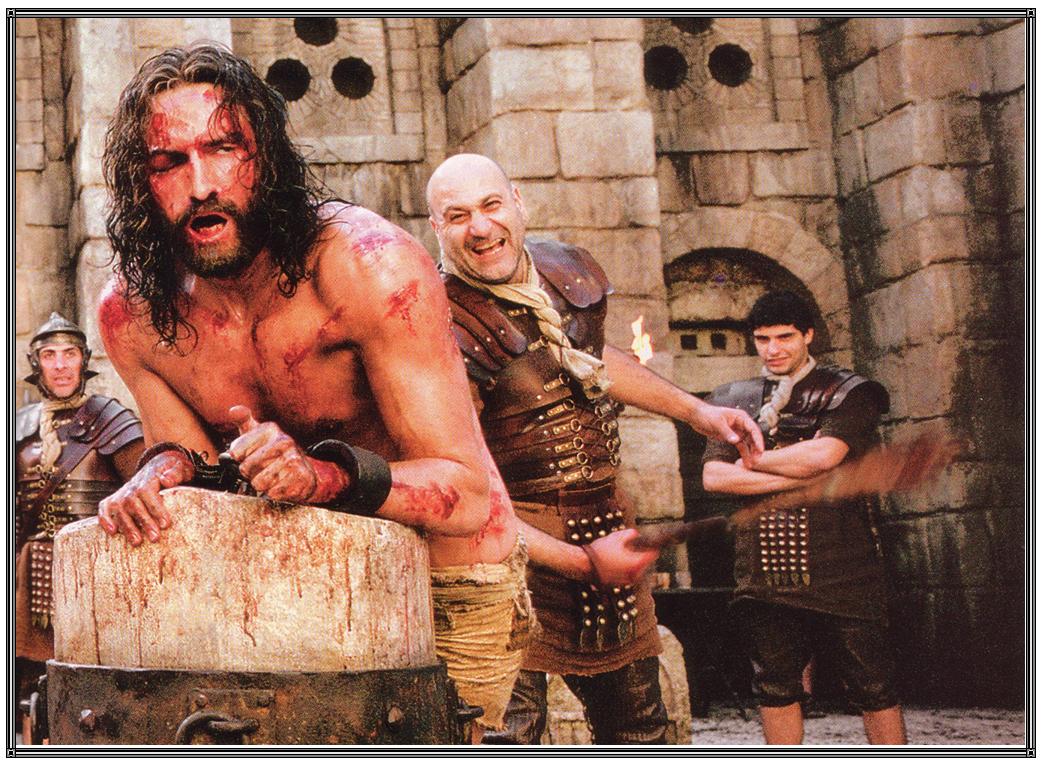
Further, it is said of him here that "many were astonished at him." This happened in two different ways. First, as Verse 14 implies, many were "astonished" at his death: "His appearance was so marred, beyond human semblance, and his form beyond that of the sons of men." This is descriptive of the face of Jesus after he had endured the terrible Roman scourging, the beatings, the blows to his face with the rod, which the soldiers mockingly called a king's scepter, and the crushing of the crown of thorns upon his head. By the time he was impaled on the cross, his face was a bloody mess. This is what the prophet sees: our Lord's appearance was so marred that those who passed by were "astonished" at his visage.
But Verse 15 describes another form of astonishment: "so shall he startle many nations." This refers to the tremendous accomplishments he achieved, not only during his ministry, but through the intervening centuries since. Many have commented on the remarkable achievements of Jesus. Kenneth Scott Latourette, a well known historian, has said,
As the centuries pass, the evidence is accumulating that, measured by his effect on history, Jesus is the most influential life ever lived on this planet.
G.K. Chesterton, that remarkable English Christian novelist and literary critic, has written,
There was a man who dwelt in the East centuries ago, and now I cannot look at a sheep or a sparrow, a lily or a cornfield, a raven or a sunset, a vineyard or a mountain without thinking of him. If this be not to be divine, what is it?
Truly, our Lord has made an astonishing impact upon our world. He is the Man who cannot be forgotten.
The first three verses of Chapter 53 describe the Messiah's strange rejection. These words express the feelings of the repentant nation when at last they recognize him at his return. The prophet cries out as the voice of the nation,
Who has believed our report?
And to whom has the arm of the Lord been revealed?
For he grew up before him like a young plant,
and like a root out of dry ground;
he had no form or comeliness that we should look at him,
and no beauty that we should desire him.
He was despised and rejected by men;
a man of sorrows, and acquainted with grief;
and as one from whom men hide their faces
he was despised, and we esteemed him not. (Isaiah 53:1-3 RSV)
These remarkable words are felt by any person who comes to Christ and remembers how lightly he regarded him when he first learned of him. Here the nation asks, "Who has believed our report, that which we have heard. The arm of the Lord was revealed to us, but we did not understand who he was." Looking back, they can see how he fulfilled these words.
He grew up before Jehovah as a "young plant." That speaks of the hidden years at Nazareth when, in the obscurity of the carpenter's shop no one knew who he was except his Heavenly Father. He was the "root out of dry ground." We have already seen Isaiah's prediction that a root would rise up from the stem of David, from whom Joseph and Mary were both descended. But the House of David had fallen on evil days. The royal line had become impoverished and no one recognized its claims to leadership within Israel. When our Lord came he was indeed a root out of very dry ground.
The passage continues, "He had no form or comeliness that we should look at him, and no beauty that we should desire him." Again, these are words that refer to our Lord's appearance as he hung upon the cross. He was a pitiful figure to behold, hanging naked, blood covering his face, worn and shattered by suffering. Indeed he had "no beauty that we should desire him."
He was truly "a man of sorrows, and acquainted with grief." There is no record in Scripture that Jesus ever laughed. I think he did laugh, for you cannot read some of his parables, or some of the things he said to his disciples, without sensing a smile on his face or hearing a chuckle in his voice. But there is no account that he ever laughed. He was "a man of sorrows and acquainted with grief."
We must remember that all through his boyhood, and even into his manhood, he was pursued by nasty cracks about his birth, inferring that he was an illegitimate son, born to a faithless maiden who had broken her vow of betrothal. His brothers misunderstood him and did not believe in him. They were embarrassed at some of the things he said and did. It was not until after the resurrection that they believed in him. He was called a drunkard and a glutton, and was said to be possessed by a devil. He was called a Samaritan, a disparaging term. He had no home to go to. He said himself, "Foxes have holes, birds have their nests, but the Son of Man has nowhere to lay his head," (Matthew 8:20, Luke 9:50). Sometimes his disciples left him alone to go about their business, but he had to go out to the Garden of Gethsemane and sleep alone beneath the o lives trees. He became at one point "Public Enemy No. 1." In the weeks before his crucifixion the Pharisees offered a reward to anyone who would turn him in. Surely he was rejected of men! In the words of the Apostle John, "He came unto his own, and his own people received him not," (John 1:11 RSV).
The next stanza portrays our Lord's substitutionary sacrifice:
Surely he has borne our griefs
and carried our sorrows;
yet we esteemed him stricken,
smitten by God, and afflicted.
But he was wounded for our transgressions,
he was bruised for our iniquities;
upon him was the chastisement that made us whole,
and with his stripes we are healed.
All we like sheep have gone astray;
we have turned every one to his own way;
and the Lord has laid on him
the iniquity of us all. (Isaiah 53:4-6 RSV)
This, of course, is the very heart of the gospel, the good news. Jesus took our place. As Peter puts it, "He bore our sins in his own body upon the tree," 1 Peter 2:24). He took our sins and paid the price for them. He had no sins of his own and Scripture is very careful to record the sinlessness of Jesus himself. He was not suffering for his own transgressions, but for the sins of others. One writer has put it rather well,
It was for me that Jesus died,
For me and a world of men
Just as sinful and just as slow to give back his love again.
And he did not wait until I came to him.
He loved me at my worst.
He needn't ever have died for me
If I could have loved him first.
That is the problem, isn't it? Why do not we love him first? Why is it that we can only learn to love our Lord when we have beheld his suffering; his excruciating agony on our behalf? Why is it we find such difficulty in obeying the first commandment, "Thou shalt love the Lord thy God with all thy heart and all thy soul, and all thy strength," (Deuteronomy 6:5 KJV). It is because of our transgressions, as this passage declares. They have cut us off from the divine gift of love that ought to be in every human heart.
Sin is a disease that has afflicted our entire race. We cannot understand the depth of human depravity until we see the awful agony through which our Lord passed; behold the hours of darkness and hear the terrible orphaned cry, "My God, my God, why hast Thou forsaken me?" (Matthew 27:46, Mark 15:34 KJV). All this spells out for us what we really are like. Most think of ourselves as decent people, good people. We have not done, perhaps, some of the terrible things that others have done.
But w hen we see in the cross of Jesus the depth of evil in our hearts we understand that sin is a disease that has infiltrated our whole lives. Man, who was created in the image of God and once wore the glory of his manhood, has become bruised and marred, sick and broken, his conscience ruined, his understanding faulty, his will enfeebled. The principle of integrity and the resolve to do right has been completely undermined in all of us. We know this to be true. No wonder, then, this verse comes as the best of news: He was wounded for our transgressions. The bruising that he felt was the chastisement that we deserved, but it was laid upon him.
There is no way to read this and fail to see that our Lord is the great divine Substitute for the evil of the human heart. We can lay hold of this personally by the honest admission stated in Verse 6: "All we like sheep have gone astray; we have turned every one to his own way." How true that is of each of us! Who can claim anything else? I grew up in Monta-a-a-a-na, and I know something about sheep. Sheep are very foolish and willful creatures. They can find a hole in the fence and get out, but they cannot find it to get back in. Someone must go and get them every time. How true are the words, "We have turned every one to his own way."
Frank Sinatra made a song popular a few years ago, "I Did It My Way." When you hear that it sounds like something admirable, something everybody ought to emulate. How proud we feel that we did it "our way." But when you turn to the record of the Scripture, you find that that is the problem, not the solution. Everyone is doing things "their way," so we have a race that is in constant conflict, forever striving with one another, unable to work anything out, because we all did it "our way."
The way to lay hold of the redemption of Jesus is to admit that "All we like sheep have gone astray. We have turned every one to his own way"; and then to believe the next line, "But the Lord has laid on him the iniquity of us all." One Christian put his testimony in a rather quaint way. He said, "I stooped down low and went in at the first 'all,' and I stood up straight and came out at the last."
Notice that this verse begins and ends with the word "all": "All we like sheep have gone astray." This man said, "I stooped down low and went in at that 'all.'" In other words, "I acknowledged that I, too, was part of that crowd that had gone astray." Ah, "But I stood up straight and came out at the last 'all.'" He understood that "The Lord has laid on him the iniquity of us all." He bore our punishment and took our place.
The next stanza foretells the silent sufferings of Jesus.
He was oppressed, and he was afflicted,
yet he opened not his mouth;
like a lamb that is led to the slaughter,
and like a sheep that before its shearers is dumb,
so he opened not his mouth.
By oppression and judgment he was taken away;
and as for his generation, who considered
that he was cut off out of the and of the living,
stricken for the transgression of my people?
And they made his grave with the wicked
and with a rich man in his death,
although he had done no violence,
and there was no deceit in his mouth. (Isaiah 53:7-9 RSV)
Once again, Scripture preserves carefully the sinlessness of Jesus himself. He was without sin, but he bore the sins of others. That is why he did it in silence. He had no interest in defending himself, so he never spoke in his own defense. It is a striking thing that in the gospel accounts of the trials of Jesus he never spoke up on his own behalf or tried to escape the penalty. This amazed both Pilate and Caiaphas. When our Lord stood before the High Priest, he was silent until the High Priest put him on oath to tell them who he was. When he stood before Pilate, he was silent until to remain silent was to deny his very Kingship. Then he spoke briefly, acknowledging who he was. When he was with the soldiers, they smote him and spat him and put the crown of thorns on his head, yet he said not a word. Peter says, "When he was reviled he reviled not again," 1 Peter 2:23). Truly, "As a lamb before her shearers is dumb, so he opened not his mouth." When he went before contemptuous, sneering Herod, he stood absolutely silent. He would not say one word to him. He was returned at last to Pilate because Herod could find nothing wrong with him.
By oppression and judgment he was taken away. (Isaiah 53:6a RSV)
It is very apparent to anyone reading the gospel accounts that the trials that Jesus went through were a farce. The Jewish trial before the High Priest was illegal. It was held at night, which was contrary to the law. Pilate several times admitted that he could find no wrong in him, and yet he pronounced upon him the sentence of death. How true are these words, "by oppression and judgment he was taken away."
He was "stricken for the transgression of my people." Remember that as the crowd was crying out, "Crucify him, crucify him," they added these significant words, "Let his blood be upon us and upon our children." Thereby they acknowledged that he was indeed "stricken for the transgressions of my people."
But when at last the deed was done and he cried with a loud voice, "It is finished" (John 19:30), his friends came to take him down from the cross. No enemy hands touched his body after his death, only those who loved him. As they removed his bloody body, the dear lips were silent, the wondrous voice was stilled, the light had gone from his eyes, and the great heart beat no more. But instead of throwing him on a rubbish heap, as the authorities intended, they "made his grave with the rich," just as Isaiah had predicted written 720 years before the event. Joseph of Arimathea, a rich man, offered to put the body of Jesus in his new tomb that had never been used. Someone has put that rather remarkably, "He who came from a virgin womb, must be laid in a virgin tomb."
Then in the last stanza his ultimate triumph is pictured. Yet it was the will of the Lord to bruise him; he has put him to grief; when he makes himself an offering for sin, he shall see his offspring, he shall prolong his days; the will of the Lord shall prosper in his hand; he shall see the fruit of the travail of his soul and be satisfied; by his knowledge shall the righteous one, my servant, make many to be accounted righteous; and he shall bear their iniquities. Therefore I will divide him a portion with the great; and he shall divide the spoil with the strong; because he poured out his soul to death, and was numbered with the transgressors; yet he bore the sin of many, and made intercession for the transgressors.
The Hebrew in Verse 10 is rather remarkable. Our version says, "It was the will of the Lord to bruise him," but the Hebrew literally says, "It pleased Jehovah to bruise him. He has put him to grief." The question comes, "How could it please God to put his Son to death, in the agony and torture of a crucifixion?" How could God find any pleasure in that?
When the question is asked, "Who is responsible for the death of Jesus?" the world rather blatantly answers, "It was the Jews who put him to death." That is true. The Jewish rulers did deliver him up to be crucified. But it is also true that the Gentiles crucified Jesus. Pilate, as the representative of the supreme government of earth at that time, put him to death, so that both Jew and Gentile are responsible. But that still does not exhaust the matter. We must go beyond that to this mysterious statement, "It pleased Jehovah to bruise him. He has put him to grief." When we face the question of why and how could God the Father ever take any delight in the death of his beloved Son, the only clue we have is that remarkable promise in Verse 32 of Romans 8, "He who spared not his own Son but delivered him up for us all, for us all, how shall he not with him also freely give us all things?" As hard as it is to believe, we must understand that God loved the lost race of mankind more than he loved his Son, and was willing to deliver him up to death that our race may find a way out of the disease and death of sin. That is all we can say on that. Perhaps one of the hymns puts it best,
On Christ almighty vengeance fell,
That would have sunk a world to hell.
He bore it for a chosen race,
And thus becomes our Hiding Place.
Verses 10 and 11 describe a resurrection, and the satisfaction that Messiah feels when he sees what his sufferings have accomplished. We are told, "He shall see his offspring, he shall prolong his days." That cannot be said of any human being who dies. How can a dead man see his offspring? How can a dead man prolong his days? But clearly, after death, after he has "made his grave with the wicked," here is One who shall "see his offspring and prolong his days." Resurrection is clearly in view.
"He shall see the fruit of the travail of his soul and be satisfied." What a remarkable statement! Nothing else could satisfy Jesus than to see the redeemed brought to his Father. Nothing else could do it. This was the relentless desire that drove him through pain, tears and death-hell itself-to achieve what he always wanted: a world freed from pain, torment, death and injustice; a world of men delivered from crying, sorrow, sadness and heartache; a world in which men and women would live in peace and in power, fulfilling the tremendous possibilities that God incorporated in man when he made him in the beginning. This is what he is after, and nothing can satisfy him but that. As the writer of Hebrewssays, "For the joy that was set before him he endured the cross, despising the shame thereof," (Hebrews 12:2). This will at last bring satisfaction to his heart.
Verse 12 summarizes all this: "He will make many righteous and he shall bear their iniquities. Therefore I will divide him a portion with the great and he shall divide the spoil with the strong." This is a reference to Paul's word in Romans 8, that we are "heirs with Christ" (Romans 8:17), and that we will share with him the inheritance that he has achieved. It is for those who "out of weakness have been made strong" (Hebrews 11:34) by faith in his death and life. So the chapter ends, "Because he poured out his soul to death, and was numbered with the transgressors; yet he bore the sin of many, and made intercession for the transgressors."
When I first came here as a pastor, many years ago, we had an unusual opportunity to have in our home a Japanese man who had become a Christian evangelist. His name was Captain Mitsuo Fuchida, the commander of the squadron that bombed Pearl Harbor on December 7, 1941. He told us in his broken English of that event and how he felt at the time he gave the command to drop the bombs. After the war he became a hero in Japan, yet he felt his life was empty. Then he heard the amazing story of one of the American fliers, Jacob DeShazer, one of Doolittle's bombers, who had been captured and put in prison in Japan. At first he was a very intractable prisoner, but someone gave him a New Testament and, reading it, his whole life was changed.
Fuchida heard about that change in the life of DeShazer, and Fuchida himself began to read the New Testament. When he came to the story of the crucifixion, he told us that he was so moved by the prayer that broke from the lips of Jesus as he hung upon the cross with his torturers and tormentors gathered about him, "Father, forgive them for they know not what they do" (Luke 23:34), that his own heart broke. He could not understand how anyone could pray for his enemies and ask for them to be forgiven. In that moment he opened his heart to Christ, and ultimately became a Christian evangelist. For some years he traveled throughout this country, speaking especially to young people about the grace that could come into a life through One who was "numbered with the transgressors . . . and made intercession for them."
This is a love story. What kind of love is this that awakens within us a response of deep and abiding gratitude, a willingness to admit that we need help? Our only adequate response is found in the words of a hymn,
Oh, love that will not let me go,
I rest my weary soul in Thee.
I give thee back the life I owe,
That in thine ocean depths its flow
May richer fuller be.

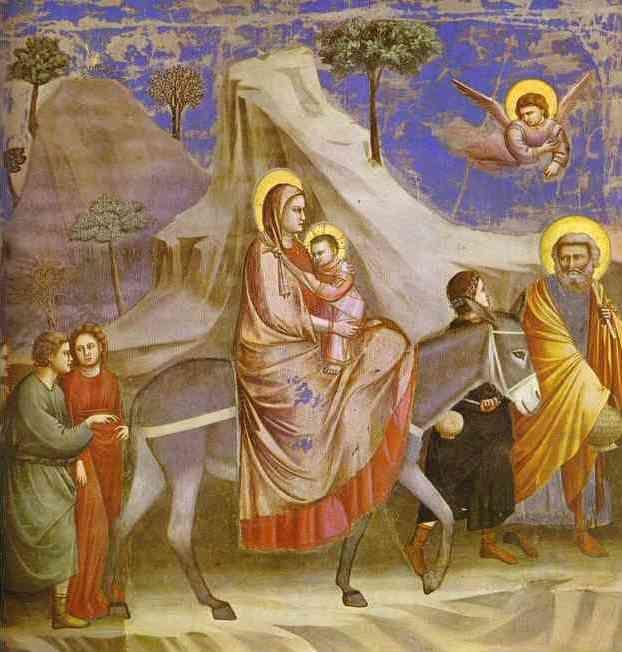 Now when they had departed, behold, an angel of the Lord appeared to Joseph in a dream and said, “Rise, take the child and his mother, and flee to Egypt, and remain there until I tell you, for Herod is about to search for the child, to destroy him.” And he rose and took the child and his mother by night and departed to Egypt and remained there until the death of Herod. This was to fulfill what the Lord had spoken by the prophet, “Out of Egypt I called my son.” (