Feb 25, 2013

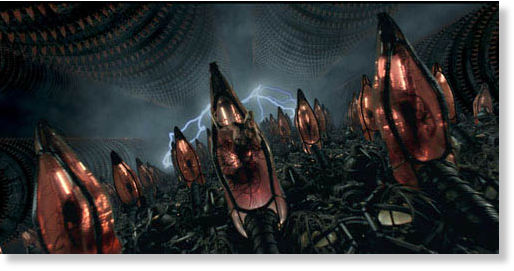
In Japan, The Matrix is now reality as humans are used as living batteries

Tyler Durden
Zero Hedge
 
Who says necessity is not the mother of invention in the New Normal. While a tiny fraction of the Japanese population is enjoying the transitory effects of Abe's latest reflating "wealth effect" policy (even as China has made it clear said policy will end quite soon), the bigger problem for Japan is that even sooner, more and more of it will be reliant on hamster wheels to generate electricity, as LNG prices have just hit a record high and are rising at a breakneck pace, and as local nuclear power generation has collapsed to virtually zero. Which means one thing: electricity will soon become so unaffordable only those who are invested in the daily 2% Nikkei surges will be able to electrify their immediate surroundings.

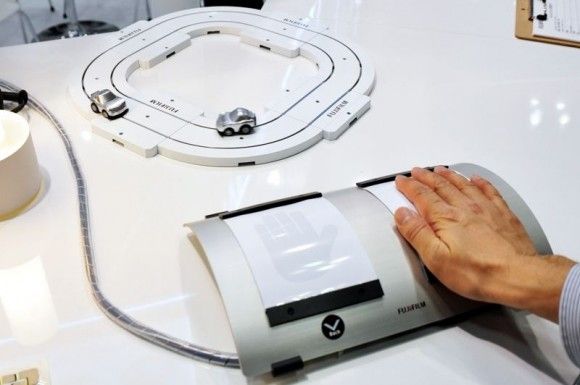
So what is Japan's solution? A quite ingenious one: as Geek.com and ASR both report, Japan's Fujifilm has created organic printed sheet that harvests energy from body heat, or in other words, converts body heat to electricity. Finally, at least one key part of the Matrix "reality" is now fully operational - the use of human beings as batteries.

Specifically, Fujifilm Corp. and the National Institute of Advanced Industrial Science and Technology (AIST) have developed a resin sheet that generates electricity, utilizing the temperature difference between human body and the air.

The power-generating sheet developed by Fujifilm and AIST could be used to provide additional power for portable devices.

The sheet uses the thermoelectric effect, which generates a voltages due to the temperature difference between the surface of an object and its reverse side. The sheet is 0.4mm thick and soft. In a normal environment, the temperature of the air is lower than that of the human body or the surface of clothes. That temperature difference can be used to generate a steady flow of electricity.

From Geek:
Fujifilm has used the Nanotech 2013 conference in Tokyo to demonstrate some progress with the creation of a new thermoelectric conversion material. Such a material can convert temperature differences directly into electricity, which can then be stored or used immediately to power or charge some device.

The material Fujifilm has created in collaboration with Japan's National Institute of Advanced Industrial Science and Technology (AIST) is desirable because it is both organic and has the highest thermoelectric conversion efficiency yet seen. Using a temperature difference of just one degree Celsius it can produce "several milliwatts" of electricity.

The good news continues as Fujifilm can manufacture the organic thermoelectric conversion material using a printing technique, making it easy to produce a range of sheet sizes at a minimal cost. It's also not rigid, so can be wrapped around an object such as an area of your body.

So far two primary uses are seen for the new material. The first is as an attachment patients can wear on their skin to power medical devices. The second is as part of solar panels as a way of collecting additional energy and therefore making them more efficient.

Depending on how cheap and quick the material is to produce, we may see it appear as an accessory you can wear to help charge your smartphone on the go in the near future.
 
And since life always immitates Hollywood, we now await for the release of the prophecy which will disclose just who it is that will destroy Bernanke's centrally-planned surreality, in which those who trade stocks are in a Matrix of their own.
 
Read more at - http://www.sott.net/article/258854-In-Japan-The-Matrix-is-now-reality-as-humans-are-used-as-living-batteries

Extra-Biblical Prophecies - The Warnings of Fatima and LaSalette

Fatima is a bit of a conundrum for me, as I believe it was prophetic, but also a pagan/fallen angel apparition. If you haven't read the story of what happened at Fatima, there are enough hints here to find some good links. Thousands saw the final event, and something supernatural occurred. It's also clear that the third secret of Fatima was not revealed to the public. Before we totally dismiss pagan prophecies, it's good to remember that Balaam was also pagan, but his prophetic abilities were real and his pronouncements accurate. (Numbers 22-24) While we can't fully comprehend the why's of such things, we can look critically at them to evaluate them for truth. Let's do that here.

By Tom Horn & Cris Putnam


Possibly at the center of the Prophecy of the Popes and a “Vatican cover-up” of the complete vision of Fátima (and related prophecies) is a potential papal contender for the role of Petrus Romanus or “Peter the Roman”—Cardinal Tarcisio Pietro (Peter) Bertone, who was born in Romano (the Roman) Canavese (“Peter the Roman”).

Among other things, Cardinal Bertone is, at the time Exo-Vaticana heads to the printer, second in command at the Vatican. As the Secretary of State and the Pope’s Camerlengo (Italian for “Chamberlain”), he is responsible during a papal vacancy to serve as acting Head of State of the Vatican City until “the time of agreement” and the election of a new pope. This means, if even only for a few weeks, a man whose name literally means "Peter the Roman" will hold the most powerful position at the Vatican starting in a few days. Our interest for the moment is with his 2007 book, The Last Seer of Fátima that appears to have accomplished exactly the opposite of its primary objective, mainly, to refute another work by famous Italian media personality, journalist, and author Antonio Socci, whose manuscript The Fourth Secret of Fátima claims the Holy See has repressed information concerning the true secrets delivered in Marian apparitions to three shepherd children in the rural Portuguese village of Fátima in 1917. The three young people were Lúcia (Lucy) dos Santos and her cousins Francisco Marto and his sister Jacinta Marto, whose visions—containing elements of prophecy and eschatology—are officially sanctioned by the Catholic Church.

In his uncharacteristically explosive response to Cardinal Bertone—Dear Cardinal Bertone: Who Between You and Me is Deliberately Lying?—we first discover how, after significant time and investigation, Mr. Socci concluded the Vatican had withheld an important part of the Fátima revelation during its celebrated press conference and release of “The Message of Fátima,” June 26, 2000.

Socci describes in the introduction to his book how at first he truly believed the Vatican’s official version of the Fátima Message, prepared at that time by Cardinal Ratzinger (current Pope Benedict XVI) and Monsignor Tarcisio Bertone (possible next and final pope), which with its release to the public claimed to be the final Secret. Then Socci came across an article by Italian journalist Vittorio Messori, entitled “The Fátima Secret, the Cell of Sister Lucy Has Been Sealed,” and a series of questions cast suspicions on the Vatican’s authorized publication for which Socci had no answers. Why would Messori, whom Socci describes as “a great journalist, extremely precise…the most translated Catholic columnist in the world,”[i] want to challenge the Church’s official version of the Third Secret without good cause, he reasoned. Not long after, Socci came across a second similar thesis published in Italy by a young and careful writer named Solideo Paolini, which convinced Socci to begin a probe of his own focusing on the biggest question of them all—was a portion of Lucy’s hand-written document, which contained the principal words “of the Blessed Virgin Mother” concerning end-times conditions at Rome, being withheld from public view by the Vatican due to its potentially explosive content?

Socci’s suspicions only deepened after he requested an interview (well ahead of his work, The Fourth Secret of Fátima which later cast doubts on Rome’s official story) with Cardinal Bertone, who, together with Joseph Ratzinger, had coauthored the June 26, 2000 Vatican document that purportedly released the final segment of the “The Message of Fátima.”[ii]

“I’ve searched many influential authorities inside the Curia, like Cardinal Bertone, today Secretary of State in the Vatican, who was central to the publication of the Secret in 2000,” Socci says. “The Cardinal, who actually favored me with his personal consideration, having asked me to conduct conferences in his former diocese of Genoa, [now] didn’t deem it necessary to [even] answer my request for an interview. He was within his rights to make this choice, of course, but this only increased the fear of the existence of embarrassing questions, and most of all, that there is something (extremely important) which needs to be kept hidden.”[iii]

Though not expecting to uncover such a colossal enigma, in the end Socci was left convinced that two sets of the Fátima Secret actually exist: one which the public has seen, and another, which for reasons yet unknown, the Vatican is keeping buried.

At the beginning of this possible plot was a description of the Third Secret given by Cardinal Angelo Sodano a full five weeks before the June 26, 2000 “Message of Fátima” was delivered by Rome. Sodano’s comments came during Pope John Paul II’s beautification of Jacinta and Francisco at Fátima, when he surprised many in a speech, saying the vision of a “bishop clothed in white” who makes his way with great effort past the corpses of bishops, priests, and many lay persons, is only “apparently dead” when he falls to the ground under a burst of gunfire.[iv]

Using the added language “apparently dead,” Cardinal Sodano went on to suggest the Fátima vision had been fulfilled in the 1981 assassination attempt against John Paul II. “It appeared evident to His Holiness that it was ‘a motherly hand which guided the bullet’s path,’ enabling the ‘dying Pope’ to halt ‘at the threshold of death.’”[v]

Though some applauded Sodano’s presentation that day, others saw in it, and him, a concerted cover-up, as the Fátima prophecy and the alleged fulfillment in 1981 bore significant differences. The Washington Post was happy to point out these glaring contradictions on July 1, 2000 when under the stinging headline, “Third Secret Spurs More Questions: Fátima Interpretation Departs from Vision” the newspaper opined:

On May 13, Cardinal Angelo Sodano, a top Vatican official, announced the imminent release of the carefully guarded text. He said the Third Secret of Fátima foretold not the end of the world, as some had speculated, but the May 13, 1981, shooting of Pope John Paul II in St. Peter’s Square.

Sodano said the manuscript…tells of a “bishop clothed in white” who, while making his way amid corpses of martyrs, “falls to the ground, apparently dead, under a burst of gunfire.”

But the text released Monday (June 26) leaves no doubt about the bishop’s fate, saying that he “was killed by a group of soldiers who fired bullets and arrows at him.” Everyone with the pontiff also dies: bishops, priests, monks, nuns and lay people. John Paul survived his shooting at the hands of a single gunman, Mehmet Ali Agca, and no one in the crowd was harmed in the attack. [vi]

Other facts the Washington Post did not point out is how according to the prophecy the pope is killed in “a big city half in ruins” while walking to the top of a mountain and kneeling at the foot of a cross. John Paul was riding in the pope’s car through St. Peter’s square, not walking, there was no big mountain or kneeling at a cross, and the city was not half-destroyed. And then there is the contradictory testimony by Cardinal Ratzinger (current Pope Benedict XVI) himself from 1984, which he gave in an interview with the Pauline Sisters’ newsletter (Jesus Magazine) and which was re-published a year later in The Ratzinger Report, titled “Here is Why the Faith is in Crisis.” In this discussion, Ratzinger, who had read the actual Fátima Secret, said the vision involved “dangers threatening the faith and the life of the Christian and therefore [the life] of the world” as well as marking the beginning of the end times.[vii] Additionally, he said, “the things contained in [the] Third Secret correspond to what has been announced in Scripture and has been said again and again in many other Marian apparitions” and that, “If it is not made public, at least for the time being, it is in order to prevent religious prophecy from being mistaken for a quest for the sensational.”[viii]

Concerned Catholics have since contrasted this 1984 testimony with the more recent report by Ratzinger, and have wondered when, where, and under what circumstance his account changed. The 1981 assassination attempt against John Paul II certainly did not fulfill the published parts of the Fátima vision nor correspond to the “last times” as depicted in the Bible. And then there is the affirmation by the Vatican’s most respected scholars who had deduced from years of studying the Fátima prophecy that it concerned an end-time global crisis of faith emanating from the highest echelons at Rome. Celebrated Cardinal Mario Luigi Ciappi (1909–1996) served as the personal theologian to five popes including John Paul II and unreservedly held that in “the Third Secret it is foretold, among other things, that the great apostasy in the Church begins at the top” (emphasis added).[ix] Cardinal Silvio Oddi added in a March, 1990 interview with Il Sabato magazine in Rome, Italy: “…the Third Secret alluded to dark times for the Church: grave confusions and troubling apostasies within Catholicism itself… If we consider the grave crisis we have lived through since the [Vatican II] Council, the signs that this prophecy has been fulfilled do not seem to be lacking.”[x] Even more impressive in his testimony was the late Father Joaquin Alonso who knew Sister Lucy personally, had conversations with her, was for sixteen years the archivist at Fátima, and who before his death in 1981, stated the following concerning the Third Secret:

…the text makes concrete references to the crisis of faith within the Church and to the negligence of the pastors themselves [and the] internal struggles in the very bosom of the Church and of grave pastoral negligence by the upper hierarchy… terrible things are to happen. These form the content of the third part of the Secret… [and] like the secret of La Salette, for example, there are more concrete references to the internal struggles of Catholics or to the fall of priests and religious. Perhaps it even refers to the failures of the upper hierarchy of the Church. For that matter, none of this is foreign to other communications Sister Lucy has had on this subject.[xi]

Perhaps most unvarying among those who actually had access to and read the Fátima message was Jesuit Malachi Martin, a close personal friend of Pope Paul VI who worked within the Holy See doing research on the Dead Sea Scrolls, publishing articles in journals on Semitic paleography, and teaching Aramaic, Hebrew, and Sacred Scripture. As a member of the Vatican Advisory Council and personal secretary to renowned Jesuit Cardinal Augustin Bea, Martin had privileged information pertaining to secretive church and world issues, including the Third Secret of Fátima, which Martin hinted spelled out parts of the plan to formerly install the dreaded False Prophet (Petrus Romanus?) during a “Final Conclave.” Comparing the conflicting statements between Cardinal Ratzinger and Malachi Martin, Father Charles Fiore, a good friend of the murdered priest Alfred J. Kunz (discussed elsewhere in this book) and the late eminent theologian Fr. John Hardon, said in a taped interview: “We have two different Cardinal Ratzingers; we have two different messages. But Malachi Martin was consistent all the way through.”[xii]

Wikipedia’s entry on the Three Secrets of Fátima adds:

On a syndicated radio broadcast, Father Malachi Martin was asked the following question by a caller: “I had a Jesuit priest tell me more of the Third Secret of Fátima years ago, in Perth. He said, among other things, the last pope would be under control of Satan… Any comment on that?” Fr. Martin responded, “Yes, it sounds as if they were reading, or being told, the text of the Third Secret.” In a taped interview with Bernard Janzen, Fr. Martin was asked the following question: “Who are the people who are working so hard to suppress Fátima?” Fr. Martin responded, “A bunch, a whole bunch, of Catholic prelates in Rome, who belong to Satan. They’re servants of Satan. And the servants of Satan outside the Church, in various organizations; they want to destroy the Catholicism of the Church, and keep it as a stabilizing factor in human affairs. It’s an alliance. A dirty alliance, a filthy alliance...” In the same interview, Fr. Martin also said with respect to Lucia [Lucy of Fátima] that, “They’ve (The Vatican) published forged letters in her name; they’ve made her say things she didn’t want to say. They put statements on her lips she never made.”[xiii]

One thing is certain; something unnerving did seem to be happening around and with Sister Lucy in the lead-up to the release of the so-called Final Secret. After all, the first two parts of the Message of Fátima had been publically issued by her Bishop in 1941, and the Third Secret sent to the Holy See with instructions that it be made public in 1960. That year was chosen according to Lucy because the “Holy Mother” had revealed to her that it would then be when “the Message will appear more clear.” And lo and behold it was immediately following 1960 that Vatican II set in motion what many conservative Catholics today believe is a crisis of faith in the form of Roman heresies. And though there could have been much more to the revelation than just a Vatican II warning, and the Secret was not released in 1960 as it was supposed to be anyway (so we may never know), when Pope John XXIII read the contents of the secret, he refused to publish it, and it remained under lock and key until it was supposedly disclosed in the year 2000. If the first two Secrets were any indication of the scope and accuracy of the Third one, they had been amazingly insightful including the “miracle of the sun” that was witnessed “by over 70,000 persons (including non-believers hoping to dispel the apparitions), whereby the sun itself [seemed to be] dislodged from its setting and performed miraculous maneuvers while emitting astonishing light displays; the end of World War I; the name of the pope who would be reigning at the beginning of World War II; the extraordinary heavenly phenomenon that would be witnessed worldwide foretelling of the beginning of World War II; the ascendance of Russia (a weak and insignificant nation in 1917) to an evil monolithic power that would afflict the world with suffering and death.”[xiv]

But something about the Third and Final Secret was different, a phenomenon evidently to be avoided and obfuscated at all costs by the hierarchy of Rome. At a minimum, it spoke of the apostatizing of the clergy and dogma that followed Vatican II. And yet perhaps these were simply devices to lead to something more sinister, elements so dark that it was keeping Lucy awake at night. When she finally had written down the Secret in 1944 under obedience to Rome, she had a hard time doing so because of its terrifying contents. It had taken a fresh visit from the “Holy Mother” herself to convince Lucy it was okay. Then in the years following, she had been ordered by the Vatican to remain silent concerning its disclosure. Visits to her for hours at a time were made by Cardinal Bertone under orders from the pope during which the two of them would go over the diminutive aspects of the vision in private. This happened in 2000, again in 2001, and again in 2003. When at age ninety-seven the Carmelite nun finally passed away (2005), taking whatever secrets remained with her to the grave, her behavior at the last seemed odd to Catholics who understood Roman doctrinal “salvation” implications. Antonio Socci comments on this, pointing out how the long visits with the aged seer were not videotaped or recorded for posterity because viewers would have seen for themselves the psychological pressure that was being exerted on the cloistered Sister. “These thoughts came back to my mind while I was reading a passage of Bertone’s book, in which the Cardinal remembers that at one point the seer was ‘irritated’, and she told him ‘I’m not going to confession!’” About this, Socci wonders, “What kind of question could Sister Lucy answer to so strongly? Maybe someone was reminding the old Sister of the ecclesiastical power, and hinting that she would ‘not get absolution’? We don’t know, because the prelate [Bertone]—who knows and remembers the Sister’s (quite tough) answer very well—says he literally ‘forgot’ what his question was.”[xv]

It appears in truth that poor Lucy was trapped inside a sinister ring of Romanita Omertà Siciliani or “Mafia Code of Silence” imposed by Rome. Yet Socci believes the full truth of Fátima may have gotten out anyway, and based on his investigation he offers a brave theory in his book The Fourth Secret of Fátima about what actually transpired in 2000 behind the Vatican’s walls. John Vennari summarizes Socci’s shocking hypothesis this way:

Socci believes that when John Paul II decided to release the Secret, a power-struggle of sorts erupted in the Vatican. He postulates that John Paul II and Cardinal Ratzinger wanted to release the Secret in its entirety, but Cardinal Sodano, then Vatican Secretary of State, opposed the idea. And opposition from a Vatican Secretary of State is formidable.

A compromise was reached that sadly reveals heroic virtue from none of the main players.

The “Bishop dressed in white” vision, which is the four pages written by Sister Lucy would be initially revealed by Cardinal Sodano, along with his ludicrous interpretation that the Secret is nothing more than the predicted 1981 assassination attempt on Pope John Paul II.

At the same time, at the May 13 2000 beatification ceremony of Jacinta and Francisco, Pope John Paul II would “reveal” the other part—the most “terrifying part”—of the Secret obliquely in his sermon. It was here that John Paul II spoke on the Apocaplyse: “Another portent appeared in Heaven; behold, a great red dragon” (Apoc. 12: 3). These words from the first reading of the Mass make us think of the great struggle between good and evil, showing how, when man puts God aside, he cannot achieve happiness, but ends up destroying himself… The Message of Fátima is a call to conversion, alerting humanity to have nothing to do with the “dragon” whose “tail swept down a third of the stars of Heaven, and dragged them to the earth” (Apoc. 12:4).

The Fathers of the Church have always interpreted the stars as the clergy, and the stars swept up in the dragon’s tail indicates a great number of churchmen who would be under the influence of the devil. This was Pope John Paul II’s way of explaining that the Third Secret also predicts a great apostasy.[xvi]

If Socci is correct in this analysis, Bishop Richard Nelson Williamson, an English traditionalist Catholic and member of the Society of St. Pius X who opposes changes in the Catholic Church brought on by Vatican II, may have verified his hypothesis in 2005 when he related how a priest acquaintance of his from Austria shared privately that Cardinal Ratzinger had confessed: “I have two problems on my conscience: Archbishop Lefebvre and Fátima. As to the latter, my hand was forced.” Who could have “forced” Ratzinger’s hand to go along with a false or partial statement on the final Fátima Secret? Was it pressure from the papal office, or, as Williamson questions, “Some hidden power behind both Pope and Cardinal?”[xvii] If Pope John Paul II’s sermon at Fátima did in fact speak to the “terrifying part” of the Final Secret—as in the Dragon’s tail sweeping down a third of the clergy to do his bidding—we are left with the unsettling impression that at least 33 percent (Masonic marker) of the Vatican’s hierarchy are committed to a Satanic Plan.
 

Stay Free part 40 - Government Legalism - The Road to Tyranny


Feb 24, 2013

Scorecard: How Many Rights Have Americans REALLY Lost?

Posted by WashingtonsBlog
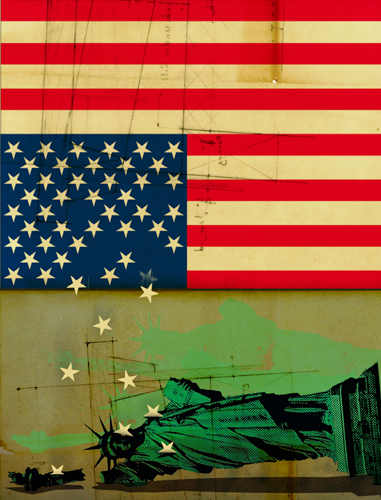
http://www.theispot.com/images/source/FredaLibertyUpended1.jpgPainting by Anthony Freda: www.AnthonyFreda.com

How Many Constitutional Freedoms Do We Still Have?

Preface: While a lot of people talk about the loss of our Constitutional liberties, people usually speak in a vague, generalized manner … or focus on only one issue and ignore the rest.

This post explains the liberties guaranteed in the Bill of Rights – the first 10 amendments to the United States Constitution – and provides a scorecard on the extent of the loss of each right.

First Amendment

The 1st Amendment protects speech, religion, assembly and the press:
Congress shall make no law respecting an establishment of religion, or prohibiting the free exercise thereof; or abridging the freedom of speech, or of the press; or the right of the people peaceably to assemble, and to petition the Government for a redress of grievances.
However, the government is arresting those speaking out … and violently crushing peaceful assemblies which attempt to petition the government for redress.

A federal judge found that the law allowing indefinite detention of Americans without due process has a “chilling effect” on free speech. And see this and this.

The threat of being labeled a terrorist for exercising our First Amendment rights certainly violates the First Amendment. The government is using laws to crush dissent, and it’s gotten so bad that even U.S. Supreme Court justices are saying that we are descending into tyranny.

For example, the following actions may get an American citizen living on U.S. soil labeled as a “suspected terrorist” today:
And holding the following beliefs may also be considered grounds for suspected terrorism:
Of course, Muslims are more or less subject to a separate system of justice in America.

And 1st Amendment rights are especially chilled when power has become so concentrated that the same agency which spies on all Americans also decides who should be assassinated.

Second Amendment

The 2nd Amendment states:
A well regulated Militia, being necessary to the security of a free State, the right of the people to keep and bear Arms, shall not be infringed.
Gun control and gun rights advocates obviously have very different views about whether guns are a force for violence or for good.

But even a top liberal Constitutional law expert reluctantly admits that the right to own a gun is as important a Constitutional right as freedom of speech or religion:
Like many academics, I was happy to blissfully ignore the Second Amendment. It did not fit neatly into my socially liberal agenda.

***

It is hard to read the Second Amendment and not honestly conclude that the Framers intended gun ownership to be an individual right. It is true that the amendment begins with a reference to militias: “A well regulated militia, being necessary to the security of a free state, the right of the people to keep and bear arms, shall not be infringed.”

Accordingly, it is argued, this amendment protects the right of the militia to bear arms, not the individual.

Yet, if true, the Second Amendment would be effectively declared a defunct provision. The National Guard is not a true militia in the sense of the Second Amendment and, since the District and others believe governments can ban guns entirely, the Second Amendment would be read out of existence.

***

More important, the mere reference to a purpose of the Second Amendment does not alter the fact that an individual right is created. The right of the people to keep and bear arms is stated in the same way as the right to free speech or free press. The statement of a purpose was intended to reaffirm the power of the states and the people against the central government. At the time, many feared the federal government and its national army. Gun ownership was viewed as a deterrent against abuse by the government, which would be less likely to mess with a well-armed populace.

Considering the Framers and their own traditions of hunting and self-defense, it is clear that they would have viewed such ownership as an individual right — consistent with the plain meaning of the amendment.

None of this is easy for someone raised to believe that the Second Amendment was the dividing line between the enlightenment and the dark ages of American culture. Yet, it is time to honestly reconsider this amendment and admit that … here’s the really hard part … the NRA may have been right. This does not mean that Charlton Heston is the new Rosa Parks or that no restrictions can be placed on gun ownership. But it does appear that gun ownership was made a protected right by the Framers and, while we might not celebrate it, it is time that we recognize it.
The gun control debate – including which weapons and magazines are banned – is still in flux …

Third Amendment

The 3rd Amendment prohibits the government forcing people to house soldiers:
No Soldier shall, in time of peace be quartered in any house, without the consent of the Owner, nor in time of war, but in a manner to be prescribed by law.
Hey … we’re still honoring one of the Amendments! Score one for We the People!
 In America, Journalists Are Considered Terrorists
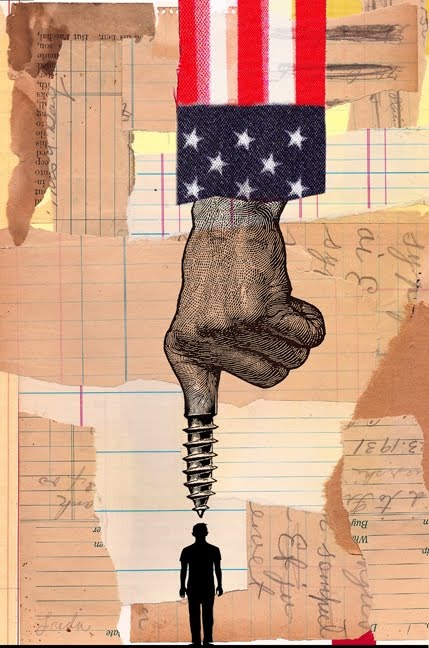
Painting by Anthony Freda: www.AnthonyFreda.com.

A Call to Anguish - David Wilkerson

I've found in my brief time comprehending the truth that the majority of folks, including those in churches, don't want to hear it.  The truth is hard, but it also saves.  We need it, desperately.  It is a fact.  "You shall know the Truth, and the Truth shall make you free".  (John 8:32)

Heaven - Kent Hovind


Petrus Romanus, the Alien Savior and the Destruction of Rome - Part 1

By Tom Horn & Cris Putnam


Last Sunday, Pope Benedict stood before a crowd of 50-thousand people and announced: “The time of testing is here.” This oblique reference to the start of great tribulation reflects our previous work, Petrus Romanus, in which we carefully detailed a prophecy by Malachy O’Morgair, or “Saint Malachy” as he is known to Catholics, having to do with “the last pope.”

The Prophecy of the Popes, hidden for hundreds of years inside the highly guarded vaults of the Vatican library contains a list of Latin verses predicting each of the Roman Catholic popes from Pope Celestine II to the final pope, Petrus Romanus or “Peter the Roman,” whose reign assists the rise of Antichrist and ends in the destruction of Rome. According to this nine-hundred-year-old prophecy, the pope following Benedict XVI is this final pontiff. The last segment of the prophecy reads:

In the extreme persecution of the Holy Roman Church, there will sit Peter the Roman, who will nourish the sheep in many tribulations; when they are finished, the City of Seven Hills will be destroyed, and the dreadful judge will judge his people. The End.[i]

While investigating this mysterious prophecy, we learned of the long line of other Roman Catholic leaders who, down through time, also foresaw Rome being destroyed after becoming an engine of the Antichrist. A remarkable example of this was Dr. Henry Edward Cardinal Manning, who delivered a series of lectures in 1861 under the title, “The Present Crises of the Holy See Tested by Prophecy,” in which he predicted a future crisis in the Roman Catholic Church resulting in apostasy and the rise of the False Prophet and Antichrist. Of the prophecy in the book of Revelation (chapter 18) concerning the end-time destruction of Mystery Babylon, Manning wrote:

We read in the Book Apocalypse, of the city of Rome, that she said in the pride of her heart, “I sit as a queen, and am no widow, and sorrow I shall not see. Therefore shall her plagues come in one day: death, and mourning, and famine; and she shall be burned with fire, because God is strong who shall judge her.” Some of the greatest writers of the Church tell us that…the great City of Seven Hills…the city of Rome will probably become apostate…and that Rome will again be punished, for he will depart from it; and the judgment of God will fall.[ii]

Manning continued, explaining how Catholicism’s greatest theologians agreed with this point of view:

The apostasy of the city of Rome…and its destruction by Antichrist may be thoughts so new to many Catholics, that I think it well to recite the text of theologians, of greatest repute. First, Malvenda, who writes expressly on the subject, states as the opinion of Ribera, Gaspar Melus, Viegas, Suarez, Bellarmine, and Bosius, that Rome shall apostatize from the faith, drive away the Vicar of Christ, and return to its ancient paganism. Malvenda’s words are:

But Rome itself in the last times of the world will return to its ancient idolatry, power, and imperial greatness. It will cast out its Pontiff, altogether apostatize from the Christian faith, terribly persecute the Church, shed the blood of martyrs more cruelly than ever, and will recover its former state of abundant wealth, or even greater than it had under its first rulers.

Lessius says: “In the time of Antichrist, Rome shall be destroyed, as we see openly from the thirteenth chapter of the Apocalypse;” and again: “The woman whom thou sawest is the great city, which hath kingdom over the kings of the earth, in which is signified Rome in its impiety, such as it was in the time of St. John, and shall be again at the end of the world.” And Bellarmine: “In the time of Antichrist, Rome shall be desolated and burnt, as we learn from the sixteenth verse of the seventeenth chapter of the Apocalypse.” On which words the Jesuit Erbermann comments as follows: “We all confess with Bellarmine that the Roman people, a little before the end of the world, will return to paganism, and drive out the Roman Pontiff.”

Viegas, on the eighteenth chapter of the Apocalypse says: “Rome, in the last age of the world, after it has apostatized from the faith, will attain great power and splendor of wealth, and its sway will be widely spread throughout the world, and flourish greatly. Living in luxury and the abundance of all things, it will worship idols, and be steeped in all kinds of superstition, and will pay honor to false gods. And because of the vast effusion of the blood of martyrs which was shed under the emperors, God will most severely and justly avenge them, and it shall be utterly destroyed, and burned by a most terrible and afflicting conflagration.”[iii]

With the forthcoming election of Petrus Romanus on everybody’s mind and not yet knowing who the Final Pope that leads Rome into destruction and great tribulation described by Catholic seers above will actually be, we should remind readers of the 61-year old codex we uncovered in our book Petrus Romanus (this book in French and English comes free on the data DVDs that will be given away with Exo-Vaticana - read more here). It was written by Jesuit academic Rene Thibaut in 1958 and contains an intriguing suggestion that the next pope will either be named ‘Pius’ or will somehow be related to a pope of that name from the past. Commenting on just one of the hidden anagrams he discovered in the Prophecy of the Popes, he observes, “Note that this way of dividing the words to sort various meanings is a method dear to the ancient Irish.”[iv] A simple example of an anagram is seen in the Latin text “Peregrinus apostolicus”[v] which was the prophecy for the ninety-sixth pope on the list, Pius VI. The anagram not only reveals the papal name, it does it twice: PeregIinUS aPostolIcUS. That’s right! The name “Pius” is rather transparently embedded in the original Latin text twice, which is rather astounding considering we have a published copy of the Prophecy of the Popes dated almost two hundred years before Pius VI was elected. Furthermore, Thibaut argues the encrypted couplet within “Apostolic pilgrim” signifies both Pius VI and the very next pope Pius VII who were both forced into foreign exile (i.e., pilgrims). He also suggests that the repetition serves as a poetic refrain. In other words, “Pius! Pius!” is similar to the excited binary “Mayday, Mayday!” that sailors cry out in dire circumstances.[vi]

With this in mind, we pointed readers last year to the electrifying visions of another pope named Pius—Pope Pius X who served as pope from 1903 to 1914 and who saw a papal successor carrying the same name Pius fleeing Rome over the bodies of dead priests at the onset of the end times. Pius X is widely reported to have said:

What I have seen is terrifying! Will I be the one, or will it be a successor? What is certain is that the Pope will leave Rome and, in leaving the Vatican, he will have to pass over the dead bodies of his priests! Do not tell anyone this while I am alive.[vii]

In a second vision during an audience with the Franciscan order in 1909, Pope Pius X appeared to fall into a trance. After a few moments, he opened his eyes and rose to his feet, announcing:

I have seen one of my successors, of the same name [a future pope named Pius], who was fleeing over the dead bodies of his brethren. He will take refuge in some hiding place; but after a brief respite, he will die a cruel death. Respect for God has disappeared from human hearts. They wish to efface even God’s memory. This perversity is nothing less than the beginning of the last days of the world.[viii]

The third part of the Secret of Fátima, which was supposedly released in total by the Vatican June 26, 2000, seems to echo the visions of Pius X. A section of the material reads:

…before reaching there the Holy Father passed through a big city half in ruins and half trembling with halting step, afflicted with pain and sorrow, he prayed for the souls of the corpses he met on his way; having reached the top of the mountain, on his knees at the foot of the big Cross he was killed by a group of soldiers who fired bullets and arrows at him, and in the same way there died one after another the other Bishops, Priests, men and women Religious, and various lay people of different ranks and positions.[ix]

The conceptual framework of these visions and their validity is volatile among many Catholics who believe Rome is complicit in an intentional cover-up involving the true Third Secret of Fátima as well as other suppressed Catholic foresights that are rife with wildly different predictions concerning the future prophetic role of the Roman Catholic Church. Marian apparitions, visions by popes, interpretations by cardinals of the apocalypse, and approved mystical prophecies often stand at odds with recent Vatican publications. Even the “Catechism of the Catholic Church” approved by the Church and promulgated by Pope John Paul II (released in English in 1994, the first catechism in more than four hundred years), which draws on the Bible, the mass, the sacraments, traditions, teachings, and the lives of the saints, states under the section The Church’s Ultimate Trial:

675 Before Christ’s second coming the Church must pass through a final trial that will shake the faith of many believers. The persecution that accompanies her pilgrimage on earth will unveil the mystery of iniquity in the form of a religious deception offering men an apparent solution to their problems at the price of apostasy from the Truth. The supreme religious deception is that of the Antichrist, a pseudo-messianism by which man glorifies himself in the place of God and his Messiah who has come in the flesh.[x]

Recent Catholic priests have confirmed these visions of destroyed apostate Rome, some pointing to the conclave and the inevitable danger of the False Prophet rising from within the ranks of Catholicism. These were also discussed in the 2012 book, Petrus Romanus as:

Father E. Sylvester Berry, whose book The Apocalypse of Saint John foretold the usurpation of the papacy by a false prophet; Father Herman Bernard Kramer, whose work The Book of Destiny painted a terrifying scenario in which Satan enters the church and assassinates the true pope (possibly during conclave) in order that his false pope can rise to rule the world; as well as similar beliefs by priests like Father John F. O’Connor, Father Alfred Kunz, and Father Malachi Martin.… In a two-hour presentation (available on DVD), Father O’Connor gave a homily titled “The Reign of the Antichrist,” in which he described how changes within [the Roman Catholic] institution were already at work before his death to provide for the coming of Antichrist. (brackets in original)[xi]

O’Connor’s worst fears have certainly been realized. An associate of Popes John Paul II and Benedict XVI who is considered one of the most important Catholic theologians of the twentieth century, Hans Urs von Balthasar, wrote a provocative essay, “Casta Meretrix,” (“Chaste Harlot”) that not only identified the Roman Catholic Church as the Great Harlot, but embraced it:

The figure of the prostitute [forma meretricis] is so appropriate for the Church…that it…defines the Church of the New Covenant in her most splendid mystery of salvation. The fact that the Synagogue left the Holy Land to go and be among the pagans was an infidelity of Jerusalem, the fact that “she opened her legs in every road in the world.”

But this same movement, which brings her to all the peoples, is the mission of the Church. She must unite and merge herself with every people, and this new apostolic form of union cannot be avoided.[xii]

While the embrace of whoredom is astonishing, the convicting words of prophecy, “Come out of her, my people, That ye be not partakers of her sins, And that ye receive not of her plagues” (Revelation 18:4), seem to forecast such apostasy. In the next entry we will re-examine what was happening around the Fatima prophecies and whether Pope Benedict himself—and the man that wants to be Petrus Romanus—have, all along, held deep secrets concerning the upcoming conclave toward world-spanning ramifications.