by Lambert Dolphin

Why God Became a Man?
The religion page in the
Saturday newspaper these days treats Jesus as a great moral teacher
whose words we may or may not have accurately recorded for us in the
gospels. Jesus may have been a remarkable teacher, but so was
Confucius, Buddha, or Mohammed. The disciples of Jesus, and the
majority of the Jews who enthusiastically followed the Master at the
beginning of his public ministry clearly hoped he would bring in the
kingdom of God by throwing out the Roman overlords and bringing Israel
back to the glory the nation had in the days of Solomon. Reading
through the gospels there is plenty of evidence that Jesus' teachings
were inexhaustibly rich and profound and authoritative. His miracles
were real and brought much relief from pain, suffering and even death.
His manhood, lived out in total dependence on the indwelling Father,
was startling to many because no man living or dead had ever come close
to measuring up to Jesus' demonstration of what God intended normal
manhood to be.
While the people pressed upon him to
hear the word of God, he was standing by the lake of Gennesaret. And he
saw two boats by the lake; but the fishermen had gone out of them and
were washing their nets. Getting into one of the boats, which was
Simon's, he asked him to put out a little from the land. And he sat
down and taught the people from the boat. And when he had ceased
speaking, he said to Simon, "Put out into the deep and let down your
nets for a catch." And Simon answered, "Master, we toiled all night and
took nothing! But at your word I will let down the nets." And when
they had done this, they enclosed a great shoal of fish; and as their
nets were breaking, they beckoned to their partners in the other boat
to come and help them. And they came and filled both the boats, so that
they began to sink.

But
when Simon Peter saw it, he fell down at Jesus' knees, saying, "Depart
from me, for I am a sinful man, O Lord." For he was astonished, and all
that were with him, at the catch of fish which they had taken; and so
also were James and John, sons of Zebedee, who were partners with
Simon. And Jesus said to Simon, "Do not be afraid; henceforth you will
be catching men." (Luke 5:1-10)
Jesus probably first realized his calling when he was about 12 years old,
And
the child grew and became strong, filled with wisdom; and the favor of
God was upon him. Now his parents went to Jerusalem every year at the
feast of the Passover. And when he was twelve years old, they went up
according to custom; and when the feast was ended, as they were
returning, the boy Jesus stayed behind in Jerusalem. His parents did
not know it, but supposing him to be in the company they went a day's
journey, and they sought him among their kinsfolk and acquaintances;
and when they did not find him, they returned to Jerusalem, seeking
him. After three days they found him in the temple, sitting among the
teachers, listening to them and asking them questions; and all who
heard him were amazed at his understanding and his answers. And when
they saw him they were astonished; and his mother said to him, "Son,
why have you treated us so? Behold, your father and I have been looking
for you anxiously." And he said to them, "How is it that you sought
me? Did you not know that I must be in my Father's house?" And they did
not understand the saying which he spoke to them. And he went down
with them and came to Nazareth, and was obedient to them; and his
mother kept all these things in her heart. And Jesus increased in wisdom
and in stature, and in favor with God and man." (Luke 2:40-52)
From
the time He first realized why He had been sent into the world, Jesus
knew that His main purpose was to arrive in Jerusalem at a precise,
exact time and date on God's calendar that had been prophesied by
Daniel 700 years earlier, (Daniel 9:24-27). There he knew that he would
be betrayed by one of his own, and that he would become a sacrificial
lamb for the sins of all the world.
"...[Jesus]
strictly charged the disciples to tell no one that he was the Messiah.
From that time Jesus began to show his disciples that he must go to
Jerusalem and suffer many things from the elders and chief priests and
scribes, and be killed, and on the third day be raised. And Peter took
him and began to rebuke him, saying, "God forbid, Lord! This shall
never happen to you." But he turned and said to Peter, "Get behind me,
Satan! You are a hindrance to me; for you are not on the side of God,
but of men." Then Jesus told his disciples, "If any man would come
after me, let him deny himself and take up his cross and follow me. For
whoever would save his life will lose it, and whoever loses his life
for my sake will find it. For what will it profit a man, if he gains
the whole world and forfeits his life? Or what shall a man give in
return for his life? For the Son of man is to come with his angels in
the glory of his Father, and then he will repay every man for what he
has done. (Matthew 16:20-27)

Men
today are no different from the Jews of Jesus' day. We'd all like a
Savior who would fix up the externals of our lives, solve our financial
and emotional problems, deal with our enemies and give us at the
happiness that constantly eludes us. But the Primary Mission of Jesus
was much more serious and profound and terrible. He came to undo cosmic
evil and to accomplish a permanent fix for the problem of human sin.
The solution to human ills and to the cosmic problem of evil could not,
cannot, and did not come from human skills, ingenuity, or from our
meritorious efforts. It is the Creator Himself who formulated the
plans---from the beginning of time---for the solution of man's terrible
plight. Though the councils of God are conducted in eternity "before
the foundation of the world," in due season,
"...when
the time had fully come, God sent forth his Son, born of woman, born
under the law, to redeem those who were under the law, so that we might
receive adoption as sons." (Galatians 4:4, 5)
God
executed His plans, as He always does, according to His own timing and
pre-planning. What God did to solve the problem of evil was to enter
the human race in the Person of the Son, as a perfect, sinless man.
Jesus,
"who, though he was in the form (morphe) of God, did not count equality with God a thing to be grasped, but emptied (ekenosen) himself, taking the form of a servant, being born in the likeness of men. And being found (schemati) in human form (homoiomati)
he humbled himself and became obedient unto death, even death on a
cross. Therefore God has highly exalted him and bestowed on him the
name which is above every name, that at the name of Jesus every knee
should bow, in heaven and on earth and under the earth, and every
tongue confess that Jesus Christ is Lord, to the glory of God the
Father." (Philippians 2:6-11)
Jesus, the
Son of God became a substitute for each one of us, a sin-bearer, a
reconciler. He is called in the New Testament, "the Author (
archegos) and Finisher (
teleiotes)
of our Faith" (Heb. 12:2). By a voluntary act the Son of God chose to
become a man, to be an obedient servant, and to do everything, day by
day throughout his entire life on earth, in total dependence upon the
Father who indwelt Him.

This
passage quoted above from Philippians is of great importance to our
understanding the nature of God and the radical solution to sin God
accomplished through the incarnation of His Son. The early church
wrestled over the issue of whether Christ had one nature or two (the
problem of the "hypostatic union")---most Christians today agree that
this passage implies that Jesus Christ is both fully God and fully man.
Furthermore, Jesus lived His entire life on earth by faith in total
dependence upon the Father who dwelt in Him, thus He did not, while He
was on earth, exercise His sovereign power as God the Son. This right
and privilege (that of acting as Sovereign God), in addition to His
exalted and splendorous place beside the Father, were temporarily and
voluntarily set aside by Jesus of his own free will. The Son of God,
having become a man, grew into maturity, through suffering and
obedience, and so came to the age where He was fully qualified to die as
a substitute for the sins of the world. Then, having accomplished that
terrible, bloody work of the cross, Jesus was raised from the dead by
the Father and by the Holy Spirit. Forty days later He ascended into
the heavens. This same Jesus now sits at the "right hand of the Majesty
on High." In this series of cosmic events, Jesus has actually gained a
more exalted position in the universe than He held before. Because of
his obedience and death on the cross, He has been elevated by the
Father to the place of supreme authority in the entire universe. This
"higher state" may be difficult for us to imagine---since Jesus was
already the Son of God before He became a man---but such is the
language used of Jesus in the New Testament describing his
post-resurrection exaltation. Chicago's Moody Church pastor and
prophet, the late A.W. Tozer wrote these words:
"The
teaching of the New Testament is that now, at this very moment, there
is a Man in heaven appearing in the presence of God for us. He is as
certainly a man as was Adam or Moses or Paul; he is a man glorified, but
his glorification did not de-humanize him. Today he is a real man, of
the race of mankind, bearing our lineaments and dimensions, a visible
and audible man, whom any other man would recognize instantly as one of
us. But more than this, he is the heir of all things, Lord of all
lords, head of the church, firstborn of the new creation. He is the way
to God, the life of the believer, the hope of Israel, and the high
priest of every true worshiper. He holds the keys of death and hell,
and stands as advocate and surety for everyone who believes on him in
truth. Salvation comes not by accepting the finished work, or deciding
for Christ; it comes by believing on the Lord Jesus Christ, the whole,
living, victorious Lord who, as God and man, fought our fight and won
it, accepted our debt as his own and paid it, took our sins and died
under them, and rose again to set us free. This is the true Christ;
nothing less will do."

The Seat of Original Sin
The late Arthur Custance, a gifted Canadian Bible scholar, in his book
The Seed of the Woman,
(Ref. 1) makes a case that "original sin" in the human race may very
well be transmitted biologically from generation to generation [from
Adam] through the male sperm, rather than through the female ovum.
Custance took care to defend his premises thoroughly. The virgin birth,
Custance believed, allowed Jesus to be born of Mary free from all sin
so as to become a "lamb without spot or blemish," "tempted in every
way, just as we are, yet without sin." Scripture also speaks of Jesus
as "The Lamb slain before the foundation of the world." If original sin
is transmitted genetically by the male sperm and not by the female
ovum, then Mary, though she herself was a forgiven sinner and a mortal
daughter of Adam and Eve, could give birth to a sinless son through the
overshadowing of the Holy Spirit without ordinary fertilization by her
husband's seed. The incarnation, the life, the death, and the
resurrection of Jesus the Son of God is an awesome intrusion into our
limited space-time domain. These events which we see as merely historic
in our time frame constitute an eternal event, a transaction (known in
theology as "the eternal covenant") between the Father and the Son,
which really takes place in eternity, outside of time. The prophet
Isaiah records amazing "conversations" outside of time between God the
Father and His servant the Messiah, (Isaiah was written about 700 years
before Jesus was born) For example Isaiah 49 says:
Listen
to me, O coastlands, and hearken, you peoples from afar. The LORD
called me (Messiah) from the womb, from the body of my mother he named
my name. He made my mouth like a sharp sword, in the shadow of his hand
he hid me; he made me a polished arrow, in his quiver he hid me away.
And he said to me, 'You are my servant, Israel, (here the Messiah is
spoken of as the true Israel) in whom I will be glorified.'
But
I (Messiah) said, 'I have labored in vain, I have spent my strength for
nothing and vanity; yet surely my right is with the LORD, and my
recompense with my God.'
And
now the LORD says, who formed me from the womb to be his servant, to
bring Jacob back to him, and that Israel might be gathered to him, for I
am honored in the eyes of the LORD, and my God has become my
strength---he says: 'It is too light a thing that you should be my
servant to raise up the tribes of Jacob and to restore the preserved of
Israel; I will give you as a light to the nations, that my salvation
may reach to the end of the earth.' Thus says the LORD, the Redeemer of
Israel and his Holy One, to one deeply despised, abhorred by the
nations, the servant of rulers: 'Kings shall see and arise; princes, and
they shall prostrate themselves; because of the LORD, who is faithful,
the Holy One of Israel, who has chosen you.'" (1-7)
Arthur
Custance's argument about the mechanism by which sin may be
genetically transmitted is a very reasonable one, (at least to my way of
thinking), and helps us to understand why the blood line of the
promise through legitimate heirs from Eve down through Mary is
uninterrupted, while only the Kingly promise (not the blood line---see
Jer. 22:30, 36:30) is preserved from Abraham to Joseph. The conception
of Jesus in the womb of Mary by the Holy Spirit interrupted the chain
of genetic links beginning with the fall, allowing a descendant of Adam
to be born into the world free from original sin. The perfect
obedience of Jesus during His life on earth also was necessary to
assure that He reached the cross as a fully qualified sin-offering.
Scripture emphasizes the humanity of the Messiah as fully as it does His
Deity. The Old Testament is replete with references to the Messiah as
the "root out of dry ground," "the seed of David," "the suffering
servant of the LORD," and so on.
Jesus and the Undoing of Cosmic Evil
The most famous
passage from the pen of Paul describing the resurrection of believers
also makes mention of Christ's victory over evil angels, and over death
itself. Indeed Jesus will, ultimately "put all things under himself:"
"But
in fact Christ has been raised from the dead, the first fruits of
those who have fallen asleep. For as by a man came death, by a man has
come also the resurrection of the dead. For as in Adam all die, so also
in Christ shall all be made alive. But each in his own order: Christ
the first fruits, then at his coming those who belong to Christ. Then
comes the end, when he delivers the kingdom to God the Father after
destroying every rule and every authority and power. For he must reign
until he has put all his enemies under his feet. The last enemy to be
destroyed is death. 'For God has put all things in subjection under his
feet.' But when it says, 'All things are put in subjection under him,'
it is plain that he is excepted who put all things under him. When all
things are subjected to him, then the Son himself will also be
subjected to him who put all things under him, that God may be
everything to every one." (1 Corinthians 15:20-28)

The
Bible is full of evidence that both the spiritual dimension and human
society are today influenced by an active and pernicious evil agency.
The old creation has been ruined because of active evil perpetrated by
fallen angels. Both the heavens and the material universe have become
flawed and corrupted. Some of the laws of physics we now take for
granted were evidently different in the past. Evil in the heavens means
that malevolent spiritual beings, having great influence in the
universe have access to the throne of God and to territories beyond the
earth as well. Satan does not rule in hell, as popular cartoons
usually suggest. As the prince of the power of the air he has access to
heaven, (Job Chapter 1). As the god of this age he rules over the
fallen social order of the nations. Satan and his hordes of malevolent
spirit-beings rule in the activities of men; however, only with
permission from God. They are completely in subjection to God and can
not go beyond boundaries established by God. Satan's pervasive
influence of active evil influencing all human affairs is also temporary
and soon will be coming to an end. In fact, the doom and fate of the
Father of Lies has already been sealed in eternity. The victory of
Jesus on the cross was a cosmic, all-encompassing one:
God
has delivered us [who believe] from the dominion of darkness and
transferred [translated] us to the kingdom of his beloved Son, in whom
we have redemption, the forgiveness of sins. Jesus is the image of the
invisible God, the first-born of all creation; for in him all things
were created, in heaven and on earth, visible and invisible, whether
thrones or dominions or principalities or authorities---all things were
created through him and for him. He is before all things, and in him
all things hold together. He is the head of the body, the church; he is
the beginning, the first-born from the dead, that in everything he
might be pre-eminent. For in him all the fullness of God was pleased to
dwell, and through him to reconcile to himself all things, whether on
earth or in heaven, making peace by the blood of his cross. And you, who
once were estranged and hostile in mind, doing evil deeds, he has now
reconciled in his body of flesh by his death, in order to present you
holy and blameless and irreproachable before him...(Colossians 1:13-22)
We
sons and daughters of Adam, who still live constrained in time, can
rest assured that a bright, new world lies ahead for all who follow
Jesus as Lord. A just and holy God cannot tolerate the present world
situation forever. He must, and He will, intervene and change the
status Que. One such direct intervention has already occurred, at the
time of the Flood of Noah. God's next moves will be more grand,
terrible, and awesome indeed. He reigns over the entire universe
always, but He does not yet rule on the earth. The day of Christ's rule
on earth is fast approaching.
Man's Three Enemies
Man is fallen, human evil is a
reality---The first three Chapters of the Book of Romans spell this out
for us in detail. How can we miss such a complete and thorough
indictment before the bar of God's court of justice? Yet amazingly
everyone of us seems intent on denying what should be perfectly obvious.
Even though we all suffer from the effects of early in life, we
persist in living for the moment denying the fact that the human
mortality rate remains a flat 100%. The fact that we begin to die as
soon as we are born, attests to the fall of our forefather Adam, "Sin
came into the world through one man and death through sin, and so death
spread to all men because all men sinned--" (Romans 5:12). Even those
of us who know Jesus Christ as Lord, and who experience his renewing
life in us, (Rom. 8:11) still live in fallen physical bodies---bodies
that are not yet redeemed. Non-Christians are described in the Bible
as "dead in trespasses and sins." Thus those who do not yet know God
cannot be expected to live what in God's eyes is truly moral and godly
lives---by our very nature. The power to live a moral life comes from
God as a gift, as does inherent rightness which is imputed to us when
we become Christians. Becoming a Christian does not eliminate sin,
rather, conversion to Christ is the time the real battle begins.
Christians find themselves subjected to temptations and inclinations
towards evil through three mechanisms. The Bible calls them "the flesh,
the world, and the devil." However, neither the body, nor matter, nor
things in the material world are, in and of themselves, evil.

The
flesh might better be translated "the self-life." The seat of the flesh
lies in the as-yet-unredeemed physical body of man, but it is Satan
who energizes and empowers the lusts of the flesh that we all
experience. The enemy seeks to draw us away from dependence upon the
indwelling Lord Jesus, this produces self-centeredness---which is how
the flesh operates. The flesh and the world are Satan's main
instruments in this process. The flesh, according to the Bible, has
both "good" and "bad" aspects. The flesh always springs to life when a
Christian tries to live his life by self-effort---rather than by
dependence upon his indwelling Lord. Christians are free to "walk after
the flesh" but admonished instead to "put to death the deeds of the
body" and to "sow good works by the Spirit" since there are inevitable
consequences for evil or for good depending on all our daily choices.
These contrasts are set forth in Galatians Chapter 5. The "world," (as
the New Testament uses the term), is not the world of nature, but
culture, custom, tradition, and human society as dominated by Satan.
The Greek word
cosmos, translated "world" means "ornament,
decoration, arrangement." Cosmos gives us our English word "cosmetics."
Hence worldliness is a concern for external appearances more than
inner content and quality. The world system is outwardly religious,
scientific, cultured and elegant. Inwardly it seethes with national and
commercial rivalries. The influence of the "world" on a follower of
Christ shows up in the following ways: a conformity to cultural norms
or traditions and stifles individuality, the use of force, greed,
ambition and warfare to accomplish objectives, the use of financial
reward, position, power or social status as a important aspect of
identity. The world cares nothing for the worth of the individual or
his uniqueness, promotes myths and illusions which appeal to human
vanity and pride, diverts attention from spiritual values by appeals to
pursue pleasure, pride (vainglory), or to power, is permissive in
regard to sexual, moral and ethical values to encourage
self-indulgence, makes an appeal to immediate pleasure rather than
long-term goals, ignores eternal values and invisible realities, offers
false philosophies and value systems to support its goals. The root
problem behind worldly values is pride. The world exalts man, his
abilities and his supposed "progress"---e.g. through the myth of social
evolution, glosses over and hides suffering, death, poverty, the
depravity of man, and man's accountability to God. The "world" seeks to
unify mankind under an atheistic humanistic or pantheistic banner, and
emphasizes pluralism while denying Biblical absolutes. Worldly
philosophy teaches human progress and advancement through better
education or social welfare. The third enemy of man is Satan. The Devil
is "the god of this world" (or in Greek this "age.") He does not
preside over hell, but over the earth, that is, over society. He has
access to heaven. As a "liar and a murderer from the beginning," Satan
seeks to twist, warp, cripple and destroy man, and to further ruin
God's creation. His basic appeal is to persuade men to be their own
gods, to be self-sufficient, to attempt mastery of their own fates and
destinies. Satan is not equal to god, and must obtain permission from
God for all that he does. He is clever, deceitful, treacherous, and
man's deadly enemy. (C.S. Lewis,
Screwtape Letters is an
excellent fictional story of conversations between the
devils---revealing much about the stratagems of Satan and his devices).
The good news of the Bible is that God has already solved the problem
of evil in both dimensions, that is, "in heaven" and "on earth". This
is why the theme of victory, triumph, and hope pervades the New
Testament. "...I would have you wise as to what is good and guileless
as to what is evil; then the God of peace will soon crush Satan under
your feet." writes Paul (Romans 16: 19-20) To the Corinthians he says,
"For he (Jesus) must reign until he has put all his enemies under his
feet. The last enemy to be destroyed is death. 'For God has put all
things under his feet.'" (1 Corinthians 15:25-27)
The Work of the Cross: The Central Accomplishment of Jesus
In
Scripture, when God has something important to say, it is sometimes
repeated. Usually one repetition is sufficient to tell us to pay
attention, as when Jesus would begin a statement with the words "Truly,
Truly I say to you..." (In the original language the word "truly" is
actually the word Amen. "Amen, amen, I say to you). Sometimes Scripture
repeats something twice to make very certain we don't miss something
important. A very few times does Scripture repeat something three times
for emphasis---for example "Holy, holy, holy is the Lord God of hosts,
the whole earth is full of his glory," are Isaiah's words when he
became aware of the holiness of God and his own deep-seated sinfulness
(Isaiah 6).

When
it comes to the life of Jesus---His temptations, betrayal, trial, death
and resurrection---four, not two, not three, Gospels were written.
Surely this strategy by the Holy Spirit is intended to help us see the
supremely great importance of God becoming a man. We must not miss the
message that "...in Christ God was reconciling the world to himself,
not counting their trespasses against them..." (2 Corinthians 5:19)
John R.W. Stott has written a thorough treatment on the cross of Christ,
revealing the importance of this subject from God's point of view
(Ref. 2). But, the cross of Christ is all-too-frequently neglected or
even crowded out of Christianity by other less "offensive" aspects of
theology and Bible study. Not only is the subject of the Cross all
about the death of Jesus on our behalf, but also it points to the fact
that we, too, must be put to death, in Christ, on that same cross, to
gain eternal life. Our crucifixion with Christ shows us that there is
nothing in the old creation, in the first Adam, that can be saved apart
from death. Paul writes, "I have been crucified with Christ;
nevertheless I live, yet not I, but Christ lives in me, and the life I
now live in the flesh I live by the faith of the Son of God who loved
me and gave himself for me. I do not nullify the grace of God, for if
justification came by the law, then Christ died to no avail."
(Galatians 2:20-21) While writing to encourage the Christians in the
early church at Colossae, the Apostle Paul reveals to them some of the
mighty once-for-all-time accomplishments of Jesus on the cross:
"As
therefore you received Christ Jesus the Lord, so live in him, rooted
and built up in him and established in the faith, just as you were
taught, abounding in thanksgiving. See to it that no one makes a prey of
you by philosophy and empty deceit, according to human tradition,
according to the elemental spirits (stoicheia) of the universe,
and not according to Christ. For in him the whole fullness of deity
dwells bodily (permanently), and you have come to fullness of life in
him, who is the head of all rule and authority. In him also you were
circumcised with a circumcision made without hands, by putting off the
body of flesh in the circumcision of Christ; and you were buried with
him in (the) baptism, in which you were also raised with him through
faith in the working of God, who raised him from the dead. And you, who
were dead in trespasses and the uncircumcision of your flesh, God made
alive together with him, having forgiven us all our trespasses, having
canceled the (legal) bond which stood against us with its legal
demands; this he set aside (blotted out), nailing it to the cross. He
disarmed (stripped of power and authority) the principalities and
powers (in the heavenly places) and made a public example (spectacle)
of them, (bodily) triumphing over them in him." (Colossians 2: 6-15)
Christ's Return Seen from Eternity
Speaking of the return of Christ as one grand event, Paul wrote this to the Thessalonians:
"We
are bound to give thanks to God for you, brethren, as is fitting,
because your faith is growing abundantly, and the love of every one of
you for one another is increasing. Therefore we ourselves boast of you
in the churches of God for your steadfastness and faith in all your
persecutions and in the afflictions which you are enduring. This is
evidence of the righteous judgment of God, that you may be made worthy
of the kingdom of God, for which you are suffering---since indeed God
deems it just to repay with affliction those who afflict you, and to
grant rest with us to you who are afflicted, when the Lord Jesus is
revealed (apokalupsis) from heaven with his mighty angels in
flaming fire, inflicting vengeance upon those who do not know God and
upon those who do not obey the gospel of our Lord Jesus. They shall
suffer the punishment of eternal destruction and exclusion from the
presence of the Lord and from the glory of his might, when he comes on
that day to be glorified in his saints, and to be marveled at in all
who have believed, because our testimony to you was believed. To this
end we always pray for you, that our God may make you worthy of his
call, and may fulfill every good resolve and work of faith by his
power, so that the name of our Lord Jesus may be glorified in you, and
you in him, according to the grace of our God and the Lord Jesus
Christ." (2 Thessalonians 1:3-12)

If
death for the follower of Jesus Christ means leaving time and entering
eternity, then a similar kind of happening transpires when physical
death comes to those who have rejected all of Christ's rights and
claims to rule their lives. Since the issue of sin has been dealt with
once for all by Jesus, it is only our proud unwillingness to be
forgiven that ultimately stands between us and our full reconciliation
with our Creator! Physical death for those who are not God's children
means that spirit, soul and body exit our space-time dimension and
"time travel" to the end of the age when the Day of Judgment is held.
This event (in eternity) will also intersect human history, like the
Second Coming, at some future date on our calendars. But it is no more
than a split second away in the consciousness of a person who dies in
unbelief! The passage quoted above describes the terrible last glimpse
the lost have of Jesus before they are separated from Him forever. The
book of the Revelation records what is known as the judgment of the
great white throne, which follows immediately:
"Then
I (John) saw a great white throne and him who sat upon it; from his
presence earth and sky fled away, and no place was found for them. And I
saw the dead, great and small, standing before the throne, and books
were opened. Also another book was opened, which is the book of life.
And the dead were judged by what was written in the books, by what they
had done. And the sea gave up the dead in it, Death and Hades gave up
the dead in them, and all were judged by what they had done. Then Death
and Hades were thrown into the lake of fire. This is the second death,
the lake of fire; and if any one's name was not found written in the
book of life, he was thrown into the lake of fire." (Revelation
20:11-15)
Most Bible commentators teach,
first, that all those judged at the Great White Throne are
non-believers, and second, that there are degrees of punishment in
hell---because of the reference to books (angelic records) being opened
and the dead being judged according to what they have done. All those
present at this judgment will find that their names have not been
written in the book of life.
Conclusion
All paths in life lead ultimately to a
face-to-face meeting with the man Jesus of Nazareth. There is no
escaping Him. Jesus is the One who spoke the universe into being,
carrying out the Father's design and plan for the creation. All things
were made through him, and according to Colossians, "for him." He is
the absent landlord who will one day come back and claim what is His
own. We are only house-guests in Some Else's universe. Quoting from
and applying Isaiah Chapter 45, the Apostle Paul says,
"None
of us lives to himself, and none of us dies to himself. If we live, we
live to the Lord, and if we die, we die to the Lord; so then, whether
we live or whether we die, we are the Lord's. For to this end Christ
died and lived again, that he might be Lord both of the dead and of the
living. Why do you pass judgment on your brother? Or you, why do you
despise your brother? For we shall all stand before the judgment seat
of God; for it is written, 'As I live, says the Lord, every knee shall
bow to me, and every tongue shall give praise to God.' So each of us
shall give account of himself to God." (Romans 14:7-12)
Notes
1.
The Seed of the Woman, by Arthur
C. Custance. Available from Doorway Publications, %Evelyn M. White, 38
Elora Drive, Unit 4, Hamilton, Ontario, L9C 7L6, Canada 1980. 2. John
R. W. Stott,
The Cross of Christ (Intervarsity Press; Downers Grove, Illinois, 1986).
Read more at -
http://ldolphin.org/accomplish.html

 HIS
is the season of the year when, whether we wish it or not, we are
compelled to think of the birth of Christ. I hold it to be one of the
greatest absurdities under heaven to think that there is any religion in
keeping Christmas-day. There are no probabilities whatever that our
Saviour Jesus Christ was born on that day, and the observance of it is
purely of Popish origin; doubtless those who are Catholics have a right
to hallow it, but I do not see how consistent Protestants can account it
in the least sacred. However, I wish there were ten or a dozen
Christmas-days in the year; for there is work enough in the world, and a
little more rest would not hurt labouring people. Christmas-day is
really a boon to us; particularly as it enables us to assemble round the
family hearth and meet our friends once more. Still, although we do not
fall exactly in the track of other people, I see no harm in thinking of
the incarnation and birth of the Lord Jesus. We do not wish to be
classed with those
HIS
is the season of the year when, whether we wish it or not, we are
compelled to think of the birth of Christ. I hold it to be one of the
greatest absurdities under heaven to think that there is any religion in
keeping Christmas-day. There are no probabilities whatever that our
Saviour Jesus Christ was born on that day, and the observance of it is
purely of Popish origin; doubtless those who are Catholics have a right
to hallow it, but I do not see how consistent Protestants can account it
in the least sacred. However, I wish there were ten or a dozen
Christmas-days in the year; for there is work enough in the world, and a
little more rest would not hurt labouring people. Christmas-day is
really a boon to us; particularly as it enables us to assemble round the
family hearth and meet our friends once more. Still, although we do not
fall exactly in the track of other people, I see no harm in thinking of
the incarnation and birth of the Lord Jesus. We do not wish to be
classed with those To proceed at once to what we have to say to you: we notice, first, who it was that sent Christ forth. God the Father here speaks, and says, "Out of thee shall he come forth unto me that is to be the ruler in Israel." Secondly, where did he come to at the time of his incarnation? Thirdly, what did he come for? "To be ruler in Israel." Fourthly, had he ever come before? Yes, he had. "Whose goings forth have been from of old, from everlasting."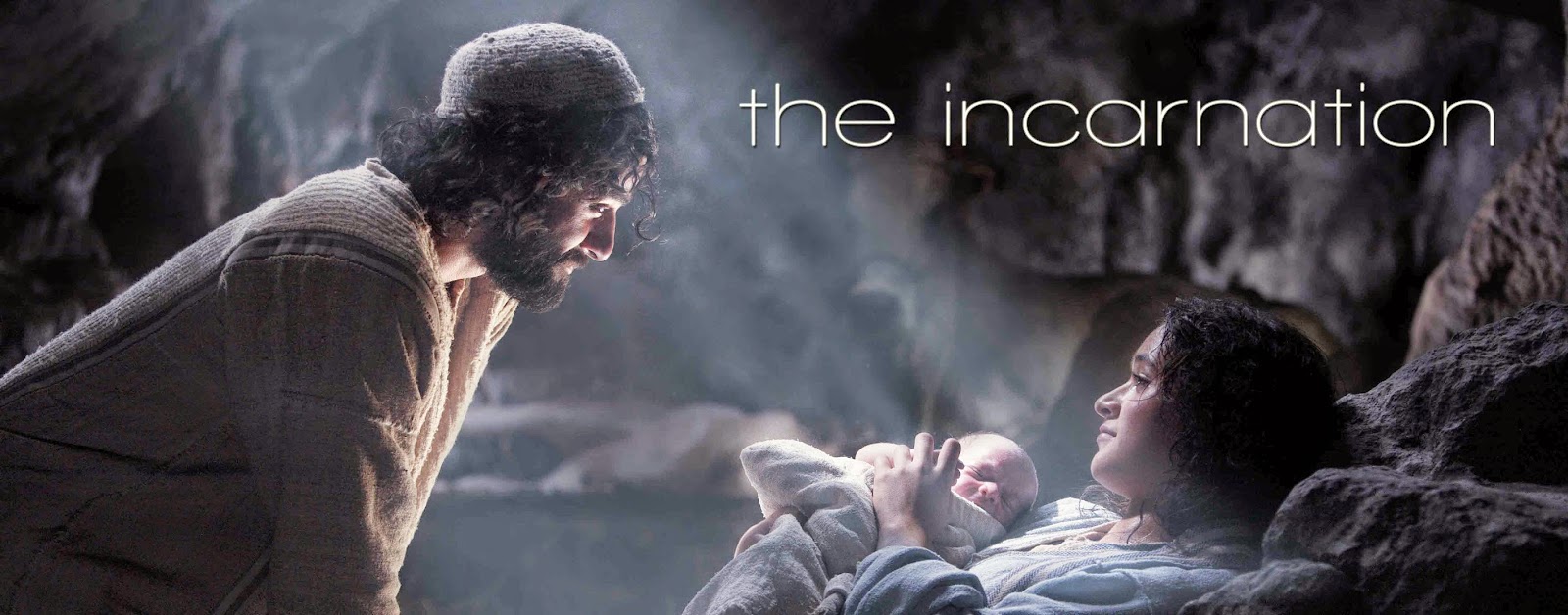


 known
by many names across the continent — Knecht Ruprecht, Certa, Perchten,
Black Peter, Schmutzli, Pelznickel, Klaubauf, and Krampus. Usually seen
as a classic devil with horns, cloven hooves and monstrous tongue, but
can also be spotted as a sinister gentleman dressed in black or a hairy
man-beast. Krampus punishes the naughty children, swatting them with
switches and rusty chains before dragging them in baskets to a fiery
place below.
known
by many names across the continent — Knecht Ruprecht, Certa, Perchten,
Black Peter, Schmutzli, Pelznickel, Klaubauf, and Krampus. Usually seen
as a classic devil with horns, cloven hooves and monstrous tongue, but
can also be spotted as a sinister gentleman dressed in black or a hairy
man-beast. Krampus punishes the naughty children, swatting them with
switches and rusty chains before dragging them in baskets to a fiery
place below. Krampus is celebrated on Krampusnacht,
which takes place on the eve of St. Nicholas’ Day. In Austria, Northern
Italy and other parts of Europe, party-goers masquerade as devils,
wild-men, and witches to participate in Krampuslauf (Krampus
Run). Intoxicated and bearing torches, costumed devils caper and carouse
through the streets terrifying child and adult alike. Krampusnacht is
increasingly being celebrated in other parts of Europe such as Finland
and France, as well as in many American cities.
Krampus is celebrated on Krampusnacht,
which takes place on the eve of St. Nicholas’ Day. In Austria, Northern
Italy and other parts of Europe, party-goers masquerade as devils,
wild-men, and witches to participate in Krampuslauf (Krampus
Run). Intoxicated and bearing torches, costumed devils caper and carouse
through the streets terrifying child and adult alike. Krampusnacht is
increasingly being celebrated in other parts of Europe such as Finland
and France, as well as in many American cities. The European practice of mummery
during the winter solstice season can be traced back tens of thousands
of years. Villagers across the continent dress up as animals, wild-men
and mythic figures to parade and perform humorous plays. This ancient
guising and masking tradition continues to this day as the primary
source for our modern Halloween with its costumes, trick-or-treat, and
pagan symbolism. Among the most common figures in these folk rituals
were Old Man Winter and the horned Goat-Man — archetypes now found in
the forms of Saint Nick/Santa Claus, and the Devil (‘Old Nick’), aka Krampus.
The European practice of mummery
during the winter solstice season can be traced back tens of thousands
of years. Villagers across the continent dress up as animals, wild-men
and mythic figures to parade and perform humorous plays. This ancient
guising and masking tradition continues to this day as the primary
source for our modern Halloween with its costumes, trick-or-treat, and
pagan symbolism. Among the most common figures in these folk rituals
were Old Man Winter and the horned Goat-Man — archetypes now found in
the forms of Saint Nick/Santa Claus, and the Devil (‘Old Nick’), aka Krampus.  In
19th century New York City an American St. Nick emerged in the form of
Santa Claus. Although based on the Dutch Saint Nicholas, Santa
incorporated more elements from pagan winter solstice customs. He
relinquished his white bishop garb for a red suit, traded his horse and
staff for a sleigh and reindeer, and moved his franchise to Christmas
Eve.
In
19th century New York City an American St. Nick emerged in the form of
Santa Claus. Although based on the Dutch Saint Nicholas, Santa
incorporated more elements from pagan winter solstice customs. He
relinquished his white bishop garb for a red suit, traded his horse and
staff for a sleigh and reindeer, and moved his franchise to Christmas
Eve. Santa
also tried to take over the dark companion’s job of punishing the
naughty, but his New World temperament was apparently unsuited for the
task. As Santa neglected and abandoned his punishing duties, American
kids lost all fear of Santa and his lumps of coal. Thankfully, in the
21st century, Krampus has arrived in this land of spoiled and
dissatisfied children to pick up the slack.
Santa
also tried to take over the dark companion’s job of punishing the
naughty, but his New World temperament was apparently unsuited for the
task. As Santa neglected and abandoned his punishing duties, American
kids lost all fear of Santa and his lumps of coal. Thankfully, in the
21st century, Krampus has arrived in this land of spoiled and
dissatisfied children to pick up the slack. While Santa Claus expanded shop and sold products in mid-1800s America, the holiday card craze exploded in Europe.
 In
Austria and other parts of Europe, countless season’s greeting cards
featured Krampus, often emblazoned with the phrase “Grüß Vom Krampus”
(Greetings from Krampus). While the lurid images are suffused with a
modern sense of the comic and the surreal, they still resonant with
mythic power and primordial horror.
In
Austria and other parts of Europe, countless season’s greeting cards
featured Krampus, often emblazoned with the phrase “Grüß Vom Krampus”
(Greetings from Krampus). While the lurid images are suffused with a
modern sense of the comic and the surreal, they still resonant with
mythic power and primordial horror.  And
with Krampus representing the naughty side of the season, the sexy
subtext is hard to ignore in these often very cheeky cards. A century
later, the brilliance of these magnificent works of pop art is now
gaining global recognition.
And
with Krampus representing the naughty side of the season, the sexy
subtext is hard to ignore in these often very cheeky cards. A century
later, the brilliance of these magnificent works of pop art is now
gaining global recognition.


 The hunger for a darker Xmas holiday has made the evil Santa Claus character a staple of pop culture, as seen in movies such as
  ,
,  and many others.

 A
new appreciation of ancient traditions that smoulder in the dark
recesses of holiday revelry continues to rise around the world. Krampus, with his horns, hoove and tongue, embodies this revived spirit of the Xmas season!
A
new appreciation of ancient traditions that smoulder in the dark
recesses of holiday revelry continues to rise around the world. Krampus, with his horns, hoove and tongue, embodies this revived spirit of the Xmas season!