Dec 16, 2015

Santa Claus - Pretender to the Throne - Part 4

Many thanks to Carol Brooks and Dr. Terry Watkins, bringing so much research under one umbrella and compiling it all in this paper.  Great research, and hopefully, the elimination of this imposter from our celebration of the birth of Jesus Christ.

Part II. Santa Vs. The Bible

I will ascend above the heights of the clouds; I will make myself like the Most High. [Isaiah 14:14]

A Beard As White As Snow

    The Bible:

    And in the midst of the seven candlesticks one like unto the Son of man, clothed with a garment down to the foot, and girt about the paps with a golden girdle. His head and his hairs [BEARD] were white like wool, as white as snow;. . . Revelation 1:13-15.
    I beheld till the thrones were cast down, and the Ancient of days did sit, whose garment was white as snow, and the hair of his head like the pure wool: . . . Daniel 7:9.
    Santa Claus:
    The poem The Night Before Christmas describes Old St. Nick as:
      "He was dressed all in fur, from his head to his foot,
      And his clothes were all tarnished with ashes and soot;
      A bundle of toys he had flung on his back,
      And he looked like a peddler just opening his pack.
      His eyes – how they twinkled! his dimples how merry!
      His cheeks were like roses, his nose like a cherry!
      His droll little mouth was drawn up like a bow,
      And the beard of his chin was as white as the snow;"

A Suit of Red

    The Bible:

    Who is this that cometh from Edom, with dyed garments from Bozrah? this that is glorious in his apparel, travelling in the greatness of his strength? I that speak in righteousness, mighty to save. Wherefore art thou red in thine apparel, and thy garments like him that treadeth in the winefat? Isaiah 63:1-2
    Santa Claus:

    Who wears boots and a suit of red
    Santa wears boots and a suit of red
    Cap on head, suit that's red
    Special night, beard that's white
    Must be Santa Must be Santa
    Must be Santa, Santa Clause 

A CarpenterSc-Carpenter

    The Bible:

    Is not this the carpenter, the son of Mary, the brother of James, and Joses, and of Judah, and Simon? and are not his sisters here with us? And they were offended at him. Mark 6:3
    Santa Claus:

    Santa is a carpenter. 

A House In The North

    The Bible:

    How art thou fallen from heaven, O day-star, son of the morning! how art thou cut down to the ground, that didst lay low the nations And thou saidst in thy heart, I will ascend into heaven, I will exalt my throne above the stars of God; and I will sit upon the mount of congregation, in the uttermost parts of the north; I will ascend above the heights of the clouds; I will make myself like the Most High. [Isaiah 14:12-14. Emphasis Added]
    SC-North
    Santa Claus:

    Santa lives in the North Pole. The origin of Santa’s home at the North Pole is uncertain, but in “Santa and His Works” Nast may have been the first illustrator to so identify the locale. (An 1857 illustration in Harper’s Weekly shows Santa preparing to leave a snowy but unnamed homeland.) [74]

Interestingly

    Since Thor’s element was fire, he was made into the god for the Yule tide. Thor was a friendly god and during the Yule tide season, he delivered presents through the chimney because the hearth, being used for fire, was especially sacred to him. In a chariot driven by two goats, Cracker and Gnasher, Thor roared across the heavens causing thunder. Thor was described as heavy built, with a long white beard and was dressed in red in keeping with his association with fire. In a place called “Northland”, Thor lived in a palace surrounded by icebergs. Thus Thor was a winter god who gave people encouragement during the bleak winter months. [75] Emphasis Added

Santa not only lives in the North Pole, he gives people encouragement during the winter months.

    The Challenge of Thor [Henry Wadsworth Longfellow]
    I AM the God Thor,
    I am the War God,
    I am the Thunderer!
    Here in my Northland,
    My fastness and fortress,
    Reign I forever!
    Here amid icebergs
    Rule I the nations; …   

A Holly Wreath

From The ancient Chinese to the Druids [who thought holly berries were thought to represent the sacred blood of their Goddess] and Romans, holly has been the subject of myths, legends, and traditional observances for centuries.

Many today believe that the actual "crown of thorns" worn by the Lord Jesus Christ, was the familiar "holly" wreath. In fact, in Germany, the Hawthorn is still known as Christdorn or "Christ's crown of thorns."

    Ancient history says that the Druids used holly in their religious rites long before the custom came to the European continent. The Druids of ancient Britain and Gaul held the English holly tree sacred. The "holy" connotation continued in later days in Europe, where the plant was widely believed to repel evil spirits. People planted trees and used their branches as protection against witchcraft, mad dogs, and other evils.
    Sometime in the past, the pagans of Europe took sprays of holly into their homes so that the tiny, imaginary peoples of the woodland would be safe from the cold of winter in the evergreen boughs. Later, holly was used as holiday decor that gave the good fairies and elves a place to hide as they did their good deeds. [Holly In Holiday Tradition.]
    With the coming of Christianity, the use of holly was condemned as a pagan ritual and forbidden by the Christian council. But Christian Romans continued to decorate with holly during festive seasons. European Christian symbolism included the belief that the spiny leaves and red berries were a reminder of the crown of thorns and the blood of Christ. The Pennsylvania Dutch held that the plant's white flowers represented Jesus' purity. The Germans called this plant Christdorn, Christ's crown of thorns. They thought holly had white berries until they were stained by Christ's blood. [76]
    SC-Holly
    Santa Claus: Santa Wears a Wreath of Holly.
      Originating in England, Father Christmas was depicted as a friendly fellow wearing a crown of holly and a scarlet or green fur-lined robe. To many, this wreath of holly represented the crown of thorns that Jesus wore when He was crucified and the red berries are symbolic of the blood He shed." [77]


A White Horse!

    The Bible:

    And I saw heaven opened, and behold a white horse; and he that sat upon him was called Faithful and True, and in righteousness he doth judge and make war. [Revelation 19:11]
    Santa Claus:  
    SC-White-Horse2Most people are not aware that until the nineteenth century, Santa flew through the sky, visiting housetop to housetop, not in a sled drawn by reindeers — but on a white horse. It wasn’t until the poem, The Children’s Friend, was published in 1821 that the magical white horse was transformed into reindeer.
      On the eve of December 6, the myth told that this bearded, white-haired old “saint,” clad in a wide mantel, rode through the skies on a white horse. [78]

In Revelation 6, the Antichrist also appears on a white horse.

    And I saw, and behold a white horse: and he that sat on him had a bow; and a crown was given unto him: and he went forth conquering, and to conquer. [Revelation 6:2].

Ho, ho, ho

    The Bible:

    Ho, ho, flee from the land of the north, saith Jehovah; for I have spread you abroad as the four winds of the heavens, saith Jehovah. Ho Zion, escape, thou that dwellest with the daughter of Babylon. (Zechariah 2:6,7)

The Hebrew word translated Ho is [hôy ] and means oh! ah, alas, O, woe.

    Santa Claus: Santa famous trademark is Ho! Ho! Ho!

Remember the Miracle plays.

      In these [Miracle] plays, the devil's common entry line, known as the "devil's bluster," was "Ho! Ho! Hoh!" [79]


Santa And His Sleigh

    The Bible:

    There is none like unto the God of Jeshurun, who rideth upon the heaven in thy help, and in his
    SC-Sleigh Excellency on the sky. Deuteronomy 33:26.
    Santa Claus:

    As dry leaves that before the wild hurricane fly,
    When they meet with an obstacle, mount to the sky,
    So up to the house-top the coursers they flew,
    With the sleigh full of toys, and St. Nicholas too

It’s also interesting in Ephesians 2:2, Satan, following the I will be like the most high script and mimicking the Lord, is depicted as "the prince of the power of the air. . ."

    Wherein in time past ye walked according to the course of this world, according to the prince of the power of the air, the spirit that now worketh in the children of disobedience: Ephesians 2:2.

Santa is Virtually Omniscient (All-knowing).

    The Bible:

    The eyes of the LORD are in every place, beholding the evil and the good. Proverbs 15:3
    For the eyes of the LORD run to and fro throughout the whole earth, to show himself strong in the behalf of them whose heart is perfect toward him. 2 Chronicles 16:9.
    "The LORD is a God of knowledge..." (1Samuel.2:3)
    Will not God search this out? For he knoweth the secrets of the heart. [Psalm 44:21]
    Santa Claus:

    Children are taught that Santa knows things that only God Almighty can know.
      He sees you when you're sleeping, He knows when you're awake
      He knows if you've been bad or good So be good for goodness sake
      Santa Claus is Coming to Town
      Bobby wants a pair of skates,
      Suzy wants a sled
      Nellie wants a picture book,
      yellow, blue, and red
      Now I think I'll leave to you
      what to give the rest
      Choose for me, dear Santa Claus;
      you will know the best.
      "Jolly Old St. Nick"
      Be not therefore like unto them: for your Father knoweth what things ye have need of, before ye ask him. [Matthew 6:8. Emphasis Addded].

Besides which…

Santa Rewards According to Works.

    The Bible:

    So then every one of us shall give account of himself to God. Romans 14:12
    And I saw the dead, small and great, stand before God; and the books were opened: and another book was opened, which is the book of life: and the dead were judged out of those things which were written in the books, according to their works. Revelation 20:12
    Santa Claus: But the children are accountable to Santa
      He's making a list, He's checking it twice
      He's gonna find out Who's naughty or nice.  

Santa is Virtually Omnipotent (All-powerful).

    The Bible:

    Is anything too hard for the LORD? [Genesis 18:14]
    Santa Claus:

    Children are taught that no feat is too great for their Santa. No storm is big enough to stop his amazing ability to deliver gifts around the world in a twinkling of an eye. He defies the laws of nature and comes down the most narrow (and hottest) of chimneys. Lets not forget the millions upon millions of gifts produced in his ‘workshop’ and delivered each to the correct child.
    To the average child - Santa can do anything. Apart from requests for this doll or that train, Santa also gets some heartbreaking appeals for the restored health of a parent or sibling, the saving of a parents marriage, for peace in the house.
    Is anything too hard for Santa?

Santa is Virtually Omnipresent (Present Everywhere).

    The Bible:

    Whither shall I go from thy spirit? or whither shall I flee from thy presence? If I ascend up into heaven, thou art there: if I make my bed in hell, behold, thou art there. [Psalm 139:7-8]
    Santa Claus:

    To visit so many homes all over the world in one evening, requires nothing less than omnipresence. Prior to Christmas, Santa also appears at hundreds of street corners and shopping centers at the same time.
    Santa is Everywhere.  

Santa Can Give You Anything. . Just Ask.

    The Bible:

    Ask, and it shall be given you; seek, and ye shall find; knock, and it shall be opened unto you: For every one that asketh receiveth; and he that seeketh findeth; and to him that knocketh it shall be opened. . .[Matthew 7:7-8]
    And all things, whatsoever ye shall ask in prayer, believing, ye shall receive. [Matthew 21:22]
    Delight thyself also in the LORD; and he shall give thee the desires of thine heart. [Psalm 37:4]
    11 If ye then, being evil, know how to give good gifts unto your children, how much more shall your Father which is in heaven give good things to them that ask him? [Matthew 7:11]
    Santa Claus:
     SC-LetterEach Christmas the U.S. Postal Service receives millions of letters addressed to "Santa Claus" In the weeks before Christmas millions of children around the globe with either/or write to Santa or visit him ‘in person’ with a list of their dearest desires. They will climb in to his lap and whisper and disclose the yearnings of their hearts. And come Christmas morning they will jump out of bed with gleeful anticipation to see what Santa has brought them.
      Lean your ear this way!Don't you tell a single soul
      What I'm going to say;
      Christmas Eve is coming soon;
      Now, you dear old man,
      Whisper what you'll bring to me;Tell me if you can.
      "Jolly Old St. Nick"

Santa is the great Giver of Gifts.. All you need to do is believe. Do You Believe in Santa??

    [On the other hand A child may receive little or nothing from Santa because his/her parents are poor. Unfortunately, the child has probably already learned that bad children get nothing from Santa, and come to the conclusion that he/she is ‘bad’].

The Fear of …Santa?

    The Bible:

    The fear of the LORD is the beginning of wisdom:. . . Psalms 111:10
    Come, ye children, hearken unto me: I will teach you the fear of the LORD. Psalm 34:11.
    Santa Claus:

    But Children the world over are taught to fear Santa. "You’d better behave. Santa is watching and writing it all down. You might not get anything for Christmas."
      You better watch out,
      You better not cry
      You better not pout,
      I'm telling you why Santa Claus is comin' to town
      He's making a list,
      He's checking it twice
      He's gonna find out
      Who's naughty or nice.  

Bring The Little Children Unto Me

    The Bible:

    And they brought young children to him, that he should touch them: and his disciples rebuked those that brought them. But when Jesus saw it, he was much displeased, and said unto them, Suffer the little children to come unto me, and forbid them not: for of such is the kingdom of God. Mark 10:13-14.
    SC-Child
    We love him, because he first loved us. 1 John 4:19

Santa Claus:

Oh, how he loves the little children.

    All the children of the world.
    Red and yellow, black and white,
    They are precious in his site.
    Santa loves the little children of the world. 

Santa’s ‘Throne’

    The Bible:

    The LORD is in his holy temple, the LORD'S throne is in heaven: his eyes behold, his eyelids try, the children of men. [Psalm 11:4]
    And he said, Hear thou therefore the word of the LORD: I saw the LORD sitting on his throne, and all the host of heaven standing by him on his right hand and on his left. [1 Kings 22:19]
    11 And I saw a great white throne, and him that sat on it, from whose face the earth and the heaven fled away; and there was found no place for them. And I saw the dead, small and great, stand before God; and the books were opened: and another book was opened, which is the book of life: and the dead were judged out of those things which were written in the books, according to their works. Revelation 20:11-12
    SC-Throne
    Santa Claus:

    Almost every local mall in the US has a Santa sitting on his ‘throne’ with the children lined up to sit on his lap and be asked the question "Have you been a good little boy [or girl]?" There are other thrones in Scripture.
    For thou [Lucifer] hast said in thine heart, I will ascend into heaven, I will exalt my throne above the stars of God: I will sit also upon the mount of the congregation, in the sides of the north: [Isaiah 14:13].

Satan’s Ultimate Goal is Worship.

    The Bible:

    All this power will I give thee, and the glory of them: for that is delivered unto me; and to whomsoever I will I give it. If thou therefore wilt worship me, all shall be thine. [Luke 4:6,7]
    Santa Claus: 
      Millions of children love Santa with all their little hearts and quite literally worship him. Santa has replaced God at Christmas … aided and abetted by their parents.
    They stand in line to sit in his lap. They delight in having their picture taken with Santa. They love whispering in Santa’s ear.

“The distinguished anthropologist Claude Lévi-Strauss has provided a wonderful pen portrait of this Christmas icon: "Father Christmas is dressed in scarlet: he is a king. His white beard, his furs and his boots, the sleigh in which he travels evoke winter. He is called 'Father' and he is an old man, thus he incarnates the benevolent form of the authority of the ancients." Importantly, says Lévi-Strauss, children believe in him, paying homage to him with letters and prayers, while adults do not:” [80]

But the Bible tells us

    And Jesus answered and said unto him, It is written, Thou shalt worship the Lord thy God, and him only shalt thou serve. [Luke 4:8] 

Believe In Santa

    The Bible:

    And they said, Believe on the Lord Jesus Christ, and thou shalt be saved, and thy house. Acts 16:31
    The heart of the Christian faith is "believing" in the Lord Jesus Christ. Salvation is believing In Jesus Christ.
    Santa Claus:

    Yet, Many many more children will be asked at Christmas whether they believe in Santa than will be asked if they believe in Jesus. Santa will be preached hundreds of times more than Jesus… with parents as the chief evangelicals. "Little Boy, Little Girl, DO You Believe In Santa?"

If the Christian world had, even a small drop of the faith the average child has in Santa – we’d have revival overnight!

A Point to consider …

    “If you once believed in a man who knew what you were doing, who had amazing abilities, and who gave you nice things, and he turned out to be a fake, why should you believe in another man who knows what you are doing, has amazing abilities, gives you nice things--Jesus Christ? If you get burned once, why get burned the second time? Wouldn’t it be better to be honest with our children right from the start, and teach them the difference between truth and make-believe?” [81].  


Ho! Ho! Ho! I Am God. . .


In 1994, the satire magazine The Onion carried a parody of Santa Claus titled "Ho! Ho! Ho! I Am God". Even though, it was written as a blasphemous parody much truth rings from the article. The article says:

    "I love visiting each and every one of your homes, stuffing your stockings with toys, and enjoying the milk and cookies you leave for me. But mostly I love Christmas because it's the celebration of the birth of my son, Jesus the Christ. You see, I'm God. . . Don't I look familiar? I'm old, I have a white beard, I love everyone. I'm the same God as the one you and your mommy and daddy worship on Sundays. . .
    Okay, I admit it. I'm not God. But I'm better than God. I'm jollier, and I give you real toys, not boring old psalms and empty promises you can only collect on when you die. Worship me, not Him! Worship Santa! I am God!" [82]

So he disguises the lie in a nice little package of make-believe and fantasy. He creates a harmless ol' jolly fellow that just loves little children. And most parents think, "Now what could be wrong with that?"

This Christmas Eve millions and millions of little children will climb into their beds "looking for their blessed hope and the glorious appearing" of Santa Claus.

There is not a Christian on the face of this earth looking for and longing for the Lord Jesus Christ as much as the average child is longing for their god Santa! A child's stolen faith in the coming of Santa puts the Christian's faith to shame.

They get so excited. . . Santa is coming! Satan is coming! 


Conclusion

But It Is Just Fantasy. . .

“How long will people dodge the issue by saying this legend is a harmless tradition?

Who is this person whose jovial face greets us everywhere in our Christmas festivities, stores, schools, and cards? This is Santa, the god of Christmas, the children's friend, who is so imbedded in the hearts that we thrill to:

    "T'was the night before Christmas..."

A charming legend, an innocent fantasy? But whose place has he taken in the hearts of children? If we strip him of his disguise, we find a masterpiece of SATAN's subtlety, for the harmless, fun-provoking Santa has usurped the throne of childhood's heart and the charming legend has replaced "the sweetest story ever told."

This is the legend in brief that we recite and sing and picture to our children:

    Away up in the ice and snow lives Santa Claus in a great house of many rooms filled with every delightful thing that children love. Santa Claus is all-seeing and all-knowing. He sees what the children do. He hears all they say. He keeps a "Book of Remembrance" in which he records their words and their actions. Santa Claus comes down from the sky in a sleigh drawn by swift reindeer that "fly upon the wings of the wind and ride upon the clouds." It is filled with wonderful gifts. His coming is secret. When he comes he brings rewards to all good children and the gifts they have asked for.

What is the children's reaction to such a legend? "Santa Claus is our friend: he has all the good things we want, and he will give them to us if we are good."

is it any wonder they open their hearts to Santa Claus, strive to please him, talk and dream about him and wait and watch eagerly for him?

What about Jesus? He said, "Suffer the little children to come unto me," but we have put before our children that awful thing against which Sinai thundered; we have put another god before Him!

We have opened our homes to a thief, and have stood by and offered no resistance while he stole the heart of childhood. We have raised no voice in protest as he corrupted the minds and hearts of our children with a false image and a living imagination.

Why have we not lifted the standard of Jesus, the true God and tender Friend of children, who is not willing that "one of these little ones should perish." Why have we not feared lest we should "offend one of these little ones which believe" on Him?

The True Story

Christian mother, what has happened? You substitute the pagan legend of Santa Claus for the true story of God's love! How can you let Santa Claus take the place of Jesus in your child's heart? How can you encourage him to look to another for his joys rather than to Jesus, "the giver of every good and perfect gift?"

The clouds of judgment hang heavy. Terrible things are happening. Let us hasten to enthrone Jesus in our homes and tell the matchless story of God's "Unspeakable gift" to the world.

Instead of the vulgar Santa Claus, with his "nose like a cherry, and his little round belly that shakes...like a bowl full of jelly," let us captivate our children's imagination with the altogether lovely One, the "dear little Stranger, born in a manger." Let us delight their fancy with the story of the guiding star, with the Magi and their gifts for the new-born King. Let us inspire our children to give gifts to Him and in His name. Let us make Christmas "holy ground" in our homes this year”. [83]

Having eyes, see ye not" Mark 8:18
Read the full article at - http://www.inplainsite.org/html/santa_claus.html#Popularity

End Notes:

[74] Robert C. Kennedy. Santa Claus and His Works.
http://www.harpweek.com/09Cartoon/BrowseByDateCartoon.asp?Month=December&Date=25

[75] http://ottawa.humanists.net/Origins_files/Christmas.htm.

[76] Holly In Holiday Tradition. , Virginia Klara Nathan. Virginia Cooperative Extension.
http://www.ext.vt.edu/departments/envirohort/factsheets2/landsnurs/dec93pr1.html

[77] "Santalady's Favorite Antique Post Cards and Related Traditions Picture," www.santalady.com/cards.html

[78] Renterghem, Tony van. When Santa Was a Shaman. St. Paul: Llewellyn Pub., 1995, p. 111

[79] Siefker, Phyllis. Santa Claus, Last of the Wild Men: The Origins and Evolution of Saint Nicholas. Jefferson: McFarland & Company, Inc., 1997, p. 69

[80] Roger Highfield.. science editor of The Daily Telegraph in London. Modern Santa and Meaning The Physics of Christmas.
http://www.enotalone.com/article/4019.html

[81] http://rumela.com/events/christmas_santa.htm

[82] Santa Claus, "Ho! Ho! Ho! I Am God!" The Onion, 29 Nov. - 5 Dec., 1994, p. 7

[83] Santa, The Imposter. http://www.baptistpillar.com/bd0282.html

Dec 13, 2015

Who Were the Magi?

By Chuck Missler

Each year, as we approach the holiday season, our preparations for Christmas include revisiting the events surrounding the birth of Our Lord. Bethlehem, (1) the shepherds, and the angels are familiar to us all. But not much is generally known about the mysterious "Magi" who came to worship the infant Jesus. The following background may be helpful to stimulate conversations around the fireplace as our thoughts turn to this incredible event from which we measure our very calendar.

Traditions

Most of what we associate with the "Magi" is from early church traditions. Most have assumed there were three of them, since they brought three specific gifts (but the Biblical text doesn't number them). They are called "Magi" from the Latinized form of the Greek word magoi, transliterated from the Persian, for a select sect of priests. (Our word "magic" comes from the same root.)

As the years passed, the traditions became increasingly embellished. By the 3rd century they were viewed as kings. By the 6th century they had names: Bithisarea, Melichior, and Gathaspa. Some even associated them with Shem, Ham and Japheth--the three sons of Noah--and thus with Asia, Africa, and Europe. A 141h century Armenian tradition identifies them as Balthasar, King of Arabia; Melchior, King of Persia; and Gasper, King of India.

(Relics attributed to them emerged in the 4th century and were transferred from Constantinople to Milan in the 5th century, and then to Cologne in 1162 where they remain enshrined.)
These are interesting traditions, but what do we really know about them?

Rembrandt: The Adoration of the Magi

The Priesthood of the Medes

.The ancient Magi were a hereditary priesthood of the Medes (known today as the Kurds) credited with profound and extraordinary religious knowledge. After some Magi, who had been attached to the Median court, proved to be expert in the interpretation of dreams, Darius the Great established them over the state religion of Persia. (2) (Contrary to popular belief, the Magi were not originally followers of Zoroaster. (3) That all came later.)

It was in this dual capacity, whereby civil and political counsel was invested with religious authority, that the Magi became the supreme priestly caste of the Persian empire and continued to be prominent during the subsequent Seleucid, Parthian, and Sasanian periods. (4)

The Role of Daniel

One of the titles given to Daniel was Rab-mag, the Chief of the Magi. (5) His unusual career included being a principal administrator in two world empires--the Babylonian and the subsequent Persian Empire. When Darius appointed him, a Jew, over the previously hereditary Median priesthood, the resulting repercussions led to the plots involving the ordeal of the lion's den. (6)

Daniel apparently entrusted a Messianic vision (to be announced in due time by a "star") to a secret sect of the Magi for its eventual fulfillment. But first let's review some historical background.

Political Background

Since the days of Daniel, the fortunes of both the Persian and the Jewish nation had been closely intertwined. Both nations had, in their turn, fallen under Seleucid domination in the wake of Alexander's conquests. Subsequently, both had regained their independence: the Jews under Maccabean leadership, and the Persians as the dominating ruling group within the Parthian Empire.
It was at this time that the Magi, in their dual priestly and governmental office, composed the upper house of the Council of the Megistanes (from which we get the term "magistrates"), whose duties included the absolute choice and election of the king of the realm.

It was, therefore, a group of Persian--Parthian "king makers" who entered Jerusalem in the latter days of the reign of Herod. Herod's reaction was understandably one of fear when one considers the background of Roman-Parthian rivalry that prevailed during his lifetime.

Rome on the Rise

Pompey, the first Roman conqueror of Jerusalem in 63 B.C., had attacked the Armenian outpost of Parthia. In 55 B.C. Crassus led Roman legions in sacking Jerusalem and in a subsequent attack on Parthia proper. The Romans were decisively defeated at the battle of Carrhae with the loss of 30,000 troops, including their commander. The Parthians counterattacked with a token invasion of Armenia, Syria, and Palestine.

Nominal Roman rule was reestablished under Antipater, the father of Herod, who, in his turn, retreated before another Parthian invasion in 40 B.C.

Mark Antony reestablished Roman sovereignty in 37 B.C. and, like Crassus before him, Also embarked on a similarly ill-fated Parthian expedition. His disastrous retreat was followed by another wave of invading Parthians, which swept all Roman opposition completely out of Palestine (including Herod himself, who fled to Alexandria and then to Rome).

With Parthian collaboration, Jewish sovereignty was restored, and Jerusalem was fortified with a Jewish garrison.

Herod, by this time, had secured from Augustus Caesar the title of "King of the Jews." However, it was not for three years, including a five months' siege by Roman troops, that Herod was able to occupy his own capital city! Herod had thus gained the throne of a rebellious buffer state which was situated between two mighty contending empires. At any time his own subjects might conspire in bringing the Parthians to their aid. At the time of the birth of Christ, Herod may have been close to his final illness. Augustus was also aged, and Rome, since the retirement of Tiberius, was without an experienced military commander. Pro-Parthian Armenia was fomenting revolt against Rome (which was successfully accomplished within two years.)

The Tensions in Parthia

The time was ripe for another Parthian invasion of the buffer provinces, except for the fact that Parthia itself was racked by internal dissension. Phraates IV, the unpopular and aging king, had once been deposed and it was not improbable that the Persian Magi were already involved in the political maneuvering requisite to choosing his successor. It was conceivable that the Magi might be taking advantage of the king's lack of Popularity to further their own interests with the establishment of a new dynasty, which could have been implemented if a sufficiently strong contender could be found.
At this time it was entirely conceivable that the Messianic prophecies of the Old Testament, culminating in the writings of Daniel, one of their own Magians, was of profound motivating significance. The promise of a divinely imposed world dominion at the hands of a Jewish monarch might be more than acceptable to them. (Their own Persian and Medo-Persian history was studded with Jewish nobles, ministers, and counselors; and in the great Achaemenid days, some of the kings themselves were of Jewish blood.)

The Entourage to Jerusalem

In Jerusalem, the sudden appearance of the Magi, probably traveling in force with all imaginable oriental pomp and accompanied by an adequate cavalry escort to insure their safe penetration of Roman territory, certainly alarmed Herod and the populace of Jerusalem.

It would seem as if these Magi were attempting to perpetrate a border incident which could bring swift reprisal from Parthian armies. Their request of Herod regarding the one who "has been born King of the Jews" (7) was a calculated insult to him, a non--Jew (8) who had contrived and bribed his way into that office.

Consulting his scribes, Herod discovered from the prophecies in the Tanach (the Old Testament) that the Promised One, the Messiah, would be born in Bethlehem. (9) Hiding his concern and expressing sincere interest, Herod requested them to keep him informed.

After finding the babe and presenting their prophetic gifts, the Magi "being warned in a dream" (a form of communication most acceptable to them) departed to their own country, ignoring Herod's request. (Within two years Phraataces, the parricide son of Phraates IV, was duly installed by the Magi as the new ruler of Parthia.)

Daniel's Messianic Role

Living six centuries before the birth of Christ, Daniel certainly received an incredible number of Messianic prophecies. In addition to several overviews of all of Gentile world history, (10) the Angel Gabriel told him the precise day that Jesus would present Himself as King to Jerusalem."

It is interesting that Daniel's founding of a secret sect of the Magi also had a role in having these prominent Gentiles present gifts at the birth of the Jewish Messiah.

The Christmas Gifts

The gifts of gold, frankincense, and myrrh were also prophetic, speaking of our Lord's offices of king, priest, and savior. Gold speaks of His kingship; frankincense was a spice used in the priestly duties; and myrrh was an embalming ointment anticipating His death.

In the Millennium, He will also receive the gifts of gold and frankincense;" but no myrrh: His death was once and for all.

What gifts are YOU going to give Him this year? Discuss it with Him.

For a review of other back ground items, see The Christmas Story: What Really Happened, on page 22. Also, for a complete study of one of the most captivating and astonishing books of the Bible, see our Expositional Commentary on the Book of Daniel, on special this month (see page 41).

Notes:
1. For background on Bethlehem, study the Book of Ruth, our briefing package, The Romance of Redemption, or Chuck's Expositional Commentary on Ruth and Esther.
2. Oneiromancy, not astrology, is their key skill mentioned by Herodotus, 1.107,120;VII.19.
3, Encyclopedia Britannica, 7:691.
4. Zondervan Pictorial Encyclopedia of the Bible, 4:31-34.
5. Daniel 4:9; 5: 11.
6. Daniel Chapter 6.
7. Matthew 2:2.
8. Herod was Idumean (an Edomite), a traditional enemy of Israel.
9. Micah 5:2. (Revealed by Holy Scripture, not astrology.)
10. Daniel 2 and 7. See also, An Empire Reborn? listed on page 23.
11. Daniel 9:24-26. See also, Daniel's 70 Weeks listed on page 23.
12. Isaiah 60:6.

Read more on this topic at - http://www.ldolphin.org/magi.html

Mary, Simeon or Anna - Who First Recognized Jesus as the Messiah

Ben Witherington III     
**This article was originally published in Bible Review. Full citation below.**
Being first to hear doesn’t always mean being first to understand. In Luke’s birth narrative, Mary is the first to be told that Jesus will be the messiah. Luke adds that she “treasures the words” the angel Gabriel speaks to her. But Mary is also puzzled by the divine message; she is “perplexed” when the angel greets her and must “ponder” the meaning of his words (Luke 1:29; see also 2:19). In this, Mary contrasts sharply with Simeon and Anna, two elderly individuals who happen to be in the Temple when Joseph and Mary bring the infant Jesus to Jerusalem for the first time.

According to Luke 2:22–24, “[Joseph and Mary] brought him up to Jerusalem to present him to the Lord (as it is written in the law of the Lord, ‘Every firstborn male shall be designated as holy to the Lord’ [quoting Exodus 13:2, 12]) and they offered a sacrifice according to what is stated in the law of the Lord, ‘a pair of turtledoves or two young pigeons’ [based on Leviticus 12:2–8].”
At the Temple, the family is approached by a man named Simeon, who has been told by the Holy Spirit that he will not die until he has seen the messiah. (The same Spirit told him to go to the Temple that day, too.) Simeon takes Jesus in his arms and praises God: “Master, now you are dismissing your servant in peace, according to your word; for my eyes have seen your salvation, which you have prepared in the presence of all peoples, a light for revelation to the Gentiles, and for glory to your people Israel” (Luke 2:28–32). Having seen the messiah, Simeon is now prepared to die.
Anna then approaches the Holy Family. She, too, recognizes Jesus as messiah, but she has a very different reaction: “At that moment, she came and began to speak about the child to all who were looking for the redemption of Jerusalem” (Luke 2:38). She is 84 years old, according to Luke, and she does not want to die: She wants to proselytize. Like the disciples who will follow her, she is driven to bear witness to what she has seen. Mary was the first to have the good news announced to her, but Anna is the first woman to understand fully and proclaim the good news.
This is because in addition to being a proselytizer, Anna is a “prophetess” (Luke 2:36). In fact, she is the only woman in the New Testament explicitly described as a “prophetess.” She then stands in the line of figures like the judge, military leader and prophetess Deborah and the Jerusalem prophetess Huldah, who, in the days of King Josiah, was asked to verify that an ancient scroll (a form of Deuteronomy) discovered during Temple renovations was indeed the word of God (2 Kings 22).


Unlike Simeon, Anna is not just visiting the Temple for the day; she is there all the time. According to Luke, Anna “never left the Temple but worshiped there with fasting and prayer night and day” (Luke 2:37). Perhaps she was part of some sort of order of widows (Luke tells us her husband died after only seven years of marriage) who had specific religious functions in the Temple. She may have been able to undertake this role in the Temple because she was no longer in periodic states of ritual impurity caused by menstruation.

Luke may also have seen Anna as the second witness in or around the Temple needed to validate Jesus’ significance. Deuteronomy 19:15 stresses the importance of having two witnesses to validate an event.


The pairing of Simeon and Anna reflects Luke’s penchant for male-female parallelism when he writes about the recipients of divine blessing and salvation. The story of Jesus’ birth is framed by two such stories—that of Elizabeth and Zechariah in Luke 1 and Anna and Simeon in Luke 2. Interestingly, in both, the woman is portrayed as the more positive example of discipleship. The women are not only more receptive to the message, they are more willing to act upon it, with Elizabeth realizing that her cousin is carrying the messiah and praising God for this blessing and Anna spreading the good news.

Alfred Plummer, in his classic commentary on Luke, suggested that the difference between Anna and Simeon provides a clue to Luke as a salvation historian, a chronicler of the mighty acts of God for his people through the ages. Yes, a messiah has arrived, as Simeon recognizes, but, as the prophetess Anna suggests, a new era, with a new and living voice of prophecy, has at the same time dawned.1 In this new era, the living voice of God will continue to speak about the messianic one. Anna is the first in a line of prophetic disciples who will speak about Jesus to all who were looking for the redemption of Israel.

Not everyone can be a prophet, however. Mary, for example, does not fully understand what Anna immediately recognizes. And she won’t for several years.

Twelve years after the presentation of Jesus in the Temple, the Holy Family returns to Jerusalem and Jesus returns to the Temple, this time by himself. Mary and Joseph search for him frantically for three days. When at last they find him listening to and asking questions of the teachers in the Temple, Mary asks, “Child, why have you treated us like this? Look, your father and I have been searching for you in great anxiety.” Jesus responds, “Did you not know that I must be in my Father’s house?” But, Luke reports, “they did not understand what he said to them … [but] his mother treasured all these things in her heart” (Luke 2:48–51). The late New Testament scholar Raymond Brown wrote:

“Luke’s idea is that complete acceptance of the word of God, complete understanding of who Jesus is, and complete discipleship is not yet possible. This will come through the ministry of Jesus and particularly through the cross and resurrection.”


This article was originally published in Bible Review. All Bible Review articles (1985-2005) are available in the BAS Library, as well as on the Bible Review Archive CD.  Read more at - http://www.biblicalarchaeology.org/daily/biblical-topics/new-testament/mary-simeon-or-anna-who-first-recognized-jesus-as-messiah/

Messiahmas - On the Birth Date of the Messiah


by Uri Marcus


Most Gentile Christians wouldn't bother to speculate about the time when Yeshua (Jesus) was born. They celebrate it on December 25th even though they may suspect that there is no Biblical basis for choosing that date. However, there are many Messianic Believers who, from a Jewish perspective, are convinced that the time of year when Yeshua was really born was at the Succot (the Feast of Tabernacles). Taking into account certain Jewish customs and traditions, and applying them to the biblical birth narrative, it's not difficult to calculate and arrive at this season, known as "the season of our Joy."

While there is quite a wide consensus of opinion that Yeshua was born at some time during the High Holy Days of Rosh Hoshanna (New Year), Yom Kippur (Day of Atonement), or Succot (Tabernacles), the timing can be narrowed down to Succot, in the opinion of this author, because of the abundance of historical and traditional associations which surround it. It should be noted that all of these festivals normally occur in the Autumn, or during the September or October time-frame, but it varies from year to year because the Jewish calendar is based on the cycles of the moon and doesn't track with the Gregorian calendar.

The calculation of the time of Yeshua's birth begins with Z'chariyahu (Zechariah), the father of Yochanan (John) the Baptist. According to Luke 1:5 he was a priest of the order of Aviyah. He was performing his duties, burning incense in the Beit HaMikdash (Temple), when an angel appeared and said his wife Eli-Sheva would conceive and bear a son, and he would be called Yochanan (John).
The order in which the priestly families performed their duties is given in 1 Chronicles 24:7-18. According to the Mishnah, the cycle begins on the first Shabbat (Sabbath) of Nisan, and each family of priests would minister in turn for one week. Since there are 24 families, each family would minister about twice a year. The cycle would be delayed slightly because all priests, regardless of their families, were required to be at the Beit HaMikdash (Temple) for the three festivals of Pesach (Passover), Shavu'ot (Pentecost) and Succot (Tabernacles).

The family of Aviyah was eighth in line, so Z'chariyahu would have had his first period of duty during the Jewish month of Sivan (about June) and his second period during the month of Kislev about six months later. There is no way of knowing for sure which period of duty is referred to in Luke's Gospel, but if it is surmised that it is the first period we get some very interesting results.
Z'chariyahu finished his first period of duty about the middle of Sivan. Because of his unbelief, G-d struck him dumb. Nevertheless, he went home to his wife and she became pregnant. Count off 40 weeks, the usual period of gestation, and we get to the month of Nisan the following year. Beginning on the 14th of Nisan, and lasting for eight days, we have the festivals of Pesach (Passover), Matzot (unleavened bread) and Bikurim (First Fruits), which are all occur in the spring. This raises the distinct possibility that Yochanan the Baptist was born at Pesach, which coincides with the Jewish expectation that Eliyahu (Elijah) would come at Pesach. It has always been our custom to put an extra cup of wine on the table at Pesach, in the hope that Eliyahu will come and drink it.

If Yochanan the Baptist was born at Pesach, Yeshua must have been born during the fall feasts, and most probably at Succot. In Luke 1:26 and 36 we are told that Yeshua was six months younger than Yochanan.

When the decree went out for everyone to go to their home town to be registered, Yosef and Miriam set off for Beit Lechem (Bethlehem). They would have set out in good time, before Miriam was fully 40 weeks pregnant, because she wouldn't want to be jogged into childbirth while riding on a donkey. Besides, they would have wanted to complete the journey before Rosh Hoshanna, which is two weeks before Succot.

We are given a clue about the time of the birth by the angel who appeared to the shepherds and said "Fear not. For, behold, I bring you good tidings of great joy, which shall be to all people.". (Luke 2:10). There are actually two clues here. Succot is known as "The Season of our Joy", and it is also known as the "Festival of the Nations (or Gentiles)". The angel was actually giving them a greeting for the Festival of Succot. This is the only festival where the nations are positively encouraged to participate with negative results if they do not. (Z'chariyahu 14:16-19). In addition, the narrative indicates that it was shepherds to whom the angels delivered their message, which is interesting in that for thousands of years Jewish literature ascribes a tradition known as "Ushpizin", only to Succot, and it is practiced even to this day.

After entering the Succah, and reciting certain prayers, the ceremony of Ushpizin bids us to partake in the privilege of inviting and welcoming the "Sh'kinah" ) G-d's Presence) and the seven "faithful shepherds" who enter the succah with us as exalted guests. These guests come to observe how their descendants FULFILL the mitzvah (commandment) of the Succah, in which they dwell under G-d's protection, in accordance with what G-d had promised in the Torah. These seven faithful shepherds of Israel are: Avraham, Yitzchak, Ya'acov, Yosef, Moshe, Aharon, and Melech (King) David. Back in the Luke narrative, though the text does not specify "seven" shepherds who went to visit Meriam, there seems to be a hint, when one reads between the lines. Moreover, the purpose of their visit is recorded to be very similar with that of the Ushpizin, in which the text states that it was to "see this thing that had happened, which the Lord has told us about." (Luke 2:15).

Likewise, during Succot, Jewish families today in Israel construct a flimsy shelter called a "Succah", made of loosely assembled walls and a leafy overhead covering. In the Succah, we eat or sleep. This is a reminder to us that we were completely dependent on G-d as we wandered for forty years in the desert after departing from Egypt and were led by "a pillar of cloud by day, and a pillar of fire by night." Because of this experience, we recall that "G-d is with us" (Emmanu-El).

In this same narrative in Luke 2 regarding the Shepherds to whom an angel of the Lord appears, note that the text says that they were "watching over their flocks, AT NIGHT." The angel brings them a message that their Messiah was born in the town of David, during that day which had just passed to night. This message was accompanied by the appearance of a great heavenly host, praising G-d. When we consider the seasons in Israel, and the weather patterns, one might ask "What is the latest time of year in which shepherds would still be outside with their flocks in the Judean hills, AT NIGHT?" November through February are far to cold in Israel to be doing this kind of activity. The answer of course points to the end of October, at the latest, for temperature reasons alone. Depending of the Hebrew calendar in any given year, as mentioned above, Succot always falls in the September-October time frame, when the weather is still warm and pleasant outside, especially AT NIGHT. For these reasons, and many others not documented here, we think Yeshua is very likely to have been born at Succot.

And so, the birth of Yeshua at Succot fulfills another prophecy: "The virgin will be with child and will give birth to a son, and they will call him Emmanu-El - which means, "G-d is with us". (Matt. 1:23, quoting from Yishaiyahu (Isaiah) 7:14).

If this is not enough, we also have to consider the type of dwelling in which Yeshua was born. Had it not been for the inconvenience caused by the census, he would have been born in a house like all other children. But he wasn't, he was born in a type of Succah where servants of a household slept, or where they kept sheep and cattle. Luke uses the Greek word for "manger" but because Yeshua was Jewish, and it was most likely the festival of Succot, the text probably describes a Succah. This would make sense since we know that Yeshua would fulfill every aspect of Torah from his birth until his death. The link here is directly to commandment in VaYikrah (Leviticus) Chapter 23, verse 42, "Live in Succot for seven days: All native-born Israelites are to live in Succot so your descendants will know that I had the Israelites live in Succot when I brought them out of Egypt. I am the LORD your G-d."

Yochanan, in his Gospel narrative of Yeshua's birth, confirms this truth when he indicates that G-d had come to earth to dwell with (and serve) humanity. We read in Yochanan (John) 1:14 about how "The Word became flesh and made his dwelling (Tabernacled) among us," which is a clear and obvious reference to Succot.

Eight days later, according to Luke 2:21, Yeshua was circumcised. Miriam would still have been ceremonially unclean for 33 days after the Yeshua's birth, in accordance with ViYikrah (Leviticus) 12. Owing to her requirement to present a purification offering at the Beit HaMikdash (Holy Temple) in Yerushali'im (Jerusalem) after this period, she would most likely have remained in Beit Lechem, just a short distance from Yerushali'im.

If the day of Yeshua's birth was the first day of Succot, then the day of his circumcision would be the eighth day after Succot which, in accordance with Torah is also day of sacred assembly. (ViYikrah [Leviticus] 23:39). On this day, called "Shemini Atzeret," or "the Eighth day of Solemn Assembly" and later called "Simchat Torah" or "Rejoicing in Torah," we complete our annual cycle of Torah readings and start again from Bereshit (Genesis). It is considered to be a time of "fulfillment" of the Torah and also a new beginning for it, in our lives, since Torah is never abandoned. This indeed would seem to be a fitting holiday for Yeshua's circumcision and dedication before G-d, since He came to set the Torah on a firm foundation by correctly interpreting it and fulfilling it (i.e., becoming the goal to which the Law and the Prophets pointed), thereby making a way to renew the Torah in our lives. (Matt. 5:17-19).

When the days of Miriam's purification were over, they would have then returned back to Natzeret (Nazareth) in the Galil (Luke 2:39). But each year, and in accordance with the required pilgrimage commandments in Torah, Yosef and Meriam went up to Yerushali'im for Pesach. (Luke 2:41).

During one of these visits, probably when Yeshua was about two years old, they went to Beit Lechem and stayed, not in a succah or stable this time, but in a house. (Matt. 2:11). They were visited there by the Magi, and then had to flee to Egypt to escape from Herod because he was killing all the male children two years old and under.

And so, by starting from Z'chariyahu, the father of Yochanan the Baptist, and his first period of duty in the Temple, and doing a few simple calculations, we discover that the Jewishness of the Gospel becomes profoundly evident, giving new import to many passages of Scripture previously misunderstood.

What then should we do now? Should Christians continue observing Christmas on December 25th (which incidentally is entirely pagan in its origins), or are we going to begin recognizing our Hebraic roots and understanding the purpose of the feasts which the Father in His wisdom has bestowed. He has given us an inheritance, that in them we might be in rehearsal for the day our King returns, for then, we shall all celebrate the feasts together with Him.

Some may belief that it does not matter when we celebrate the birth of the Mashiach; it can be any of the twelve months of the year! What is important is to celebrate His birth.

But this defeats the importance of Messianic prophecy and fulfillment! The birth of Yeshua at the Festival of Succot was for prophetic reasons foreshadowing the Torah, the goal to which it pointed, the seventh millennium and the kingship of Mashiach from Yerushalayim. These are important pictures to treasure in our hearts! If it is important enough to G-d that He would cause Yeshua's birth AND coronation as King to takes place at an appointed season (mo'ed z'manim) on the Jewish Calendar, then it should be important to us, regardless of the world's traditions. Therefore, we should heed the words of Rabbi Sha'ul (Paul) who quoting the Father, urged the Church at Corinth to:

..."come out from them and be separate," says the Lord. "Touch no unclean thing, and I will receive you. I will be a Father to you, and you will be my sons and daughters," says the Lord Almighty.
If we do this (and we don't have to become Jewish to do it) we will be creating the conditions in which Z'chariyahu 14:16-19 can be fulfilled. People will say "Since we are celebrating the birth of Yeshua at Succot, why not do it in Yerushali'im?". Why not indeed?

Many peoples will come and say, "Come, let us go up to the mountain of the LORD, to the house of the G-d of Ya'acov. He will teach us his ways, so that we may walk in his paths." The law will go out from Tzion, the word of the LORD from Yerushali'im. -- Yishaiyahu (Isaiah 2:3)

In Israel it's impossible to miss these festivals, but for the benefit of those in the Diaspora, the 1999 dates are:
Rosh HaShana (Festival of Trumpets) Fri Eve 10 September

Yom Kippur (Day of Atonement) Sun Eve 19 September

1st Day of Succot (Feast of Tabernacles) Fri Eve 24 September 8th

Day of Assembly (Shemini Atzeret) and

Simchat Torah (Rejoicing in the Torah) Fri Eve 01 October
The Jewish day begins at sunset which means, for example, Rosh Hoshanna begins at sunset on Friday Eve, 10 September and continues until evening on the 11th of September.
Uri Marcus
Adapted from various sources, including my brother's book "Signs In the Heavens" (by Avi Ben-Mordechai), available from him by calling 1-800-880-2656. Revised November 19, 1998.
Uri Marcus (former member)
The Nehemiah Trustees Covenant
Fund P.O. Box 44840
Haifa, 31447 Israel

Santa Claus - Pretender to the Throne - Part 3

The Model For Nast’s Santa..

The startling fact is, Santa Claus is not the Bishop St. Nicholas – but his Dark Helper!
    In certain German children’s games, the Saint Nicholas figure itself is the Dark Helper, a devil who wants to punish children, but is stopped from doing so by Christ. [48]
    Black Pete, the ‘grandfather’ of our modern Santa Claus. Known in Holland as Zwarte Piet, this eighteenth-century German version, is—like his ancient shamanic ancestor—still horned, fur-clad, scary, and less than kind to children. Although portrayed as the slave helper of Saint Nicholas, the two are, in many villages, blended into one character. This figure often has the name Nikolass or Klaus, but has the swarthy appearance of the Dark Helper. [49]

Artist Thomas Nast is rightfully credited for conceiving the image of our modern day Santa, but Nast’s model for Santa was not the Bishop St. Nicholas but his dark companion, the evil Pelznickle.

[IPS Note: Nast was an immigrant from Bavaria and was familiar with Pelznickle]

    The Christmas demon Knecht Rupprecht first appeared in a play in 1668 and was condemned by the Roman Catholic as being a devil in 1680. . . To the Pennsylvania Dutch, he is known as Belsnickel. Other names for the same character are Pelznickle, "Furry Nicholas," and Ru-Klas, "Rough Nicholas." From these names, it is easy to see that he is looked upon as not merely a companion to St. Nicholas, but almost another version of him. [50]

In Thomas Nast: His Period and His Pictures, biographer Albert Bigelow Paine, documents that Nast’s Santa was Pelznickle.

    But on Christmas Eve, to Protestant and Catholic alike, came the German Santa Claus, Pelze-Nicol, leading a child dressed as the Christkind, and distributing toys and cakes, or switches, according as the parents made report. It was this Pelze-Nicol – a fat, fur-clad, bearded old fellow, at whose hands he doubtless received many benefits – that the boy in later years was to present to us as his conception of the true Santa Claus – a pictorial type which shall lone endure. [51]

Santa historian and author, Tony van Renterghem also documents Nast’s Santa Claus was not Saint Nicholas, but the evil Black Pete–the devil.

    Thomas Nast was assigned to draw this Santa Claus, but having no idea what he looked like, drew him as the fur-clad, small, troll-like figure he had known in Bavaria when he was a child. This figure was quite unlike the tall Dutch Sinterklaas, who was traditionally depicted as a Catholic bishop. Who he drew was Saint Nicholas’ dark helper, Swarthy, or Black Pete (a slang name for the devil in medieval Dutch). . . [52]

Santa researcher, Phyllis Siefker, echoes Renterghem’s conclusion:

    It seems obvious, therefore, that Santa Claus can be neither the alter ego of Saint Nicholas nor the brainchild of Washington Irving. . . If we peek behind the imposing Saint Nicholas, we see, glowering in the shadows, the saint’s reprobate companion, Black Pete. He, like Santa, has a coat of hair, a disheveled beard, a bag, and ashes on his face. . . In fact, it is this creature, rather than Irving’s creation or an Asian saint, who fathered Santa Claus. [53]

By the way, St. Nicholas did not come down the chimney. It was his fur-clad, dark companion that came down the chimney. One of the reasons his sidekick was called the "Dark One" or "Black Peter" was because he was normally covered in soot and ashes from his chimney travels. The "dark companion" also carried the bag, distributed the goodies and punished the bad boys and girls.

    Children [in Holland] are told that Black Peter enters the house through the chimney, which also explained his black face and hands, and would leave a bundle of sticks or a small bag with salt in the shoe instead of candy when the child had been bad. [54]

SC-Krampus-4It is significant that Black Peter, Pelze-Nicol, Knecht Rupprecht and all of St. Nicholas companions are openly identified as the devil.

    To the medieval Dutch, Black Peter was another name for the devil. Somewhere along the way, he was subdued by St. Nicholas and forced to be his servant. [55]
    In Denmark, Sweden, and Norway creatures resembling both the Schimmelreiter and the Klapperbock are or were to be met with at Christmas. . . People seem to have had a bad conscience about these things, for there are stories connecting them with the Devil. A girl, for instance, who danced at midnight with a straw Julebuk, found that her partner was no puppet but the Evil One himself. 56]
    Thus, in parts of Europe, the Church turned Herne into Saint Nicholas’ captive, chained Dark Helper, none other than Satan, the Dark One, symbolic of all evil. [57]

One of the bizarre jobs of St. Nick’s devilish helper was to "gleefully drag sinners" to hell! SC-Krampus-3

    On the eve of December 6, the myth told that this bearded, white-haired old ‘saint,’ clad in a wide mantel, rode through the skies on a white horse, together with his slave, the swarthy Dark Helper. This reluctant helper had to disperse gifts to good people, but much preferred to threaten them with his broom-like scourge, and, at a sign of his master, would gleefully drag sinners away to a place of eternal suffering. [58]

The shocking truth is Santa Claus originated from a character identified as the devil or Satan.

The Miracle Plays

This section is almost entirely excerpted from Santa Claus The Great Imposter by Dr. Terry Watkins.)

Something else that fashioned our modern day Santa was the popular medieval Christmas plays of the tenth through the sixteenth century. These miracle, moral, mystery and passion dramas acted out scenes from the scriptures and the liturgy of the Roman Catholic Church. Combining humor and religion, they flourished during the fifteenth century. It is significant that St. Nicholas was a dominant theme among these plays. Much of the myth and outlandish miracles of St. Nicholas originated from these dramas. And much of the bizarre characteristics of Santa were planted in these Christmas plays.

In the classic, Teutonic Mythology, author Jacob Grimm provides us with some revealing detail into St. Nicholas’ transformation into Santa. Notice in the following excerpt from Teutonic Mythology where Nicholas converts himself into the Knecht Ruprecht [the devil], a "man of Clobes" or a "man of Claus." Grimm states, the characters of Nicholas and Knecht Ruprecht "get mixed, and Clobes [Claus] himself is the "man."

    The Christmas plays sometimes present the Saviour with His usual attendant Peter or else with Niclas [St. Nicholas]. At other times however Mary with Gabriel, or with her aged Joseph, who, disguised as a peasant, acts the part of Knecht Ruprecht. Nicholas again has converted himself into a "man Clobes" or Rupert; as a rule there is still a Niclas, a saintly bishop and benevolent being distinct from the "man" who scares children; the characters get mixed, and Clobes himself acts the "man." [59]

From Grimm’s account, in the early 1100’s, the transformation of St. Nicholas into Santa Claus from the devil Knecht Ruprecht was in full throttle.  

Ho! Ho! Ho!

There is not enough space in this book to adequately document the influence and inspiration of the medieval plays into the making of Santa, but let us examine Santa’s trademark "Ho! Ho! Ho!". Most people have no idea where this came from, and more importantly whom it came from. In The Drama Before Shakespeare - A Sketch, author Frank Ireson, describes the popular Miracle Play. Notice the description of the devil as "shaggy, hairy," etc. (as Santa), and notice the devil’s trademark "exclamation on entering was ho, ho, ho!":

    Besides allegorical personages, there were two standing characters very prominent in Moral Plays—the Devil and Vice. The Devil was, no doubt, introduced from the Miracle Plays, where he had figured so amusingly; he was made as hideous as possible by his mask and dress, the latter being generally of a shaggy and hairy character, and he was duly provided with a tail: his ordinary exclamation on entering was, "Ho, ho, ho! what a felowe [sic] am I." [60]

Siefker also collaborates the devil’s trademark "ho, ho, ho."

    In these plays, the devil’s common entry line, known as the "devil’s bluster," was "Ho! Ho! Hoh!" [61]

The devil’s trademark "ho, ho, ho" was carried over from the early medieval Miracle Plays to the popular old English play "Bomelio," as the following lines from the play verify:

    What, and a' come? I conjure thee, foul spirit, down to hell! Ho, ho, ho! the devil, the devil! A-comes, a-comes, a-comes upon me,. . . [62]

[IPS Note: In the above instance it is probable that the Ho, ho, ho is being used much as it is in the Bible in Zechariah 2:6,7. The Hebrew word translated Ho is [hôy ] and means oh! ah, alas, O, woe. IN other words the person is saying ‘Alas! The devil comes].

Author Tony Renterghem, concludes his extensive research into the origin of Santa with the following statement: [Emphasis Added]

    I can only conclude that the original ancestor of our modern Santa Claus is none other than the mythological Dark Helper-a faint memory of Herne/Pan, the ancient shamanic nature spirit of the Olde Religion. [63]
    Note: Herne or Pan is the horned god. It is common knowledge that Pan and Herne are popular names for Satan. The Satanic Bible lists Pan as one of the Infernal Names of Satan. [64]

After researching scores of books and material on the origin of Santa Claus, by far, the best book on this subject is Santa Claus, Last of the Wild Men: The Origins and Evolution of Saint Nicholas, authored by the late University of Kansas associate, Phyllis Siefker. This is no child’s book, but a scholarly exploration into the origin of Santa Claus. It is published by the prestigious McFarland Publishers, a leading publisher of reference and academic books. This book carries no Christian bias, but is simply a secular, non Christian scholastic study. With that in mind, the following analysis by Siefkler is even more alarming [Emphasis Added]

    The fact is that Santa and Satan are alter egos, brothers; they have the same origin. . . On the surface, the two figures are polar opposites, but underneath they share the same parent, and both retain many of the old symbols associated with their "father" . . . From these two paths, he arrived at both the warmth of our fireplace and in the flames of hell. [65]

Santa.. The Name

An Anagram?
Much has been said about ‘Santa’ being an anagram for ‘Satan’. While I am not sure how much importance to attach to this, the fact that Sanat Kumara is obviously an anagram for Satan gives me pause for thought. According to some of the teachings derived from modern Theosophy, i.e. the teachings of Alice A. Bailey, C. W. Leadbeater, Guy Ballard, Elizabeth Clare Prophet and Geraldine Innocente, Sanat Kumara is the Lord or Regent of Earth and of humanity. It is believed by some that he is the founder of the Great White Brotherhood, and that he lives in a city on the etheric plane called Shamballa located above the Gobi Desert in Mongolia.


[Also Shamballa]

Jolly Old St. Nick

Nick or Old Nick is a well-known appellation of the Devil. The name appears to have been derived from the Dutch Nikken, the devil, which again comes from the Anglo-Saxon nac-an, to slay--for as Wachter says the devil was "a murderer from the beginning."

    Old Nick: A well-known British name of the Devil. It seems probable that this name is derived from the Dutch Nikken, the devil... [66]
    Nick, the devil. [67]
    Devil: Besides the name Satan, he is also called Beelzebub, Lucifer . . . and in popular or rustic speech by many familiar terms as Old Nick . . . [68]

Kriss Kringle?


One of the most perturbing aspects of this whole story is the seemingly innocent, friendly, jingle-jangle SC-Krisname of Kriss Kringle which is German for "little Christ Child".

    Kriss Kringle A US name for Santa Claus derived from the German Christkindl (little Christ child). [69]

Whatever the truth behind the legend, it is one further step in the whole sorry saga of ‘Santa’.

    According to legend, Martin Luther was distressed over the growing popularity of Saint Nicholas. Saint Nicholas (who is the patron saint of sailors, children and unmarried maidens) has long been associated with giving gifts at Christmas time to children and is still popular in many parts of Europe, especially The Netherlands. However, Martin Luther thought the belief in Saint Nicholas took away from the true meaning of Christmas, which was to celebrate the birth of Jesus. Therefore, he is credited with introducing the Christkindl to Germany and parts of Switzerland. The Christkindl, usually portrayed by a young girl with a golden crown and wings, is the main attraction at Christmas parties, as she passes out presents to the other children. During the 18th Century, German and Swiss immigrants, settling in Pennsylvania, brought the tradition of the Christkindl with them. Over time, as English settlers began to populate the area, the word Christkindl was simplified to Kriss Kringle, and became another name for Santa Clause. [70] 


Santa’s Little Helpers?
Santa has some “cute” little helpers called elves, however Webster’s Dictionary has an interesting definition for the SC_Helpersfriendly elf:

    ELF1. A wandering spirit; a fairy; a hobgoblin; an imaginary being which our rude ancestors supposed to inhabit unfrequented places, and in various ways to affect mankind. . .
    2. An evil spirit; a devil. (Webster's Dictionary “elf”)

The Encyclopedia of Witches & Witchcraft is a 417 page paperback by Rosemary Ellen Guiley who is known as a thorough researcher. The following descriptions of elves are as quoted in Santa Claus The Great Imposter by Dr. Terry Watkins.

    A host of supernatural beings and spirits who exist between earth and heaven. . . Fairies [Elves] are fallen angels. When God cast Lucifer from heaven, the angels who were loyal to Lucifer plunged down toward hell with him. [71]
    Some fairies [elves] were said to suck human blood like vampires. [72]
    elves, "love to visit new born babies of mortals. . ." [72]
    "Many contemporary Witches believe in fairies [elves] and some see them clairvoyantly." [73]
    Notes:
    [48] Renterghem, Tony van. When Santa Was a Shaman. St. Paul: Llewellyn Publications, 1995, p. 105
    [49] Ibid p. 98
    [50] Del Re, Gerard and Patricia. The Christmas Almanack. New York: Random House, 2004, pp. 93,94
    [51] Paine, Albert Bigelow. Thomas Nast: His Period and His Pictures. New York: Chelsea House, 1980, p. 6
    [52] Renterghem, Tony van. When Santa Was a Shaman. St. Paul: Llewellyn Publications, 1995, pp. 95-96
    [53] Siefker, Phyllis. Santa Claus, Last of the Wild Men: The Origins and Evolution of Saint Nicholas. Jefferson: McFarland & Company, Inc., 1997, p. 15
    [54] "Saint Nicholas," Wikipedia Encyclopedia. < en.wikipedia.org/wiki/Saint_Nicholas>
    [55] Del Re, Gerard and Patricia. The Christmas Almanack. New York: Random House, 2004, p. 44
    [56] Miles, Clement A. Christmas in Ritual and Tradition Christian and Pagan. New York: Frederick A. Stokes Company, 1912, p. 202
    [57] Renterghem, Tony van. When Santa Was a Shaman. St. Paul: Llewellyn Publications, 1995, p. 97
    [58] Renterghem, Tony van. When Santa Was a Shaman. St. Paul: Llewellyn Publications, 1995, p. 111
    [59] qtd. in Siefker, Phyllis. Santa Claus, Last of the Wild Men: The Origins and Evolution of Saint Nicholas. Jefferson: McFarland & Company, Inc., 1997, p. 69
    [60] Ireson, Frank. "The Drama Before Shakespeare - A Sketch." 1920. Also http://www.oldandsold.com/articles11/culture-44.shtml
    [61] Siefker, Phyllis. Santa Claus, Last of the Wild Men: The Origins and Evolution of Saint Nicholas. Jefferson: McFarland & Company, Inc., 1997, p. 69
    [62] Dodsley, Robert. A Select Collection of Old English Plays, Vol. VI. The Project Gutenberg Ebook.
    www.gutenberg.org/dirs/etext06/7oep610.txt>) [Also http://www.fullbooks.com/A-Select-Collection-of-Old-English-Plays-Volx54484.html
    [63] Renterghem, Tony van. When Santa Was a Shaman. St. Paul: Llewellyn Publications, 1995, p. 93)
    [64] LaVey, Anton Szandor. The Satanic Bible. New York: Avon Books, Inc., 1969 p. 144
    [65] Siefker, Phyllis. Santa Claus, Last of the Wild Men: The Origins and Evolution of Saint Nicholas. Jefferson: McFarland & Company, Inc., 1997, p. 6
    [66] Encyclopedia of Occultism and Parapsychology, p.650. As Quoted in Santa Claus The Great Imposter by Dr. Terry Watkins
    [67] Walter W. Sleay, Concise Dictionary of English Etymology, p. 304. As Quoted in Santa Claus The Great Imposter by Dr. Terry Watkins
    [68] Oxford English Dictionary Vol III D-E. As Quoted in Santa Claus The Great Imposter by Dr. Terry Watkins
    [69] Brewer's Dictionary of Twentieth-Century Phrase and Fable, p. 334
    [70] Lori Mealey. Martin Luther and Christmas. http://german-history.suite101.com/article.cfm/martin_luther_and_christmas
    [71] Rosemary Ellen Guiley, The Encyclopedia of Witches and Witchcraft, p. 115
    [72] Ibid p. 116
    [73] Ibid p. 117

Dec 11, 2015

Incarnation and The Birth of Christ - Charles Spurgeon

By Charles Spurgeon

A Sermon (No. 57)
Delivered on Sabbath Morning, December 23rd, 1855, by the
REV. C. H. Spurgeon
At New Park Street Chapel, Southwark.
"But thou, Beth-lehem Ephratah, though thou be little among the thousands of Judah, yet out of thee shall he come forth unto me that is to be ruler in Israel; whose goings forth have been from of old, from everlasting."—Micah 5:2.
HIS is the season of the year when, whether we wish it or not, we are compelled to think of the birth of Christ. I hold it to be one of the greatest absurdities under heaven to think that there is any religion in keeping Christmas-day. There are no probabilities whatever that our Saviour Jesus Christ was born on that day, and the observance of it is purely of Popish origin; doubtless those who are Catholics have a right to hallow it, but I do not see how consistent Protestants can account it in the least sacred. However, I wish there were ten or a dozen Christmas-days in the year; for there is work enough in the world, and a little more rest would not hurt labouring people. Christmas-day is really a boon to us; particularly as it enables us to assemble round the family hearth and meet our friends once more. Still, although we do not fall exactly in the track of other people, I see no harm in thinking of the incarnation and birth of the Lord Jesus. We do not wish to be classed with those
"Who with more care keep holiday
The wrong, than others the right way."

The old Puritans made a parade of work on Christmas-day, just to show that they protested against the observance of it. But we believe they entered that protest so completely, that we are willing, as their descendants, to take the good accidentally conferred by the day, and leave its superstitions to the superstitious.

 To proceed at once to what we have to say to you: we notice, first, who it was that sent Christ forth. God the Father here speaks, and says, "Out of thee shall he come forth unto me that is to be the ruler in Israel." Secondly, where did he come to at the time of his incarnation? Thirdly, what did he come for? "To be ruler in Israel." Fourthly, had he ever come before? Yes, he had. "Whose goings forth have been from of old, from everlasting."
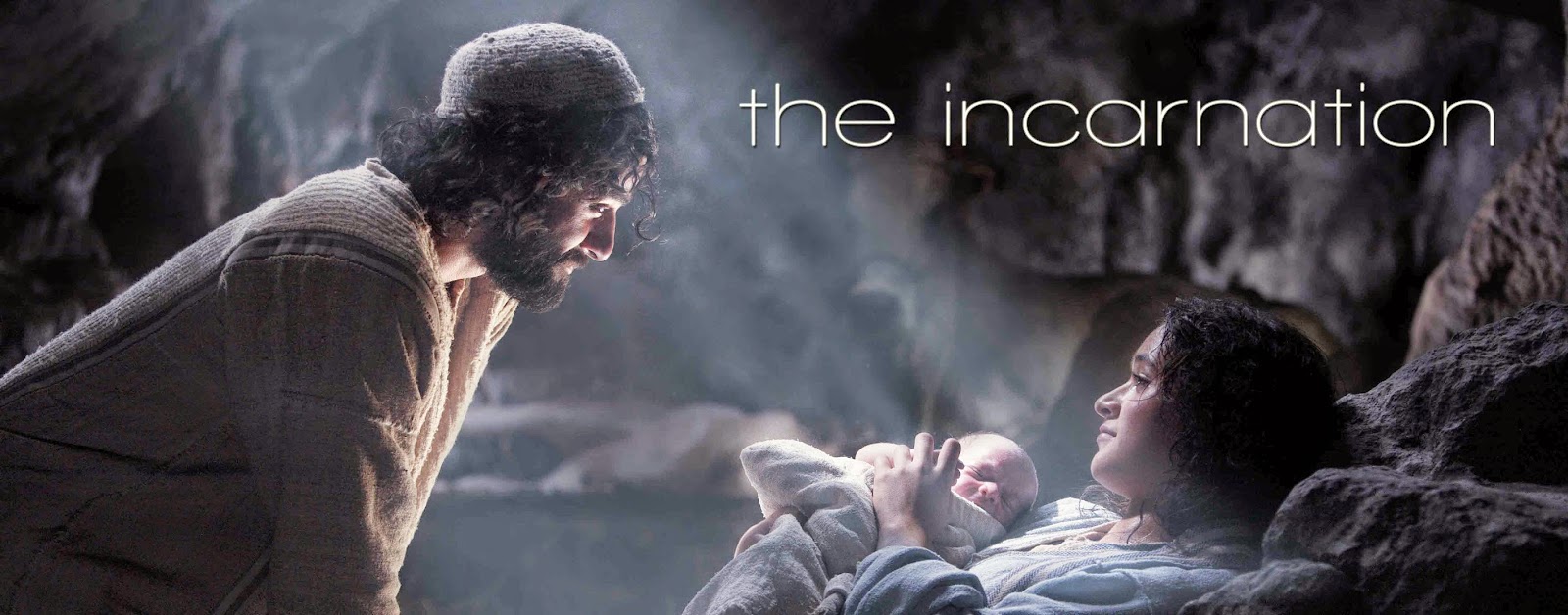
 I. First, then, WHO SENT JESUS CHRIST? The answer is returned to us by the words of the text. "Out of thee" saith Jehovah, speaking by the mouth of Micah, "Out of thee shall he come forth unto me." It is a sweet thought that Jesus Christ, did not come forth without his Father's permission, authority, consent, and assistance. He was sent of the Father, that he might be the Saviour of men. We are, alas! too apt to forget that while there are distinctions as to the persons in the Trinity, there are no distinctions of honor; and we do very frequently ascribe the honor of our salvation, or at least the depths of its mercy and the extremity of its benevolence, more to Jesus Christ than we do to the Father. This is a very great mistake. What if Jesus came? Did not his Father send him? If he was made a child did not the Holy Ghost beget him? If he spake wondrously, did not his Father pour grace into his lips, that he might be an able minister of the new covenant? If his Father did forsake him when he drank the bitter cup of gall, did he not love him still? and did he not, by-and by, after three days, raise him from the dead, and at last receive him up on high, leading captivity captive? Ah! beloved, he who knoweth the Father, and the Son, and the Holy Ghost as he should know them, never setteth one before another; he is not more thankful to one than the other; he sees them at Bethlehem, at Gethsemane, and on Calvary, all equally engaged in the work of salvation. "He shall come forth unto me." O Christian, hast thou put thy confidence in the man Christ Jesus? Hast thou placed thy reliance solely on him? And art thou united with him? Then believe that thou art united unto the God of heaven; since to the man Christ Jesus thou art brother and holdest closest fellowship, thou art linked thereby with God the Eternal, and "the Ancient of days" is thy Father and thy friend. "He shall come forth unto me". Did you never see the depth of love there was in the heart of Jehovah, when God the Father equipped his Son for the great enterprise of mercy?

There had been a sad day in Heaven once before, when Satan fell, and dragged with him a third of the stars of heaven, and when the Son of God launching from his great right hand the Omnipotent thunders, dashed the rebellious crew to the pit of perdition; but if we could conceive a grief in heaven, that must have been a sadder day, when the Son of the Most High left his Father's bosom, where he had lain from before all worlds. "Go," saith the Father, "and thy Father's blessing on thy head!" Then comes the unrobing. How do angels crowd around to see the Son of God take off his robes He laid aside his crown; he said, "My father, I am Lord over all, blessed for ever, but I will lay my crown aside, and be as mortal men are." He strips himself of his bright vest of glory; "Father," he says, "I will wear a robe of clay, just such as men wear." Then he takes off all those jewels wherewith he was glorified; he lays aside his starry mantles and robes of light, to dress himself in the simple garments of the peasant of Galilee. What a solemn disrobing that must have been! And next, can you picture the dismissal! The angels attend the Saviour through the streets, until they approach the doors: when an angel cries, "Lift up your heads, O ye gates, and be ye lifted up ye everlasting doors, and let the king of glory through!" Oh! methinks the angels must have wept when they lost the company of Jesus—when the Sun of Heaven bereaved them of all its light. But they went after him. They descended with him; and when his spirit entered into flesh and he became a babe, he was attended by that mighty host of angels, who after they had been with him to Bethlehem's manger, and seen him safely, laid on his mother's breast, in their journey upwards appeared to the shepherds and told them that he was born king of the Jews. The Father sent him! Contemplate that subject. Let your soul get hold of it, and in every period of his life think that he suffered what the Father willed; that every step of his life was marked with the approval of the great I AM. Let every thought that you have of Jesus be also connected with the eternal, ever-blessed God; for "he," saith Jehovah, "shall come forth unto me." Who sent him, then? The answer is, his Father.

 II. Now, secondly, WHERE DID HE COME TO? A word or two concerning Bethlehem. It seemed meet and right that our Saviour should be born in Bethlehem and that because of Bethlehem's history, Bethlehem's name, and Bethlehem's position—little in Judah.

 1. First, it seemed necessary that Christ should be born in Bethlehem, because of Bethlehem's history. Dear to every Israelite was the little village of Bethlehem. Jerusalem might outshine it in splendour; for there stood the temple, the glory of the whole earth, and "beautiful for situation, the joy of the whole earth was Mount Zion;" yet around Bethlehem there clustered a number of incidents which always made it a pleasant resting-place to every Jewish mind; and even the Christian cannot help loving Bethlehem. The first mention, I think, that we have of Bethlehem is a sorrowful one. There Rachel died. If you turn to the 35th of Genesis you will find it said in the 16th verse—"And they journeyed from Bethel; and there was but a little way to come to Ephrath; and Rachel travailed, and she had hard labour. And it came to pass, when she was in hard labour, that the midwife said unto her, Fear not; thou shalt have this son also. And it came to pass, as her soul was in departing, (for she died) that she called his name Ben-oni: but his father called him Benjamin. And Rachel died, and was buried in the way to Ephrath, which is Bethlehem. And Jacob set a pillar upon her grave, that is the pillar of Rachel's grave unto this day." A singular incident this—almost prophetic. Might not Mary have called her own son Jesus, her Ben-oni; for he was to be the child of Sorrow? Simeon said to her—"Yea, a sword shall pierce through thine own soul also, that the thoughts of many hearts may be revealed." But while she might have called him Ben-oni, what did God his Father call him?

Benjamin, the son of my right hand. Ben-oni was he as a man; Benjamin as to his Godhead. This little incident seems to be almost a prophecy that Ben-oni—Benjamin, the Lord Jesus, should be born in Bethlehem. But another woman makes this place celebrated. That woman's name was Naomi. There lived at Bethlehem in after days, when, perhaps, the stone that Jacob's fondness had raised had been covered with moss and its inscription obliterated, another woman named Naomi. She too was a daughter of joy, and yet a daughter of bitterness. Naomi was a woman whom the Lord had loved and blessed, but she had to go to a strange land; and she said, "Call me not Naomi (pleasant) but let my name be called Mara (bitter) for the Almighty hath dealt very bitterly with me." Yet was she not alone amid all her losses, for there cleaved unto her Ruth the Moabitess, whose Gentile blood should unite with the pure untainted stream of the Jew, and should thus bring forth the Lord our Saviour, the great king both of Jews and Gentiles. That very beautiful book of Ruth had all its scenery laid in Bethlehem. It was at Bethlehem that Ruth went forth to glean in the fields of Boaz; it was there that Boaz looked upon her, and she bowed herself before her lord; it was there her marriage was celebrated; and in the streets of Bethlehem did Boaz and Ruth receive a blessing which made them fruitful so that Boaz became the father of Obed, and Obed the father of Jesse, and Jesse the father of David. That last fact gilds Bethlehem with glory—the fact that David was born there—the mighty hero who smote the Philistine giant, who led the discontented of his land away from the tyranny of their monarch, and who afterwards, by a full consent of a willing people, was crowned king of Israel and Judah. Bethlehem was a royal city, because the kings were there brought forth. Little as Bethlehem was, it was much to be esteemed; because it was like certain principalities which we have in Europe, which are celebrated for nothing but for bringing forth the consorts of the royal families of England. It was right, then, from history, that Bethlehem should be the birth-place of Christ.

Read the rest of this article at - http://www.spurgeon.org/sermons/0057.htm